
In April, we begin seeing some hints that spring is on the way. One of the most prominent weeds is Henbit (aka Purple Dead Nettle). April showers inevitably produce many May flowering weeds of various colors, but most prominent are those flowers that are yellow.
Weeds are the most successful plants on Earth. Indeed Mother Nature Abhors A Void. Weeds are the single most important economic pests of all crops worldwide. They find many niches, in which to grow and prosper. Their greatest gifts are in helping to slow soil erosion and add a little color following winter. Evolution provided them the ability to survive, reproduce and compete in harsh soil in many diverse environments.
The turf industry ramps-ups speed rapidly in May. Mowing is among the most time consuming and expensive issues from this time forwards, but cleaning up weeds can be challenge. In 2019, I addressed several yellow-flowered weeds that brightened dreary landscapes including: cinquefoil, Indian mock strawberry, bulbous buttercup, hawkweed and cats ear (aka false dandelion). These weeds are commonplace, and you see them everywhere, but can you name/ID them? Even many pro’s cannot! In this edition, I want to add descriptions of a few other April and May flowering weeds, including: low hop clover, yellow and creeping woodsorrel, and sheep sorrel.
Cinquefoil: There are several species of cinquefoil, and all are similar in appearance and perennial. Cinquefoil is low growing, and plants die-back in winter, and new leaves and shoots again appear in spring. Leaves are glossy with five, dark-green, radiating (i.e., palmate) and toothed leaflets. Stems are brown to purplish and are conspicuously hairy. Some cinquefoil’s spread by above ground stems called stolons, which root at nodes. Just under the soil surface, you may find slender, dark-brown wiry stems called rhizomes. It is either the presence of stolons and/or rhizomes that allows plants to pack together in dense mats and compete with turf. Flowers are borne on long stalks (petioles) and have 5 bright yellow petals. Flowers of cinquefoil resemble Indian mock strawberry, but the species are easily differentiated based on leaflet number.
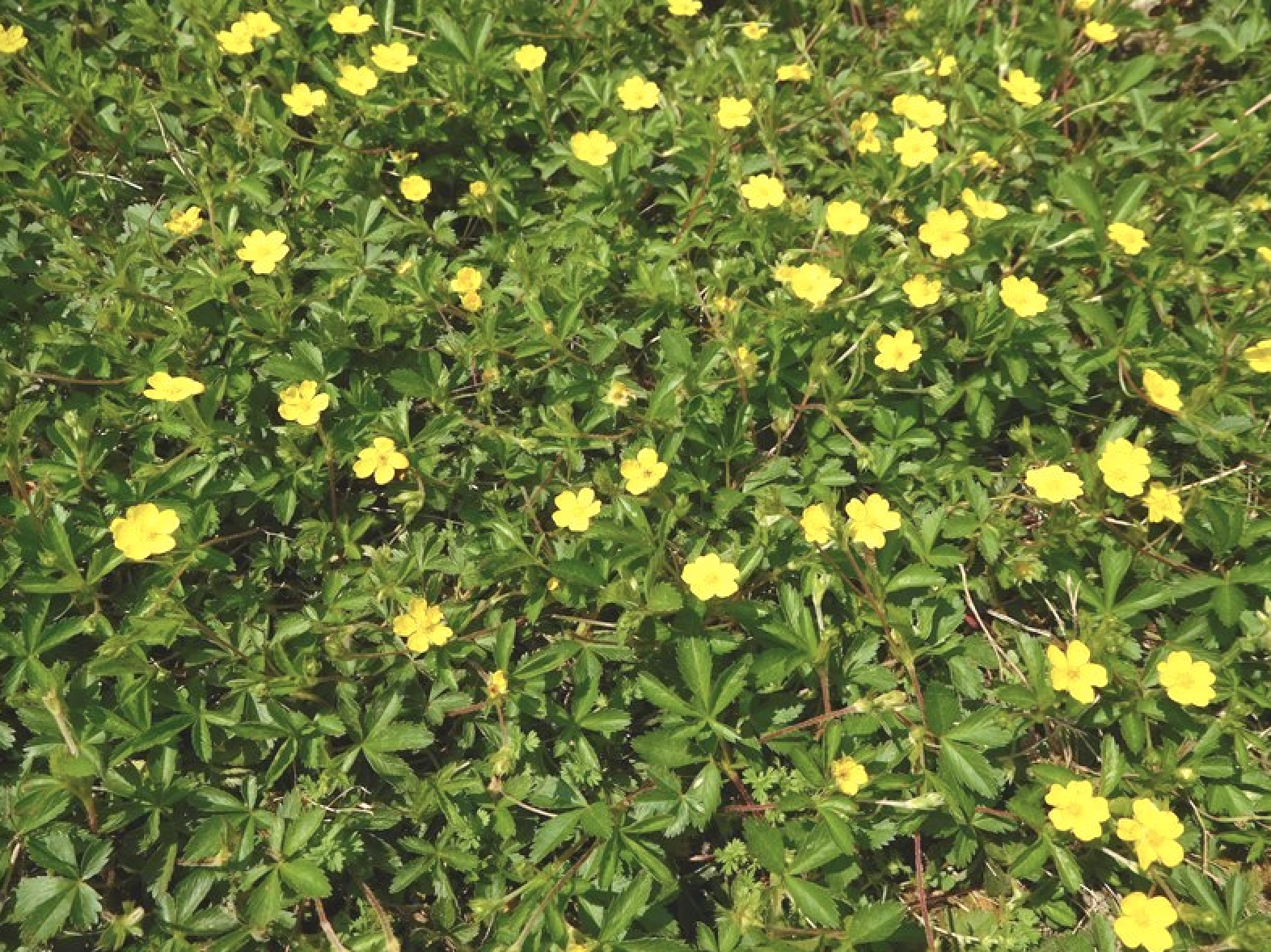
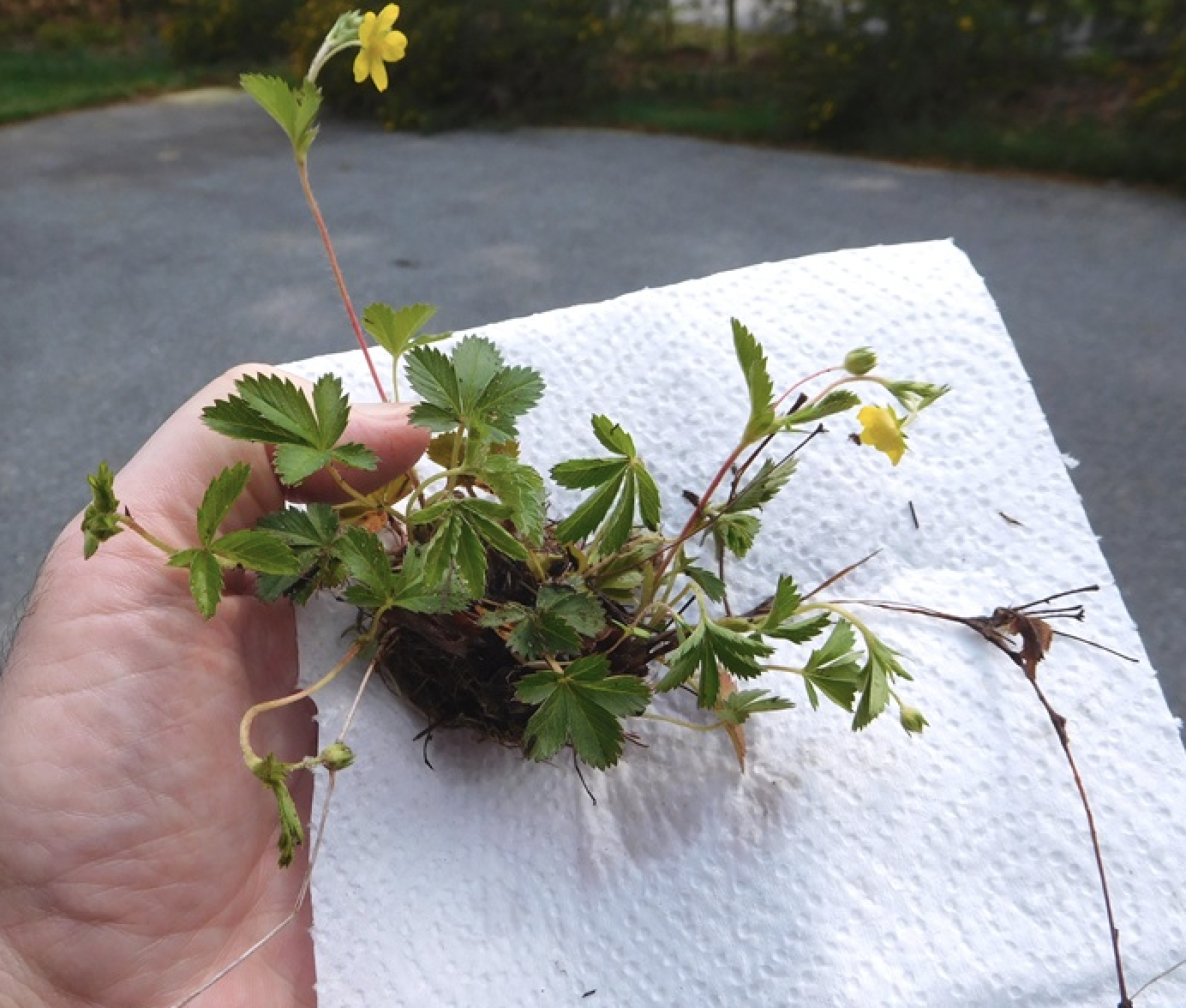
Cinquefoil produces dense mats of plants in May with bright yellow flowers. Cinquifoil has 5 radiating, notched leaflets. Flowers with 5 yellow petals, and brown or purple trailing stems.
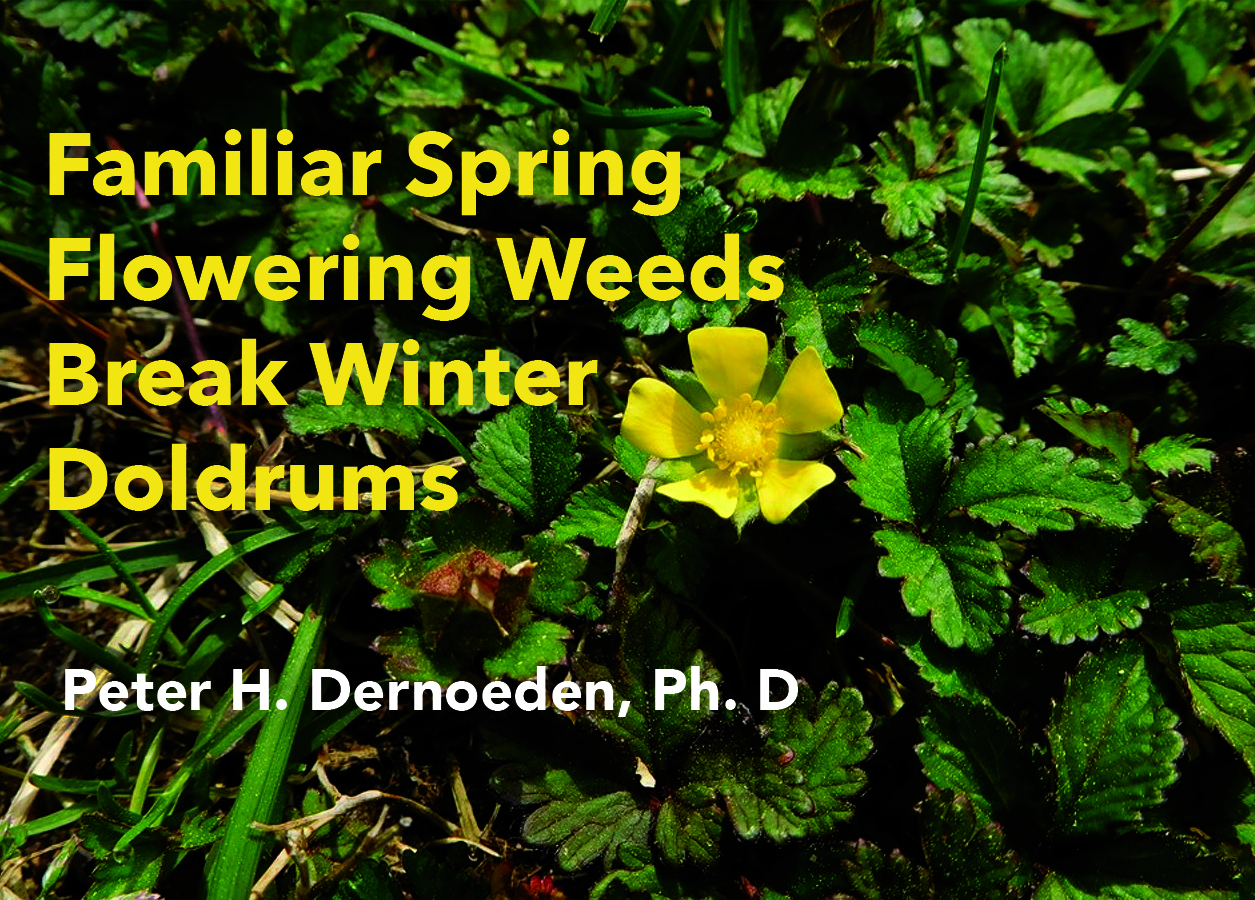
Indian mock-strawberry is recognized by its three, dark-green leaflets, yellow flowers and strawberry-like fruit. Rosettes of trifoliate leaves (i.e., 3 leaflets), and are rounded and have rounded teeth on margins. Plants produce long, trailing stems that have a purple color, which may or may not form roots. Flowers form on long stems and have 5 rounded and yellow petals. Fruit are red, round, spongy and strawberry-like. Plants remain green throughout summer and winter. Wild strawberry is very similar in appearance, but produces white flowers and is uncommon in our region.
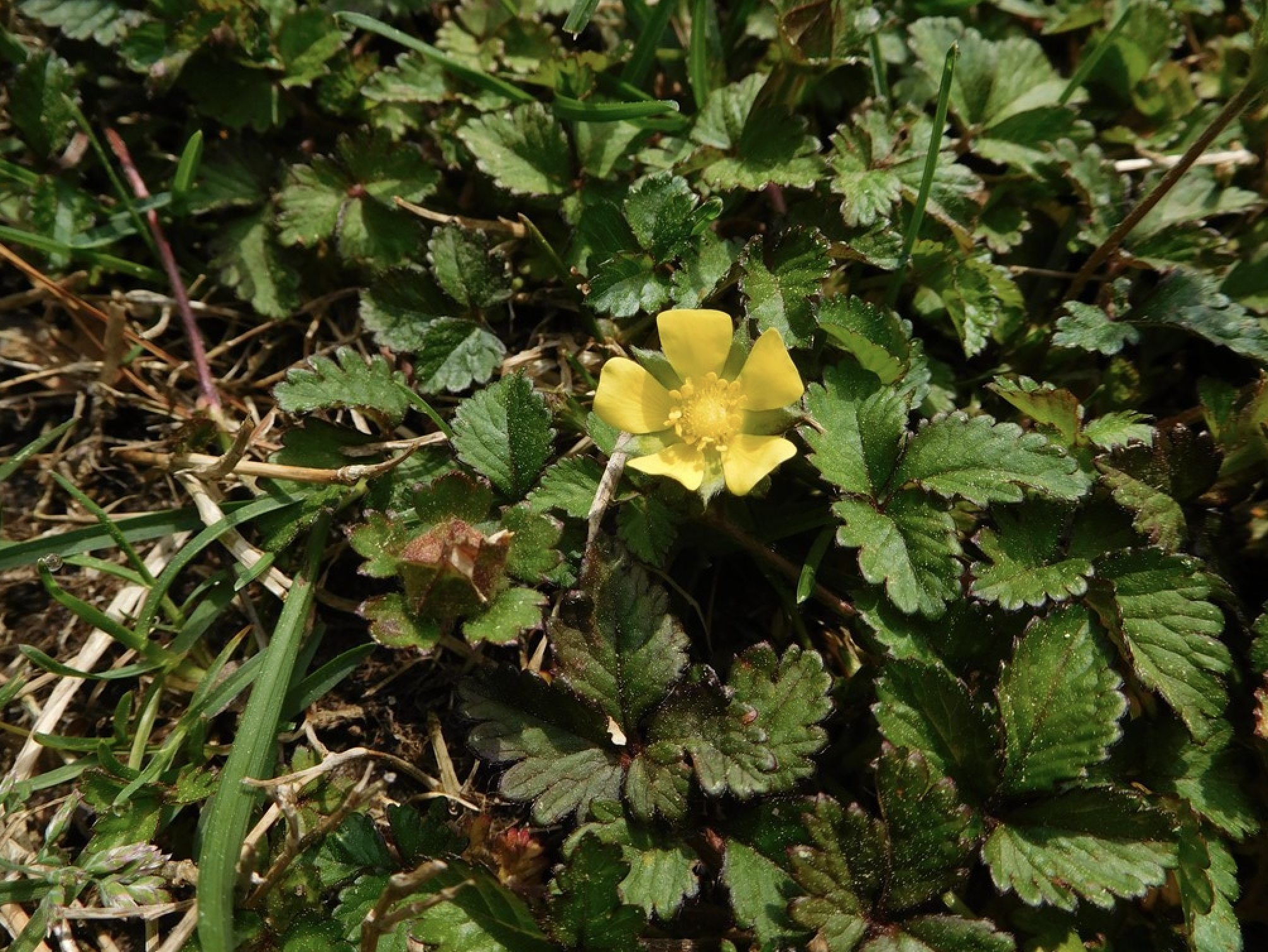
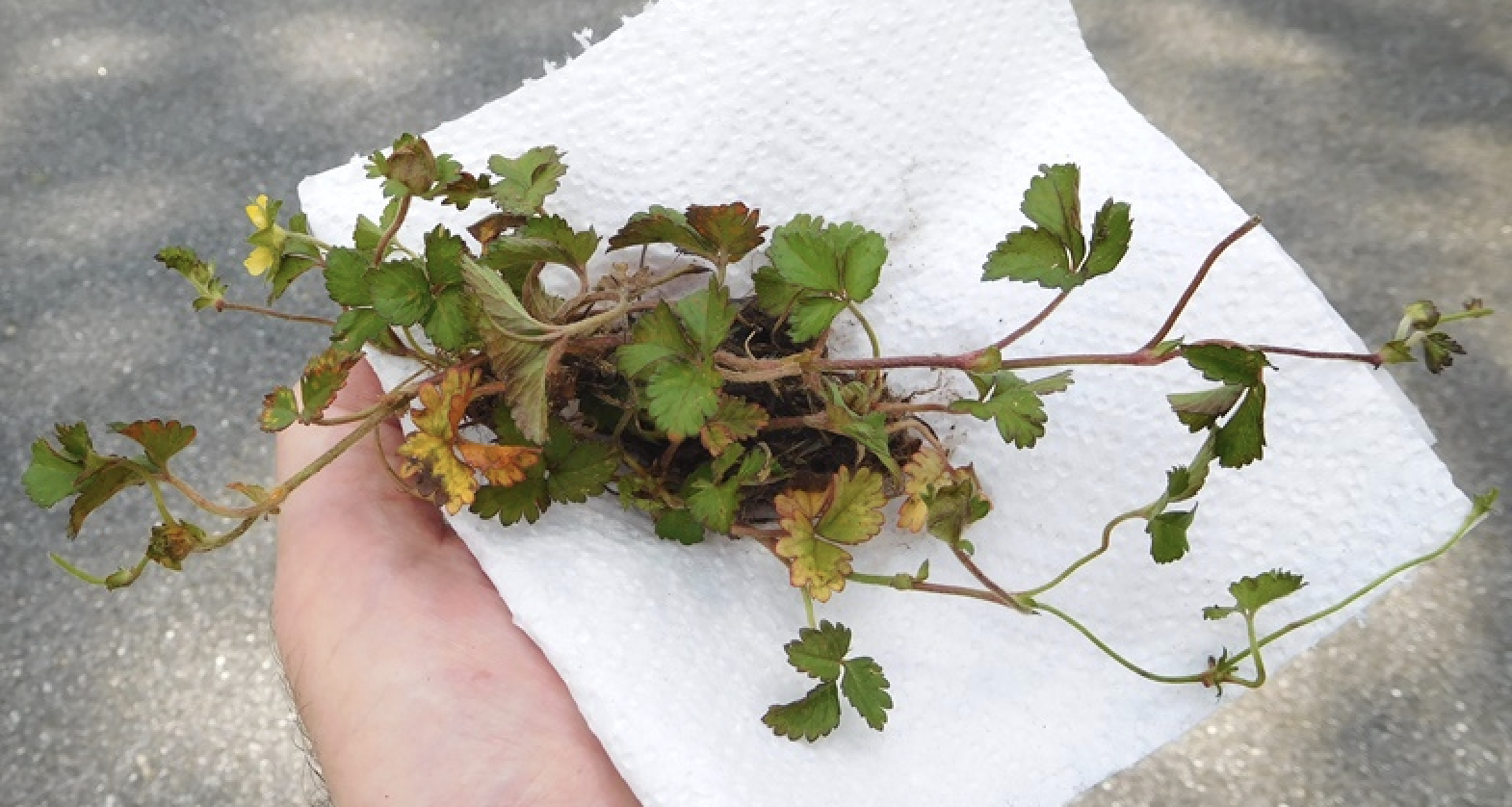
Indian mock strawberry produces rosettes of trifoliate leaflets that are rounded and have rounded teeth on margins; flowers have 5 yellow petals. Indian mock strawberrry produces long, hairy, purple,trailing stems and strawberry-like fruit in summer.
Bulbous buttercup does not become evident until about early May in our region, but suddenly produces a burst of great numbers of yellow flowers. Young hairy leaves with 3 lobes emerge from underground bulbs (i.e., corms) and form tufts. Corms are onion-like, white and papery and 0.25 to 0.5 inch in diameter. Corms do not have an onion odor. The 3-parted, rounded leaves are borne on long stalks (petioles) and have deep notches or clefts. Two smaller, 3-lobed leaves with teeth or notches form below larger leaves. In spring (May usually), bright yellow flowers are produced on top of erect stems. Flowers consist of 5 bright, shiny and yellow petals. Following flowering leaves senesce with the advent of higher summer temperatures and eventually plants die-back to the corms. Plants survive as corms and seed.
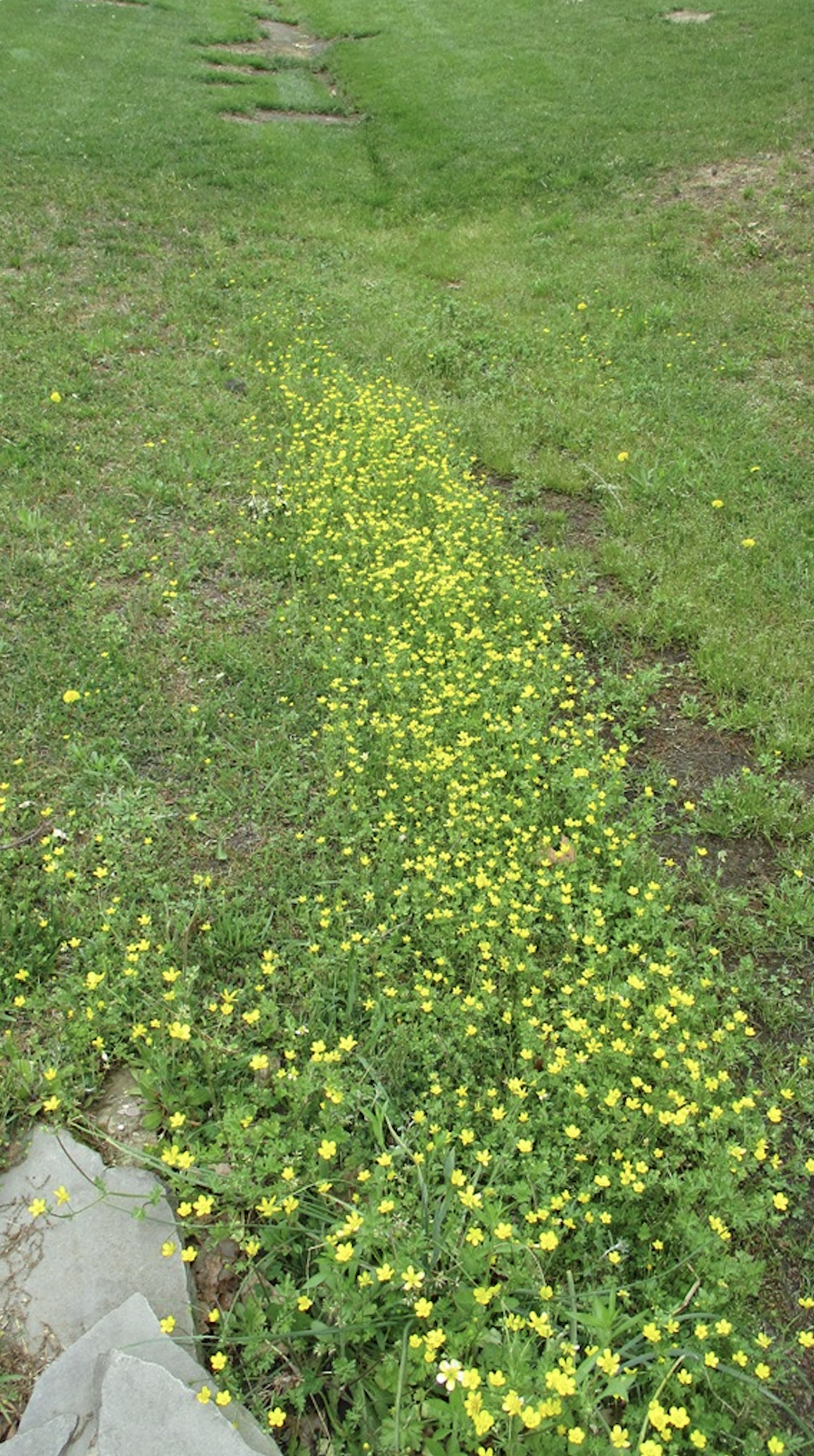
Buttercups in a swale of a poorly maintained lawn, May 2022
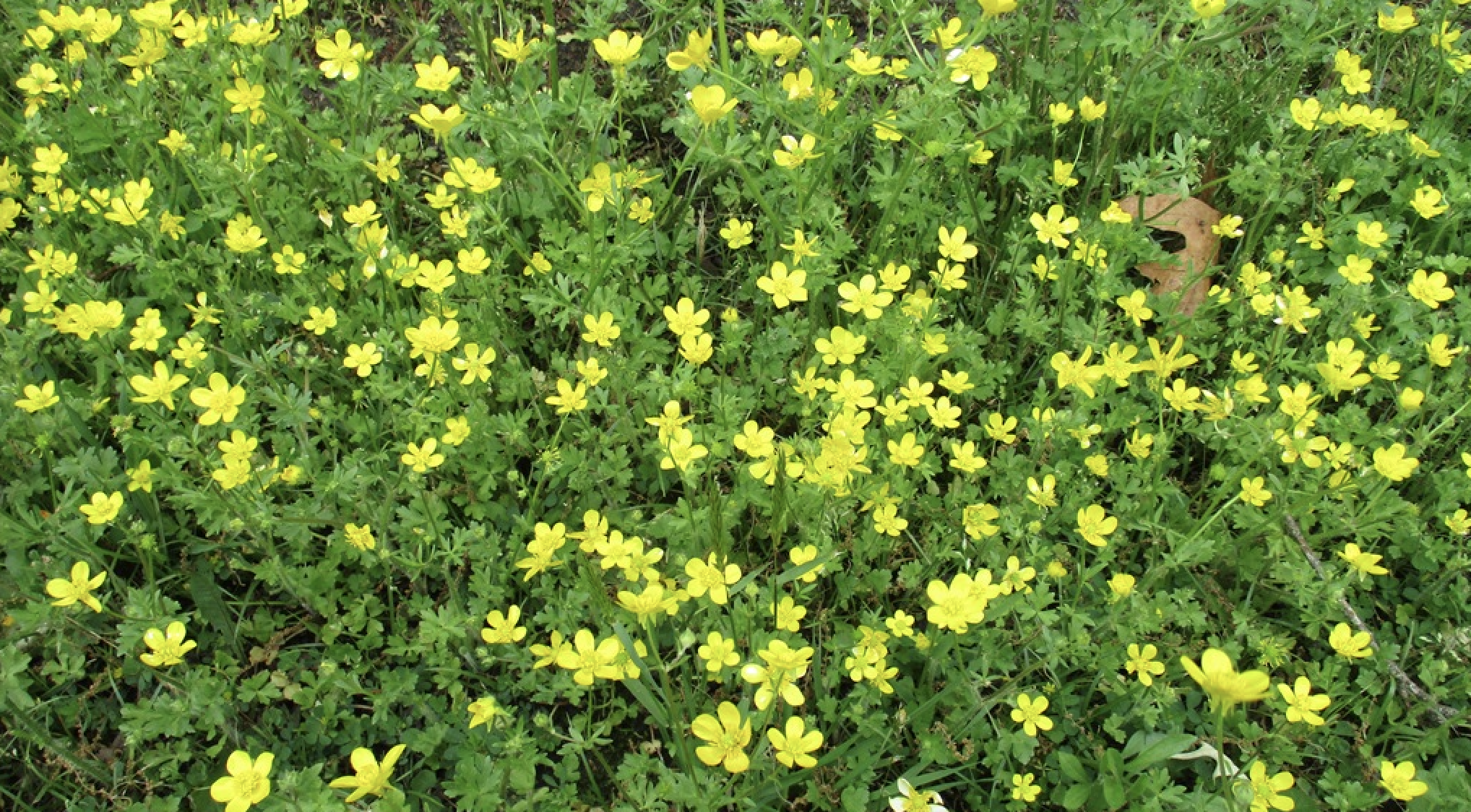
Bright shiny flowers of buttercup are produced in abudance on long stalks. Leaves are 3-parted, rounded, and have deep notches or clefts.
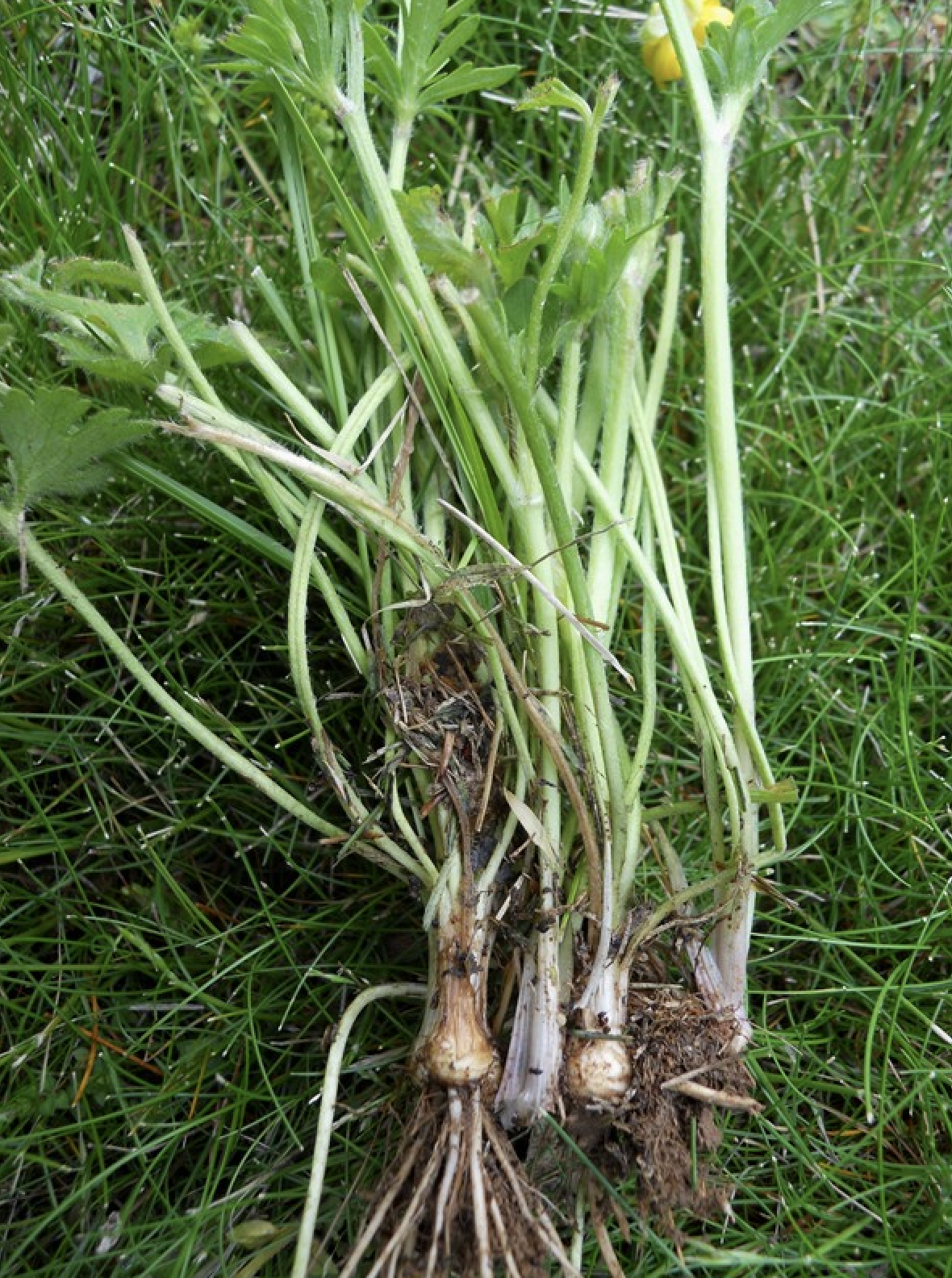
Bulbous buttercup grows in bunches; produces long stems for flowers; and onion-like corms, which have no pungent odor.
Yellow hawkweed is a perennial and forms rosettes of hairy leaves that spread by both above ground and below ground stems called stolons and rhizomes; respectively. Stolons and rhizomes form dense mats of rosettes that can push turf out of the stand. Older leaves become elongated and oblong, and taper at the base. Leaves are very hairy and exude a milky substance when cut. Rosettes are prostrate and in the absence of frequent mowing they rapidly produce tall seedheads. Seedhead stems are leafless, 10 to 24 inches or higher, produce clusters of 2 or more bright yellow flowers, and exude a milky substance when cut. Flowers are similar in appearance to those of dandelion, but smaller and do not develop into globe-like, puff-balls of grayish-white seeds. Seedheads are evident only in areas that have not been mowed routinely.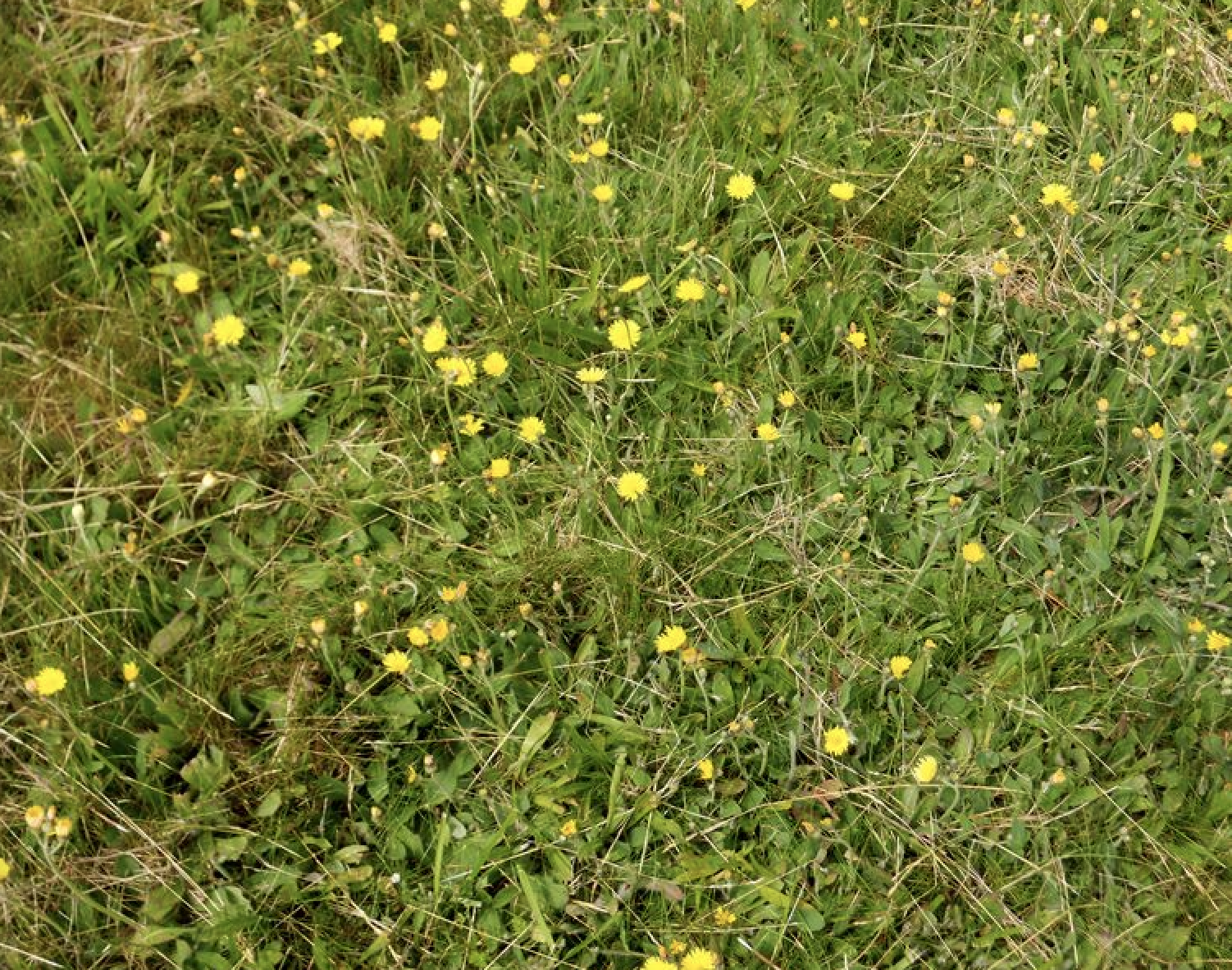
Yellow hawkweed produces numerous, yellow dandelion-like flowers on leaf-less stems begining in May.
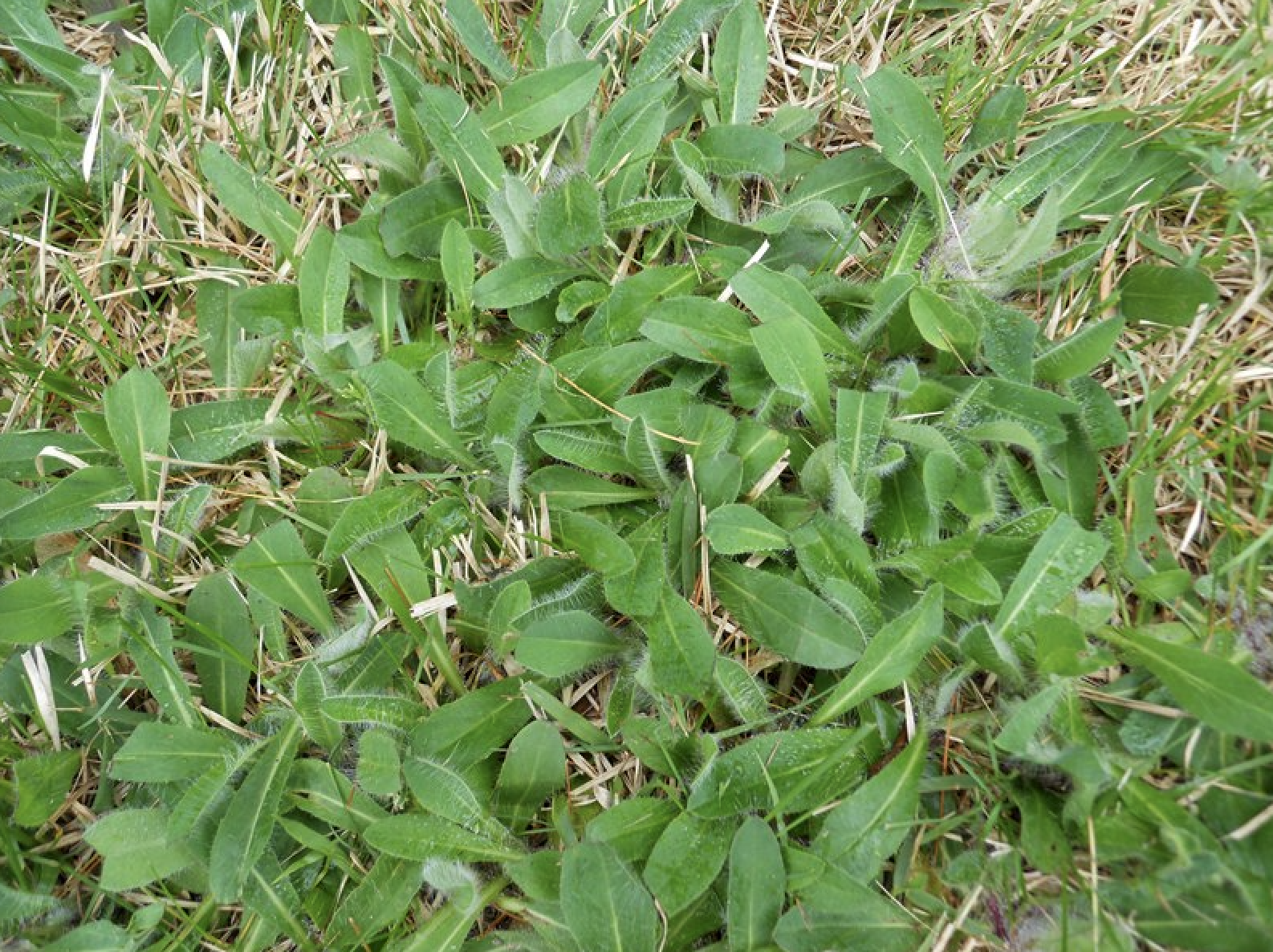
Yellow hawkweed is perennial and produces dense mats of plants via stems. Leaves hairy, oblong-shaped that taper at the base.
Common catsear (aka false dandelion) is similar in appearance to yellow hawkweed, but is more diminutive, less invasive and found in infrequently mowed, low maintenance turf areas. Catsear above ground parts senesce and die shortly after seedheads are produced. Leaves are arranged in basal rosettes, with deeply notched teeth or lobes similar to dandelion. Leaves are conspicuously hairy, and like dandelion and hawkweed, ooze a milky substance when broken or crushed. Flowers are borne on tall (≥ 10”) and almost leaf-less stems. Yellow, radiating flower heads are very similar to dandelion (and yellow hawkweed), but much smaller and may be bright yellow or have an “orange-yellow” tint. Once mature, flowers develop into a dense globe-like, puff-ball of grayish-white seeds. Like dandelion, seeds are produced on long stalks with a parachute of hairs that become airborne under windy conditions, which rapidly and efficiently redistribute the weed.
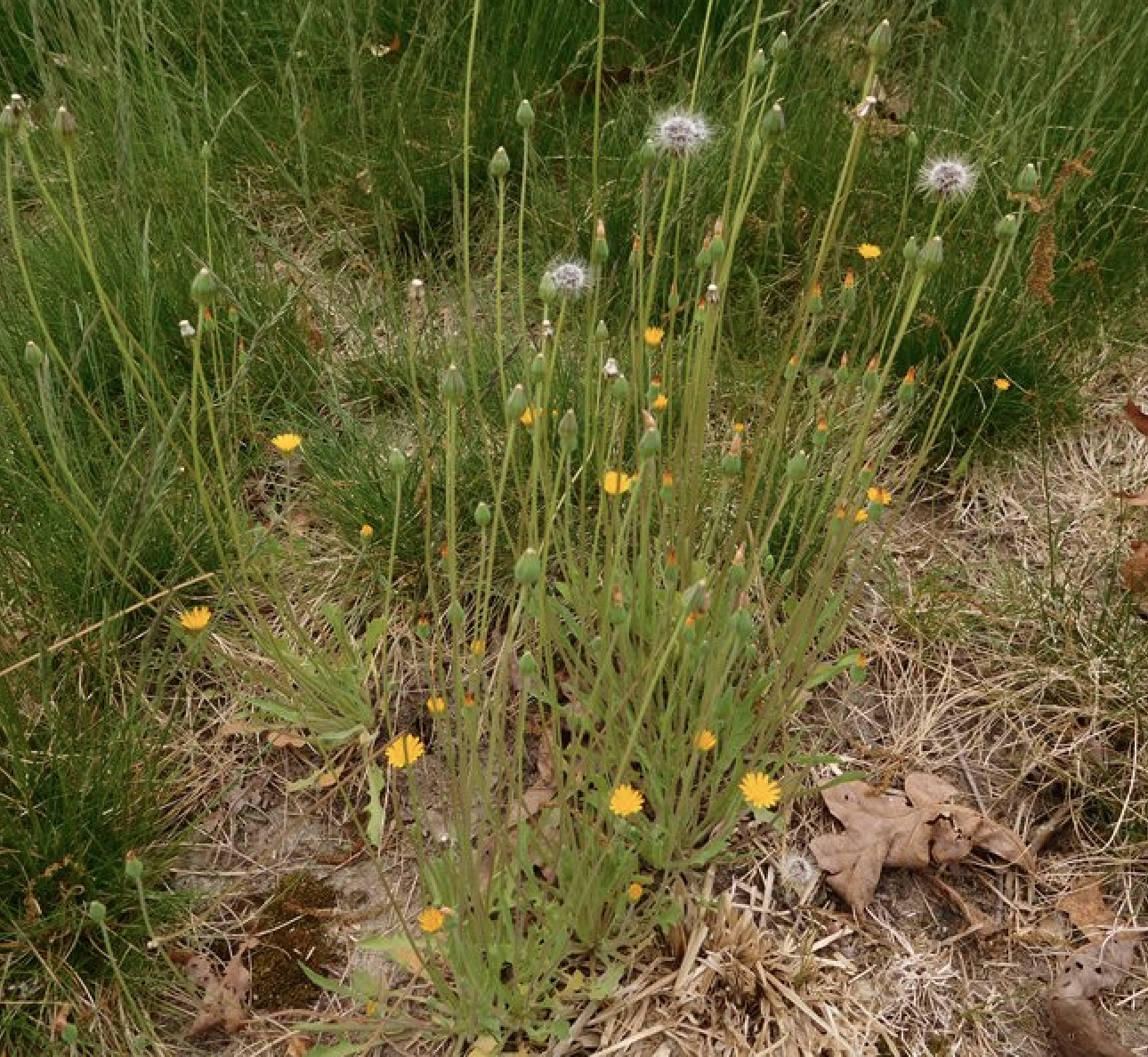
Common catsear flowers are yellow to orange, dandlion-like, and when mature develop into globes of grayish seeds.
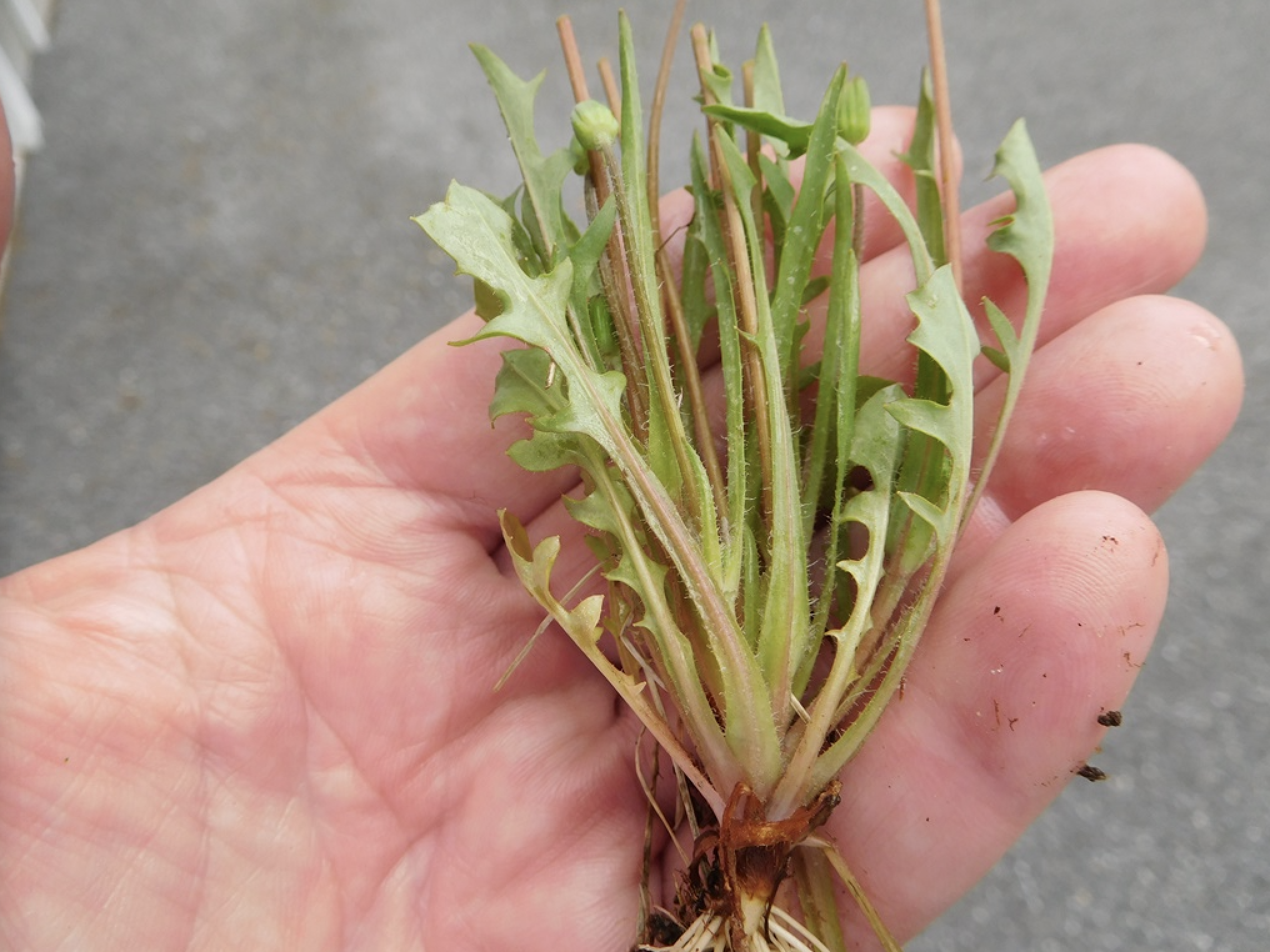
Common catsear leaves are arranged on basal rosettes; with deeply notched teeth or lobes; are hairy and simiar to dandelion.
Low Hop Clover: Low hop clover (aka hop clover) is a winter annual (i.e., seed germinate in the fall; plants develop and flower in spring to produce seed that perpetuate the species). Seedling emergence is staggered throughout the fall into May and June, but existing plants remain inconspicuous all winter. Almost out of nowhere, beginning in mid-May compact plants suddenly appear in patch-like circular clusters ( > 8-12” in diam.) of yellow flowers, even under low mowing. Flowers are globe-shaped and consist of clusters of bright yellow petals (< 0.25 inches in diam.). Once flowers mature they turn white [look like small versions of white clover flowers). Following some hot weather, flowers turn brown. Inconspicuous crown shaped pods are produced below dying petals, and can be seen with a hand lens.
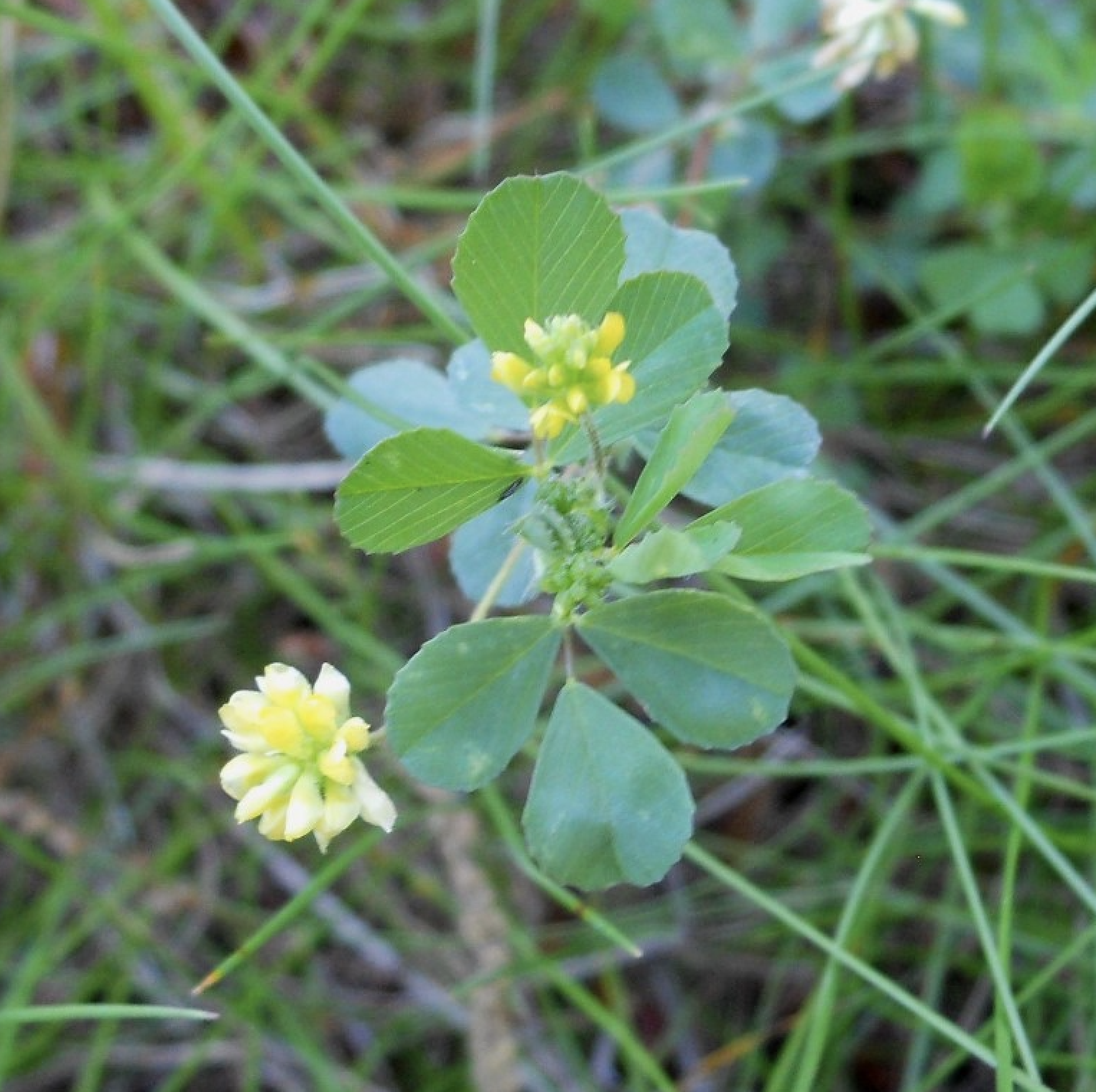
Wedge-heart-shaped trifoliate leaves with serrations and small yellow flowers in clusters of hop clover, May 2017.
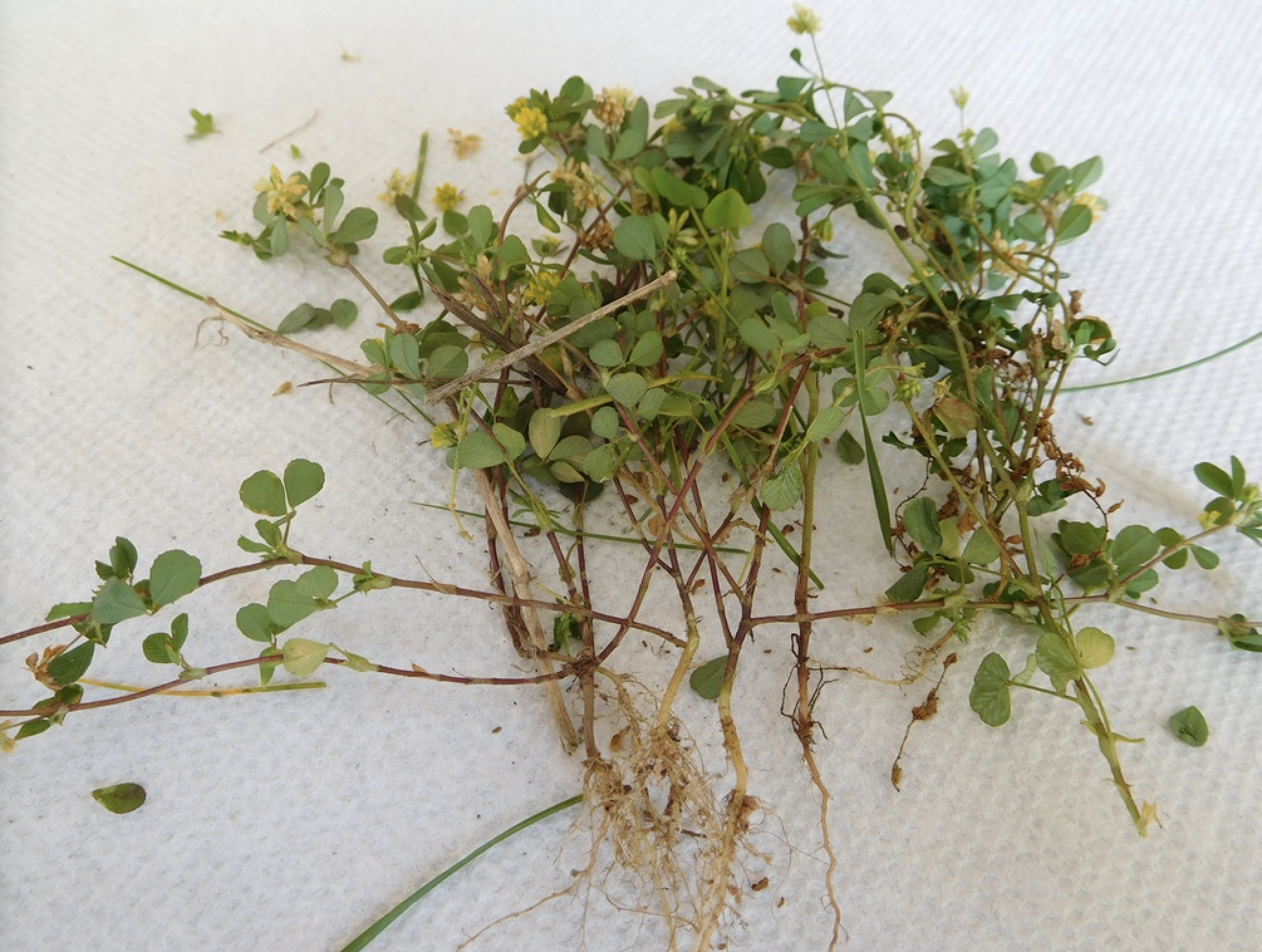
Hop clover forms long, purple and wirey stems on which leaves and flowers are produced in May.
The first yellow flowers appear about mid-May, and after each rain event, new plants emerge and invade into June. As more and more plants emerge, they coalesce and form a uniform carpet-effect, especially in low maintenance areas. Leaves are clover-like with the typical three or trifoliate pattern. Leaves are wedge to slightly heart-shaped, taper at the base, and have a few small notches or teeth (serrated) on leaf margins. Hop clover plants have a fibrous root system, and when ready to produce flowers, it develops long wiry stems that radiate from stem bases. Older stems are purplish, have hairs that only can be seen with aid of a hand lens, and have a slightly square-like feel. As each flower loses its petals, it will enclose an one-seeded pod. Given an unusual heat wave (>90F plus dry soils) during the May 20 and 23, 2022 time period, plants are rapidly senescing. Hop clover easily is confused with black medic. Black medic, however, is a summer annual (i.e., seed germinate in spring; plants produce flowers and seed and then die before autumn). Black medic plants have dark-green clover-like leaves and large yellow flowers.
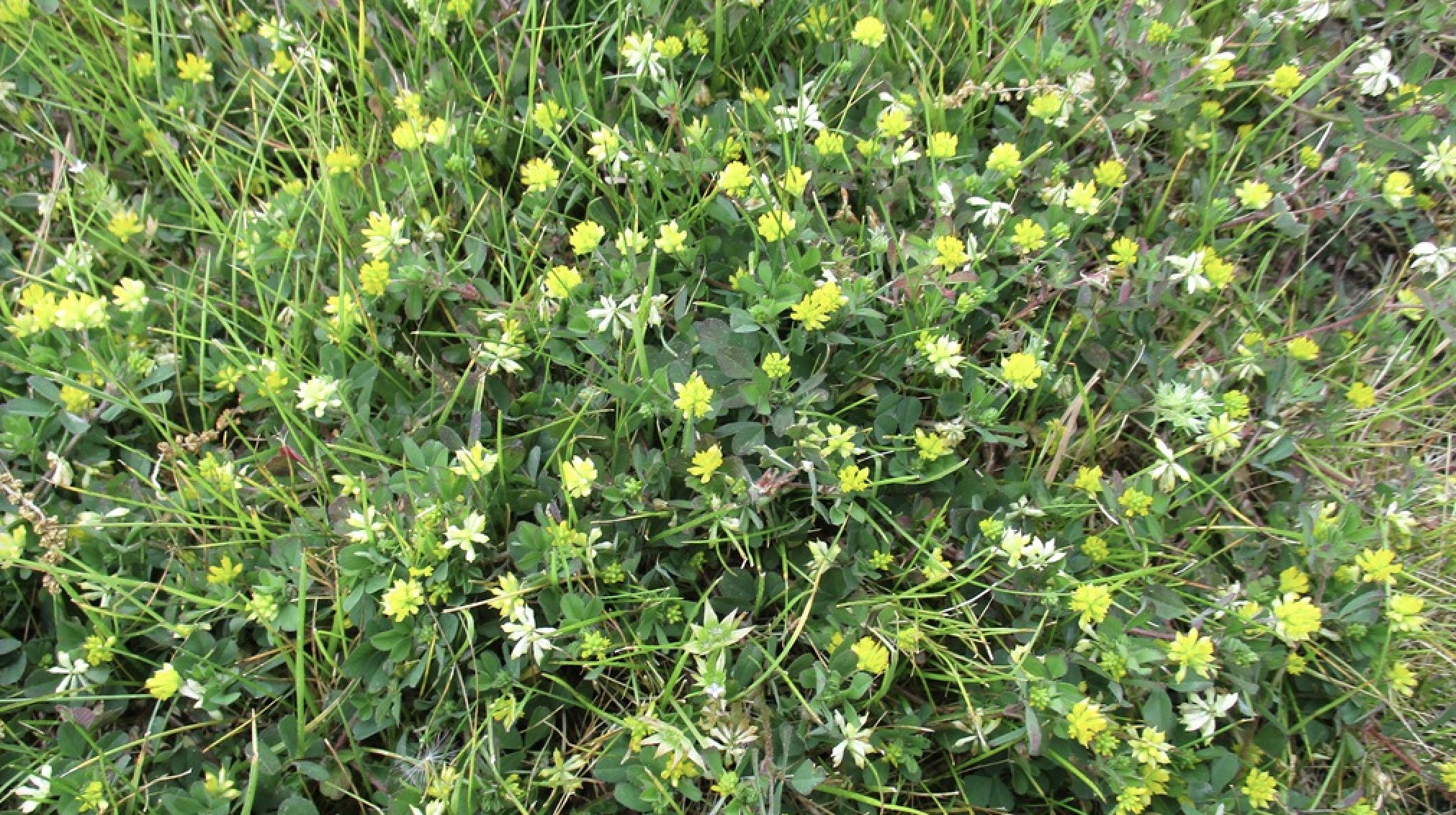
Dense mats of hop clover suddenly appear in May. Young flowers are yellow, but turn white on maturity and then brown. Pods form below dead flowers.
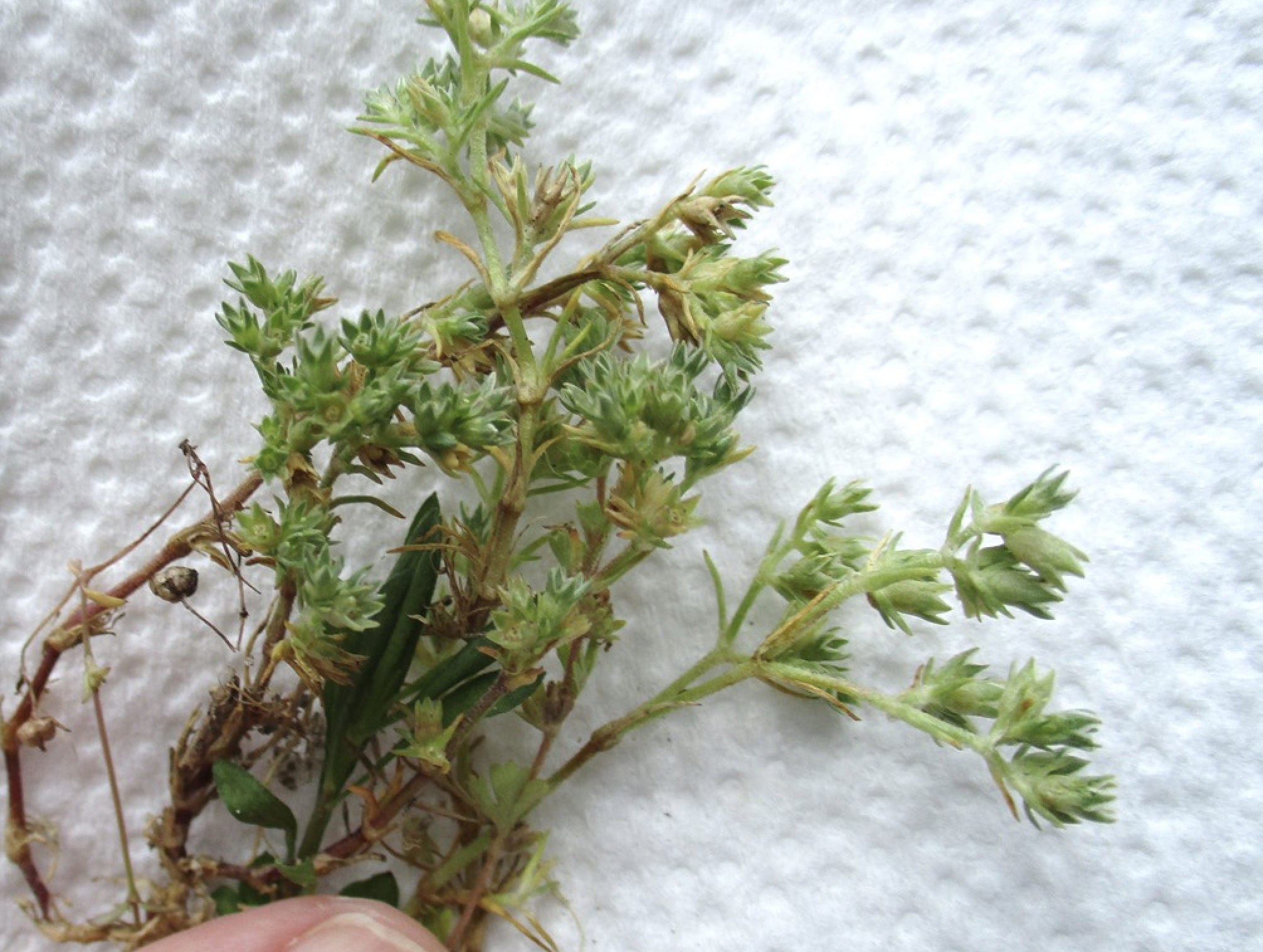
Once petals have died, each flower produces a one seeded pod that encloses the fruit of hop clover, May 25, 2022.
Yellow and creeping woodsorrel: Yellow and creeping woodsorrel have a similar appearance. Yellow woodsorrel can produce below ground rhizomes and thus is perennial, but in many turf situations it behaves like an annual. Creeping woodsorrel produces above ground stolons and also may behave as both an annual and perennial. Yellow and creeping woodsorrel germinate in mid-to-late spring as soils warm, but they emerge incessantly all summer long and are a major weed issues, especially in lawns. Woodsorrel’s produce three (trifoliate) distinctive heart-shaped leaflets, which are reminiscent of a shamrock. Yellow woodsorrel grows upright and produces bright, light-green leaves. Yellow woodsorrel can produces somewhat wiry below ground (i.e., rhizomes) stems as plants mature. Creeping woodsorrel has green or purplish leaves and produces procumbent growing stems (i.e., stolons) that root at nodes. Creeping woodsorrel can produce dense mats of vegetation that can out-compete turf. Woodsorrel flowers appear in early May and throughout summer, and are bright yellow and have 5 petals. When flowers mature, 5-sided, cucumber-shaped seed pods form. Pods mature, split open and seed are scattered.
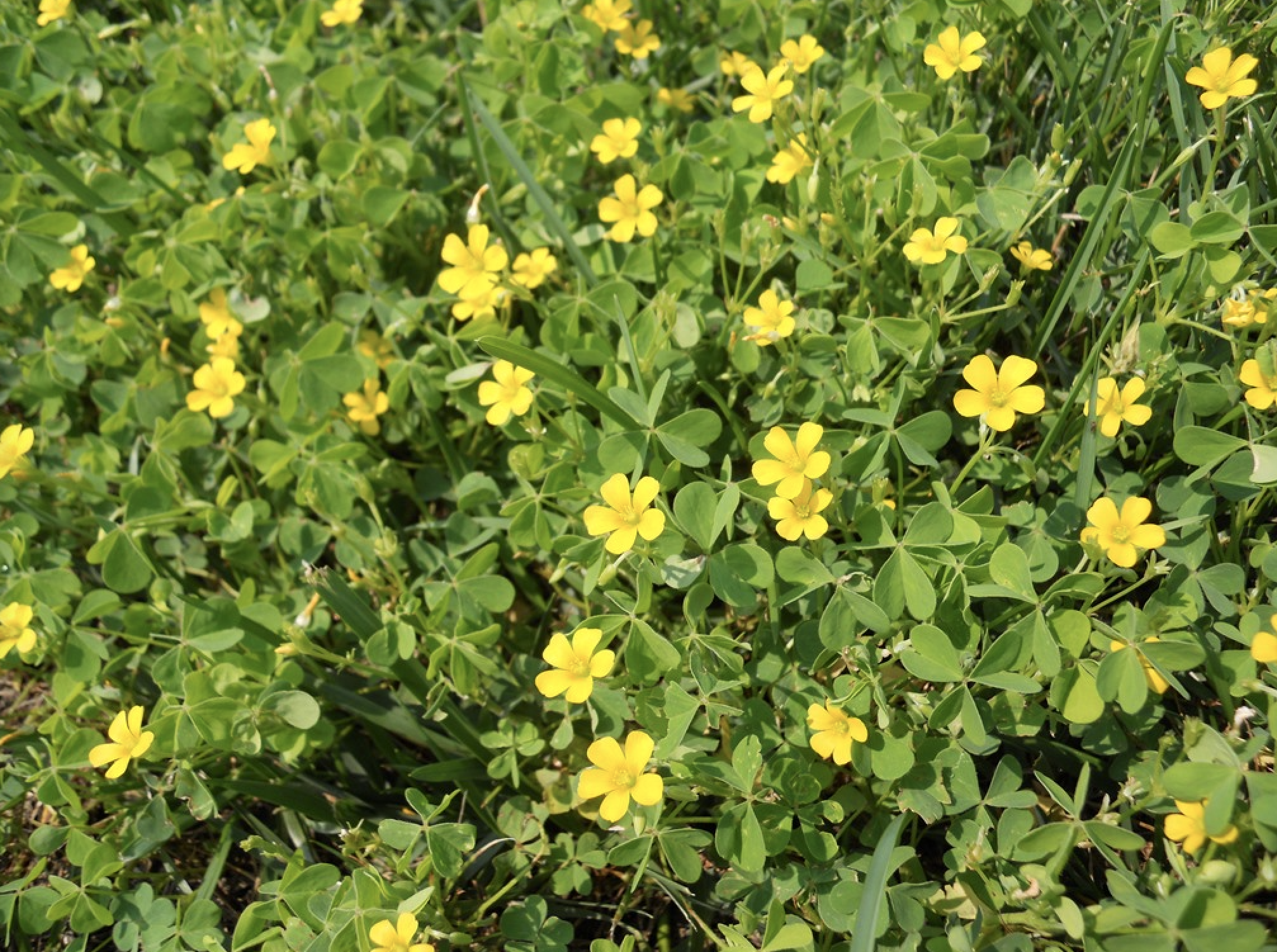
Yellow woodsorrel -is identified by the shamrock-like leaves and yellow flowers. Appears in early May and keeps emerging from seed all summer..
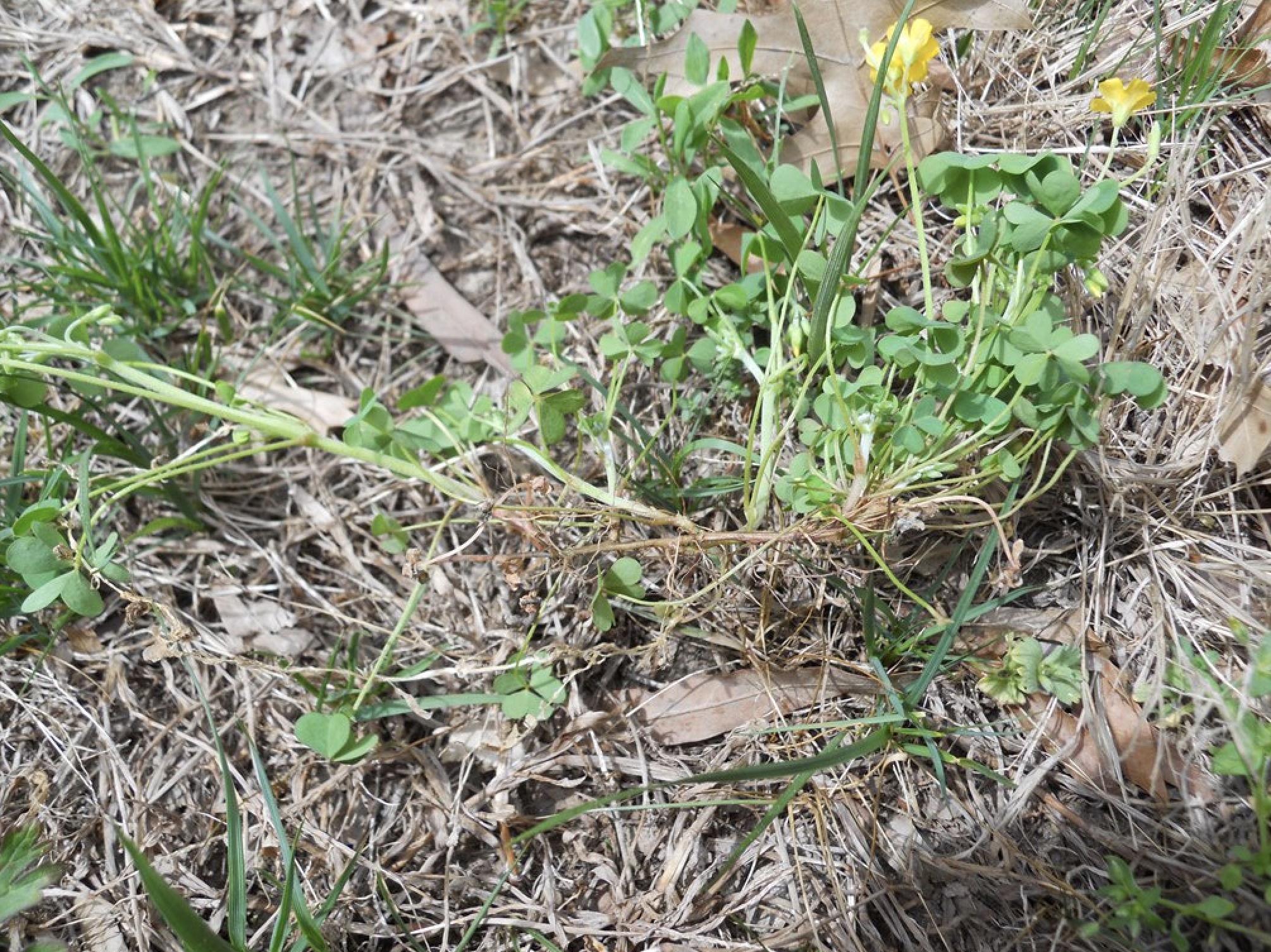
Yellow woodsorrel produces creeping stems or stolons. It's possible for buds on stolons to survive winter.
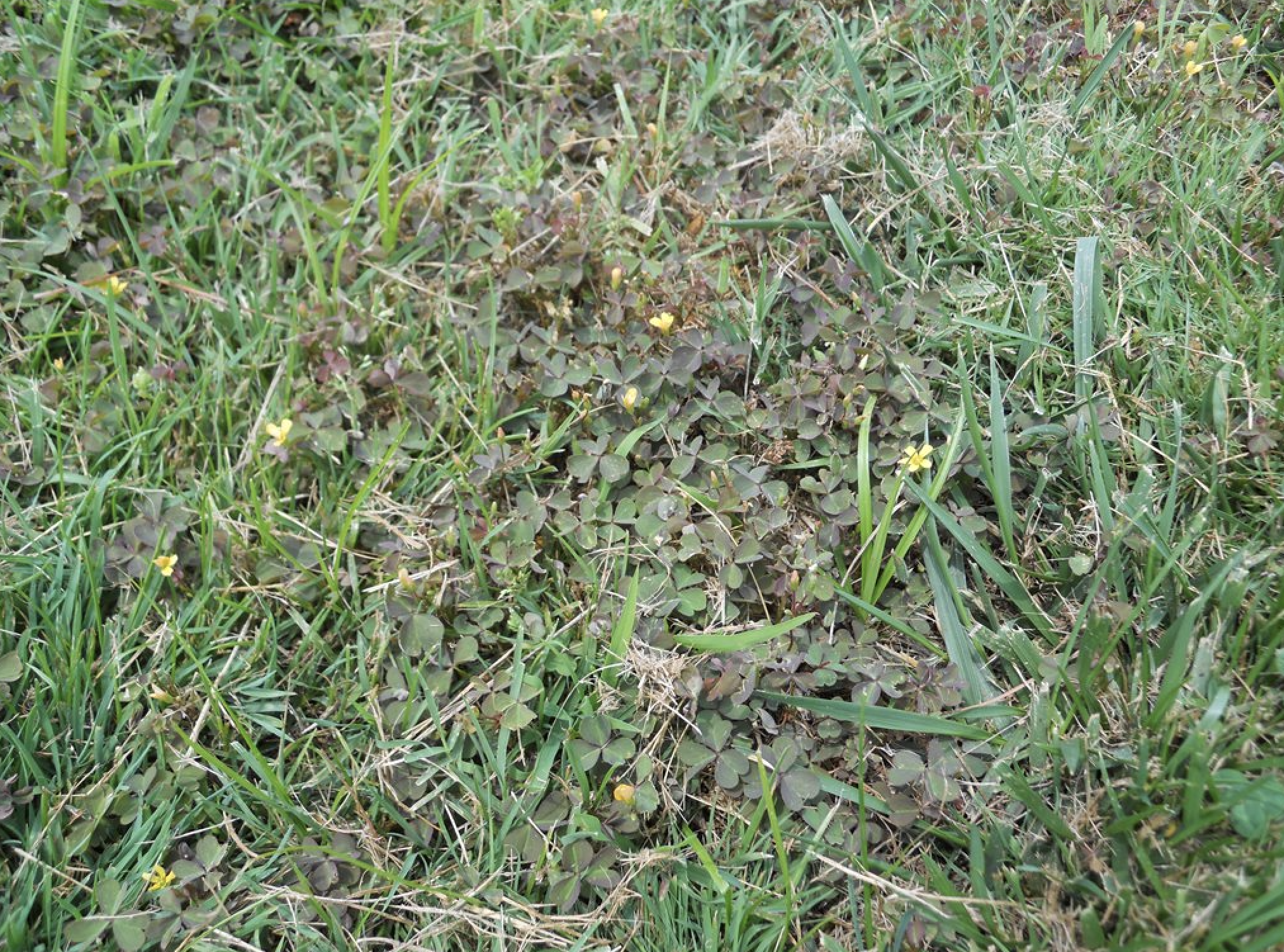
Creeping woodsorrel has purple leaves and rapidly produces above creeping stems called stolons.
Red Sorrel– Red sorrel, also known as sheep sorrel, is a perennial, rhizomatous broadleaf weed. Red sorrel produces seedheads on male and female plants. Massive production of reddish-brown female seedheads (actually purple when immature) begin in late April and throughout May, and provide a striking color contrast in lawns and roadsides. Male seedheads form inconspicuous yellow flowers. Flowering stems are four-sided, reddish at the base, appear in mid-spring and continue to be produced throughout the summer and into early autumn.
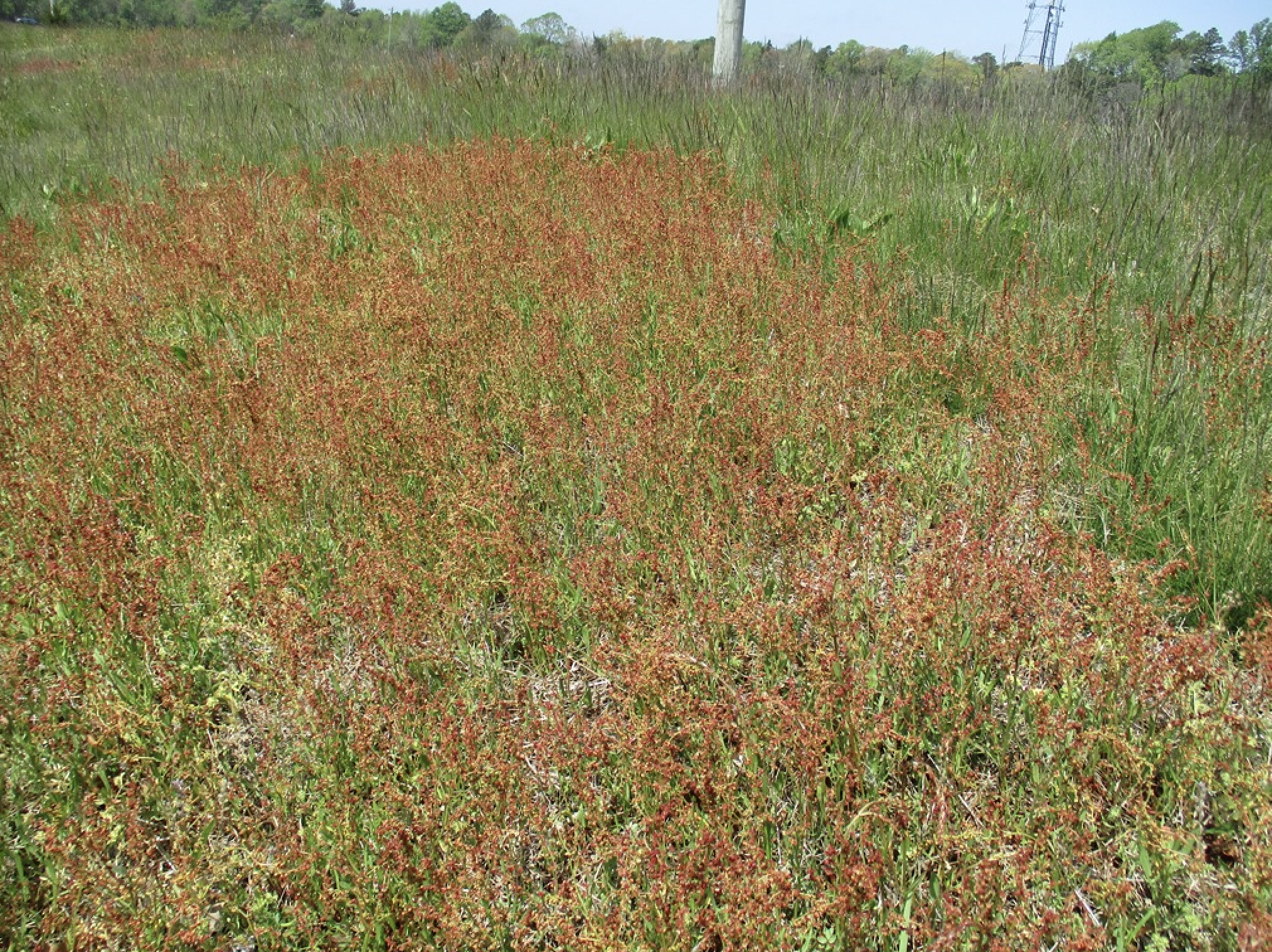
Red sorrel is commonly found on roadsides; distinctive reddish-brown seedheads appear in May.
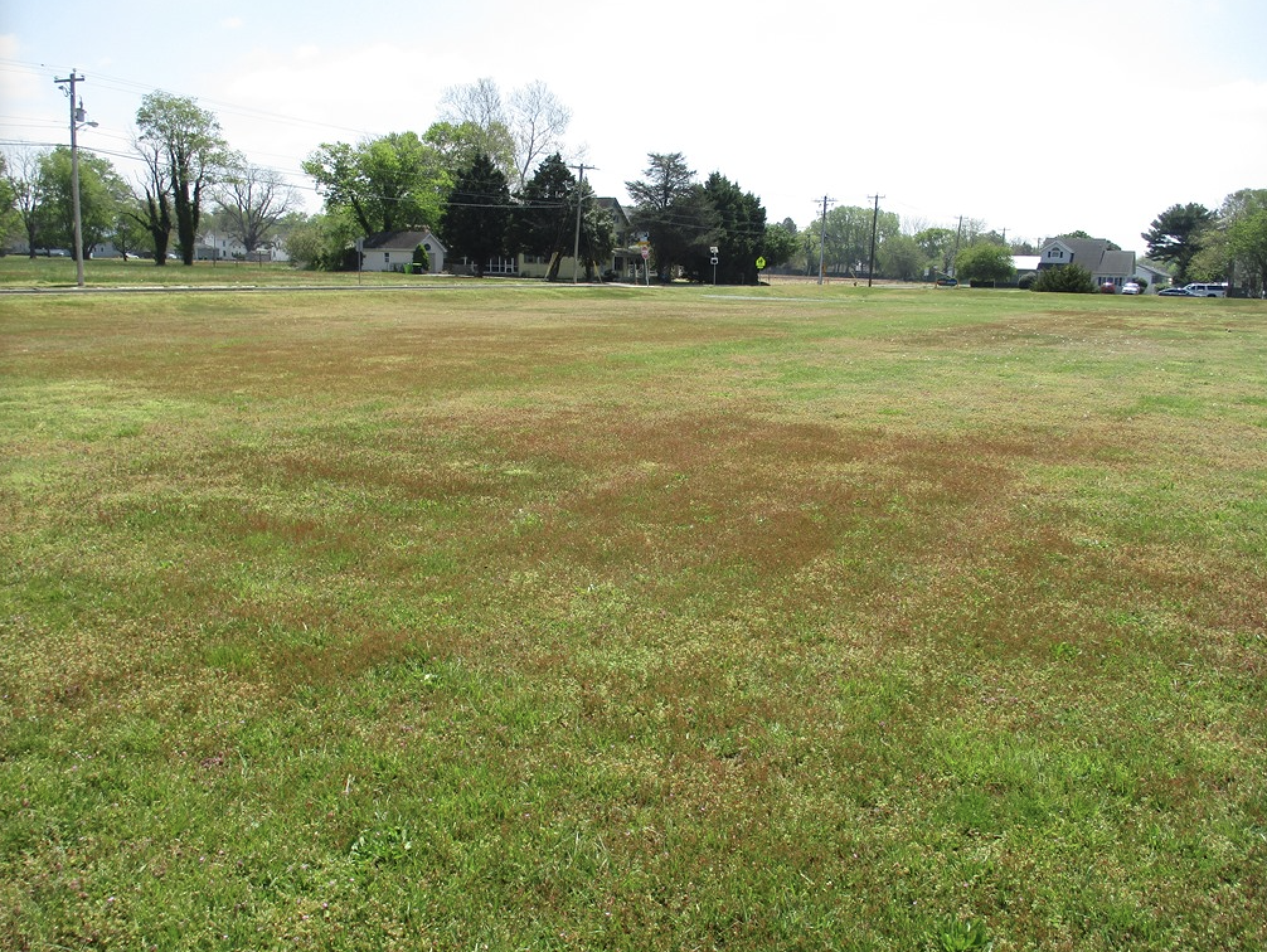
Red sorrel is very invasive in common areas and low maintenace lawns. Seedheads can be produced under high and infreqent mowing.
Seedling red sorrel plants initially form in rosettes of egg-shaped leaves. As plants mature, leaves change shape, forming distinctive arrowhead- shaped leaves with two basal lobes that alternate on stems. Mature plants produce yellow taproots and spread by rhizomes. Shoots from rhizomes are robust and enable plants to form in dense mats that can crowd-out turf. Leaves senesce and die following frosts, but plants survive from buds on stem bases, rhizomes and seed. Red sorrel is most invasive in low maintenance, poorly nourish, and open turfs. This weed favors, but is not limited to, acid soils, poorly drained sites on slopes and in surface water drainage patterns. Red sorrel is among the most invasive and difficult to control weeds in lawns and roughs.
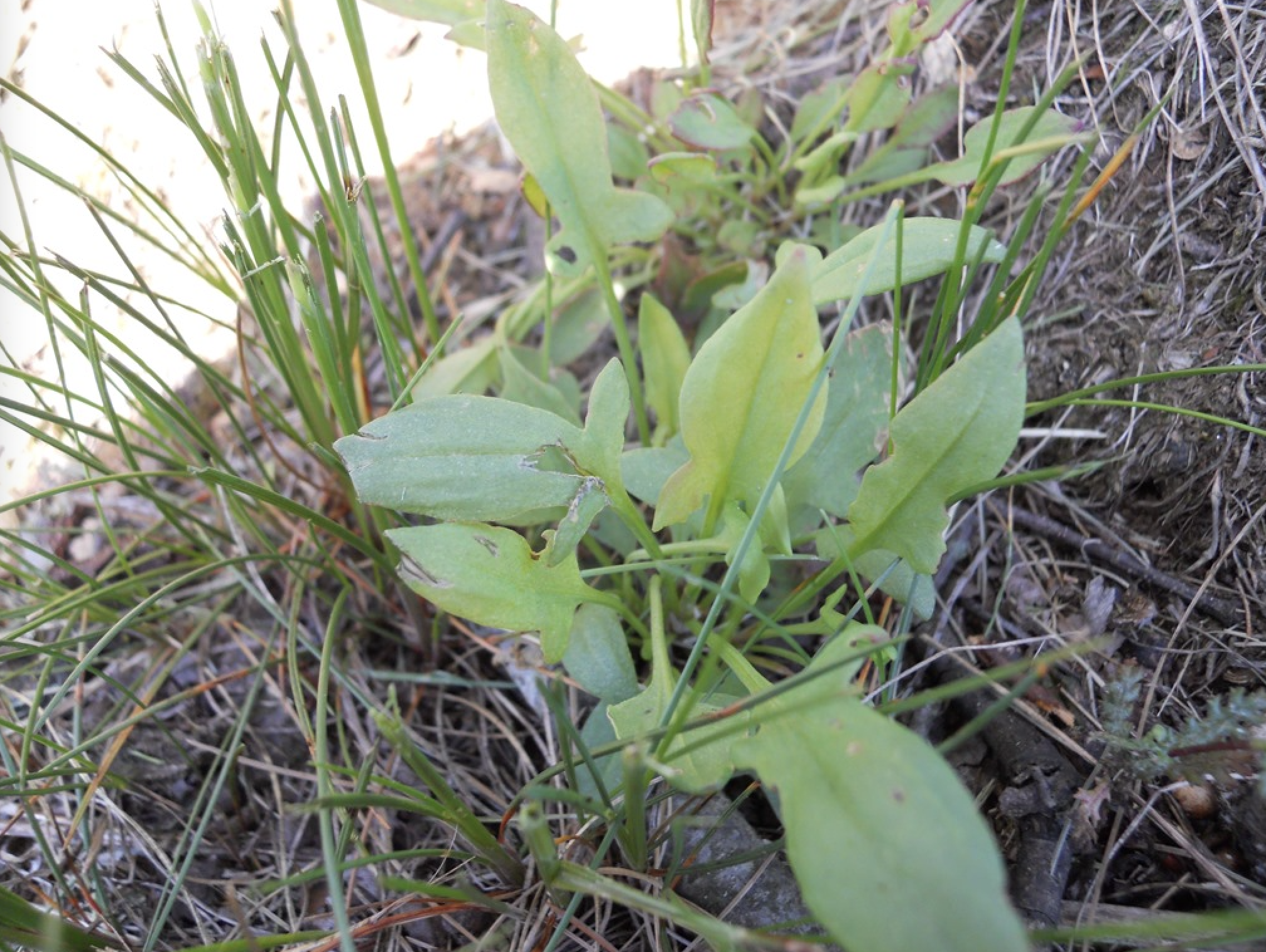
Red sorrel produces distince arrow-shaped leaves.
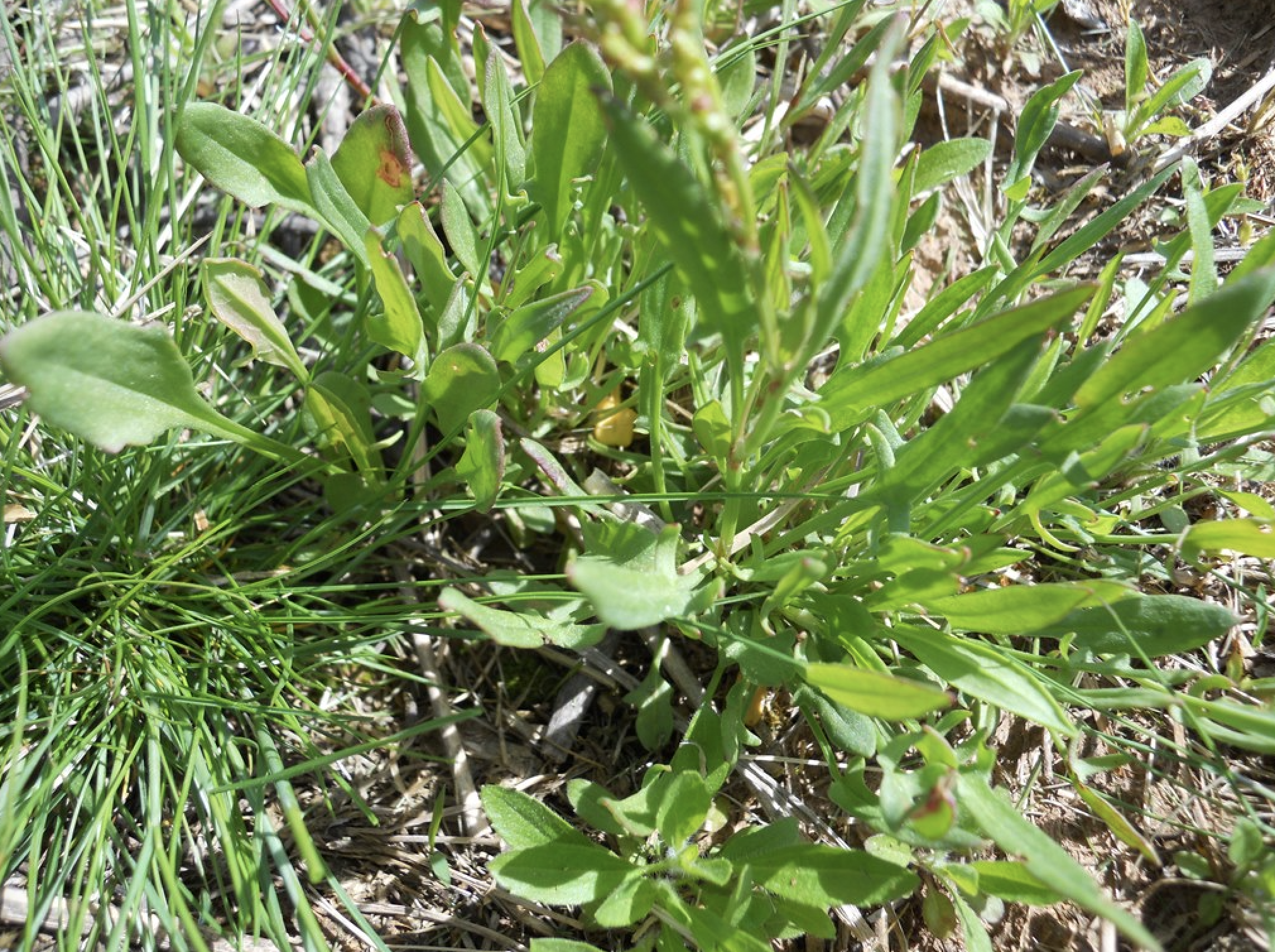
Red sorrel leaves develop in dense clusters.
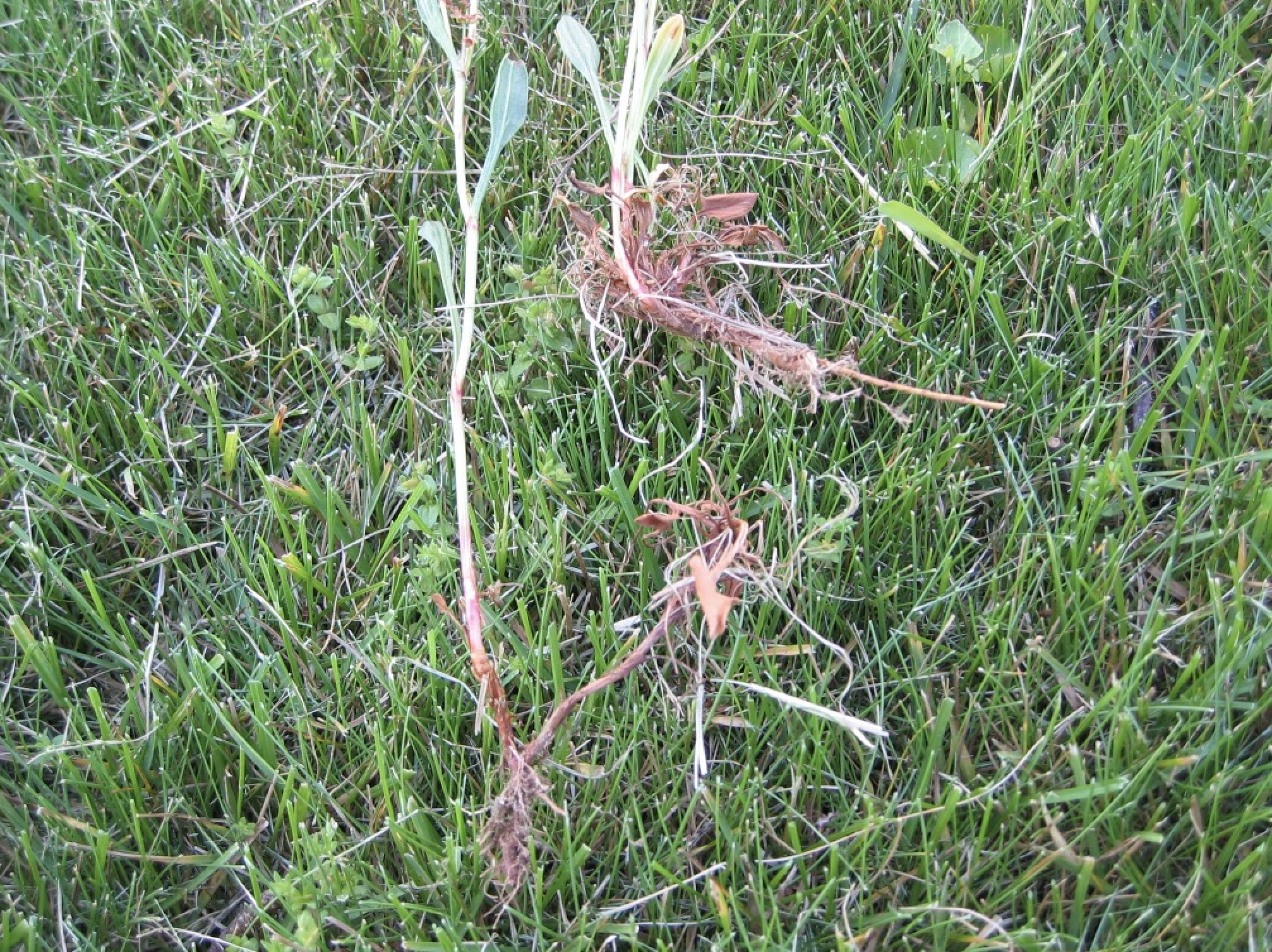
Red sorrel rapidly crowds-out turf via their aggressive underground stem – called rhizomes.
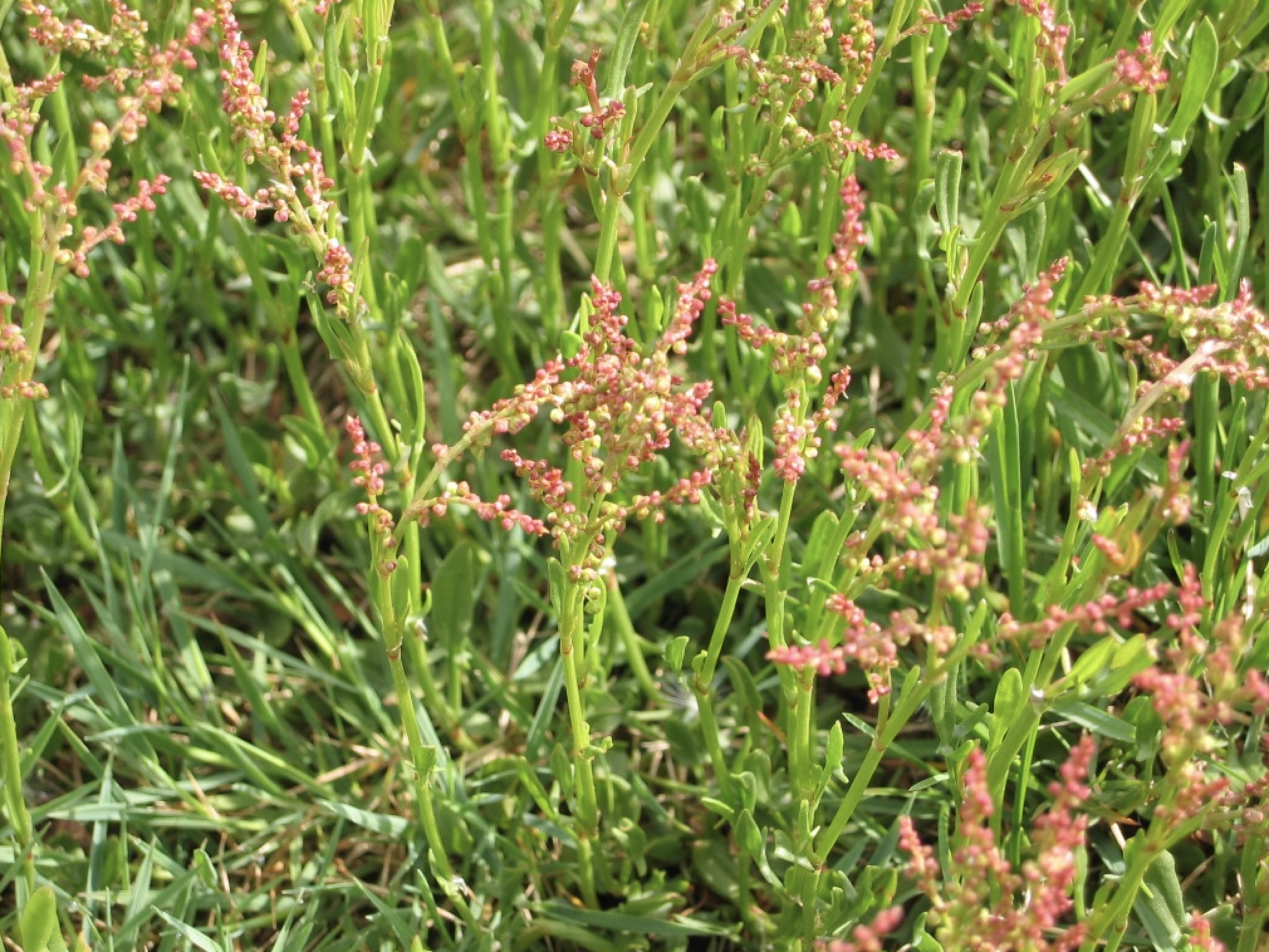
Red sorrel flowers initially are red or purple and turn reddish-brown when mature. A seed will be borne in each of the tiny ball-like flowers.
Control: Most of the aforementioned weeds prosper in mostly low maintained turfs, such as poorly nourished lawns, common areas and roughs as well as in open fields (where seed is produced in abundance for widespread dispersal in wind and water and on equipment).
Improving nitrogen fertility and amending acid soils with limestone reduce their invasiveness, but in reality, they all find their way into professionally/LCO managed lawns, roughs, sports fields and even fairways.. Frequent mowing reduces the potential for seedheads to form. All of these weeds are difficult to control with herbicides. Part of the problem is that they prosper in spring when soils are moist and night temperatures dip into the 40’s and 50Fs, which tend to slow or lessen the ability of most herbicides to provide complete control. Indeed, in many situations, following a blanket application of an effective herbicide, there will be breakthrough. Another problem is emergence from seed or from buds is staggered over many weeks. Hence, new plants often become evident after each successive rain event. The bottom line is that effective control is seldom possible with a single application. Thus, follow-up spot treatments often are needed. Many spring applied pre-emergence herbicides that target crabgrass may help to reduce new seedling emergence of some of the aforementioned broadleaf weeds.
Two or three-way mixes of 2,4-D, MCPP, dicamba ,clopyralid, fluroxypyr and triclopyr are effective. In colder weather, which has mostly passed, products like Speedzone (i.e., 2,4-D + MCPP + dicamba + carfentrazone) and Defendor (i.e., florasulam) are often used for their ability to work well in colder weather. Confront (clopyralid + triclopyr) was widely adopted years ago, because of its broad-spectrum effectiveness and low odor, but it later was learned that clopyralid lasted too long in the environment. Indeed, aged and well-rotted grass clippings from clopyralid- treated lawns were found to damage vegetable and flowers when clippings were used as an mulch. The bottom-line, is all combination broadleaf herbicides are broad-spectrum, but some are just more effective on some species. This is where your experience comes into play. Experimenting with different products, helps to identify those pre-pack mixes that work best on your most persistent and troublesome weeds. There are no cook-books on what product works best on many of the most difficult to control weeds.