
It has been a tumultuous year with COVID-19, civil unrest and anarchy. The heat, Bay Bridge renovation and COVID strangulation of our economy has caused unprecedented problems. Intense heat, drought, and thunderstorms have greatly added to the misery of our turf industry.
The Mid-Atlantic, and in particular the Philadelphia to DC I-95 Corridor, is known as one of the toughest regions in which to grow quality turfgrasses. In recent years, we have had generally mild winters and summers. During the 2019-2020 winter and spring, we experienced incessant overcast, dismal, chilly and wet weather until about the third week of June. Like a flip of a switch, intense hot and humid air masses with eye-squinting sun (aka Bermuda High) gripped the region. The heat wave was responsible for turf yellowing (aka chlorosis), Pythium blight and many other lawn and sod farm troubles.
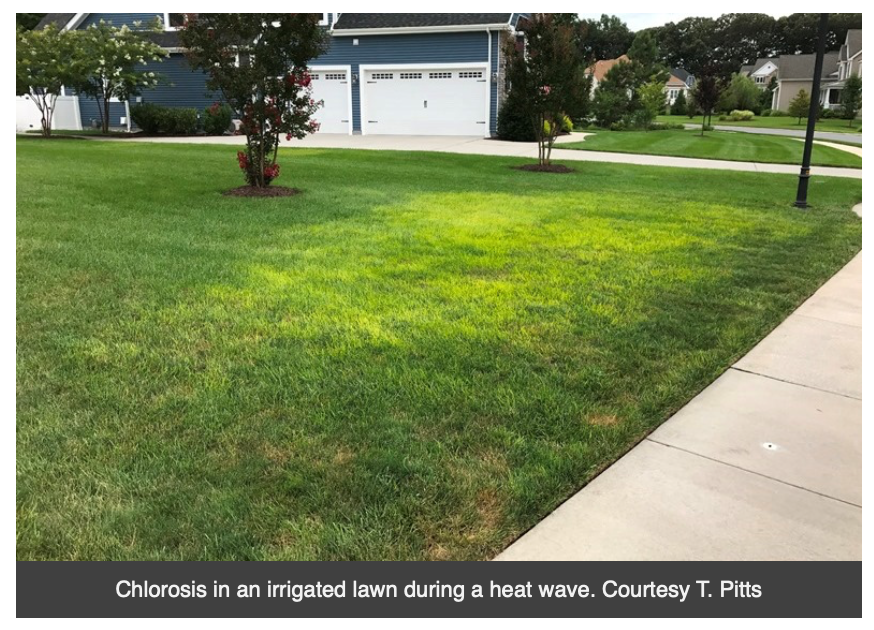
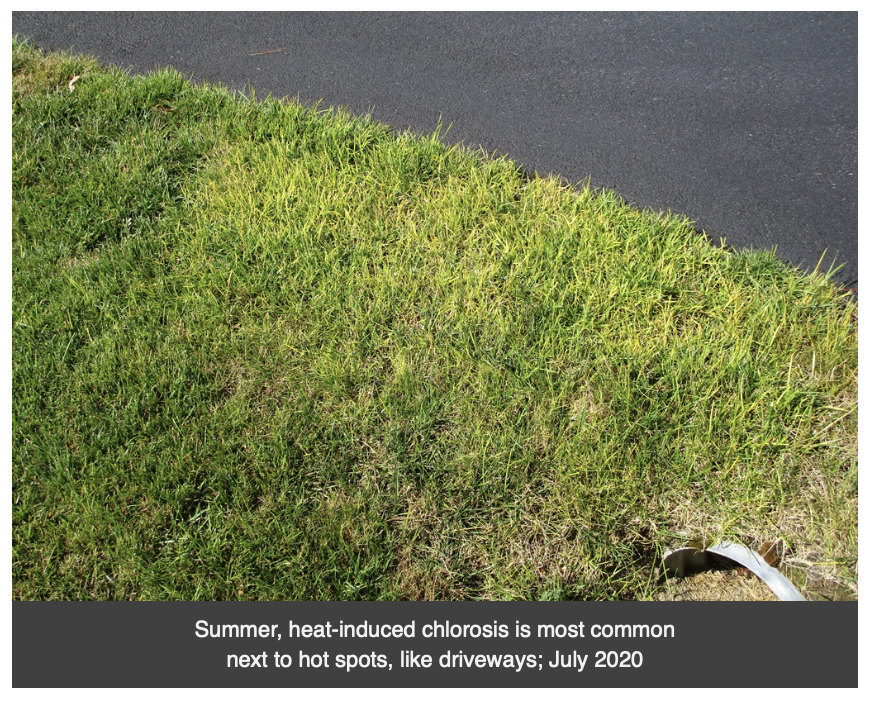
Chlorosis=The Yellows: Chlorotic conditions are very common in the summer. The major cause is intense heat, especially adjacent to driveways. The condition is common in Kentucky bluegrass , especially if irrigated or subjected to dowsing water from thunderstorms. This type of intense yellowing is due to hot and wet soils, which is physiological in nature. Below, I discuss another kind of “nutrient deficiency chlorosis”, which is more common in sandy soils on Delmarva, South Jersey and places like Anne Arundel Co., MD.
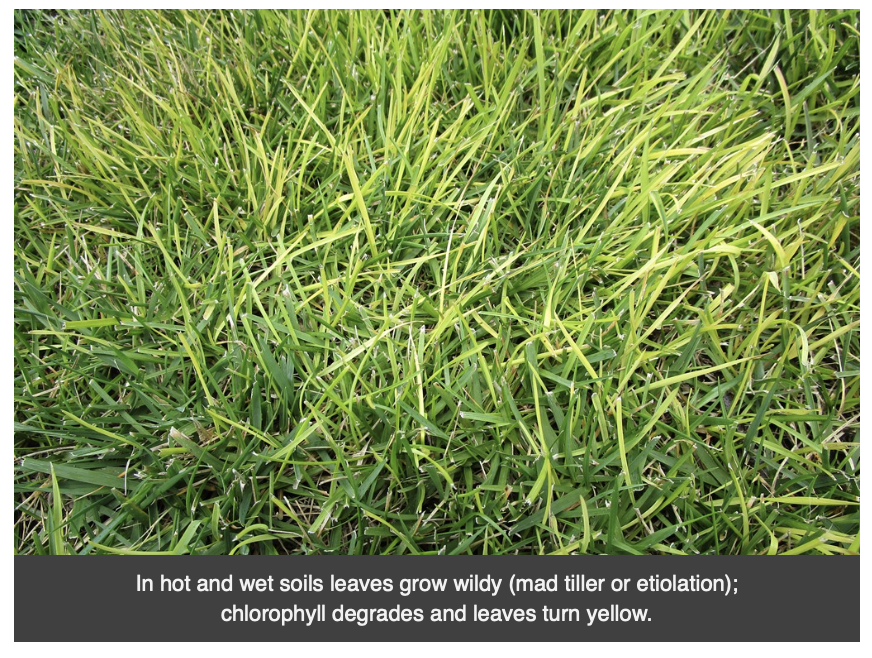
Heat-induced physiological chlorosis in lawns is mostly seen in Kentucky bluegrass, but tall fescue also can be affected. This type of chlorosis is induced by hot and wet soils. Leaves grow rapidly (i.e., etiolated growth or etiolation), and indeed in only 2 or 3 days after mowing, the yellow canopy is high again and in need of mowing. The yellowing is not due to lack of nitrogen (N) of other fertilizer. It simply is due to the inability of grass plants to produce sufficient levels of chlorophyll to keep up with rapidly expanding leaves in response to hot and wet soils. This chlorosis is especially common next to heat sinks like driveways, slopes and in swales where water collects and saturates. The same phenomenon occurs in tall fescue and other turf species, but is less common. The malady sometimes is erroneously referred to as “mad tiller disease”. Since the problem is physiological, and not pathogen-based, there is little that can be done to improve the lanky growth and yellowing. Application of a chelated iron product would enhance green color in the short-term. Nitrogen should be avoided since it would overstimulate growth of stressed plants. Once cooler and less humid conditions return, turf eventually will green-up and resume normal growth.
Nutrient Imbalances and Deficiency Chlorosis. Lawns generally fertilized with mostly water soluble nitrogen (N; like urea), often turn yellow in summer. Simply stated, the N runs-out. The condition is easily corrected by applying more N, but during the heat of summer it will stimulate growth causing a need for more water and more mowing. In this situation, the use of iron (use chelated liquid sources) provides a good green-up effect without stimulating growth, but the greening is short-lived. Hopefully, chelated iron will provide enough of a boost in green color until weather breaks and plants can resume normal growth.
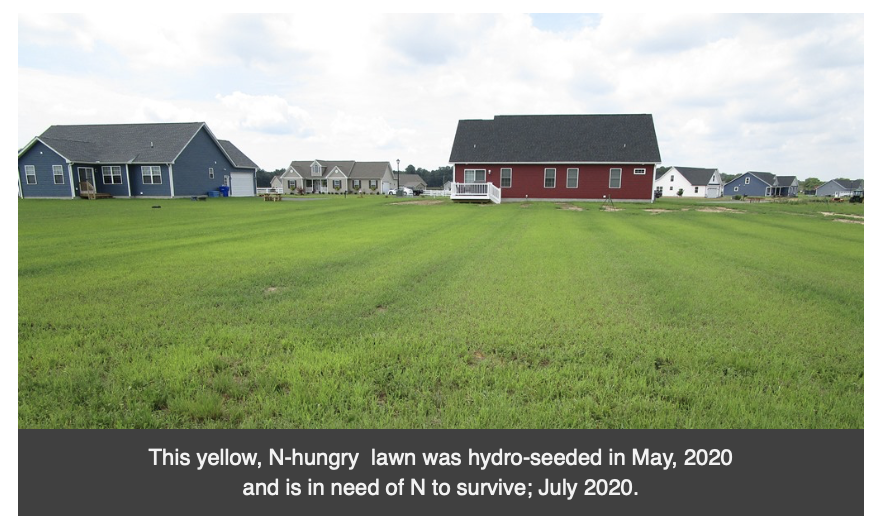
Recent, other poorly understood chlorotic conditions have occurred in tall fescue sod fields as well as in Kentucky bluegrass lawns. Lawns grown on sandy soils (like Delmarva, South Jersey and Anne Arundel Co., MD) have low nutrient holding capacity due to low levels organic matter. With help from Dr. Tom Turner (University of Maryland Soils Specialist), I learned that the problem in these sandy soils is due to sulfur deficiency. Sulfur deficiencies had been non-existent in the east for over 100 years because of “acid rain.” Clean air legislation and scrubbing devices in power plants have eliminated so much sulfur from the atmosphere that sulfur deficiencies can occur.
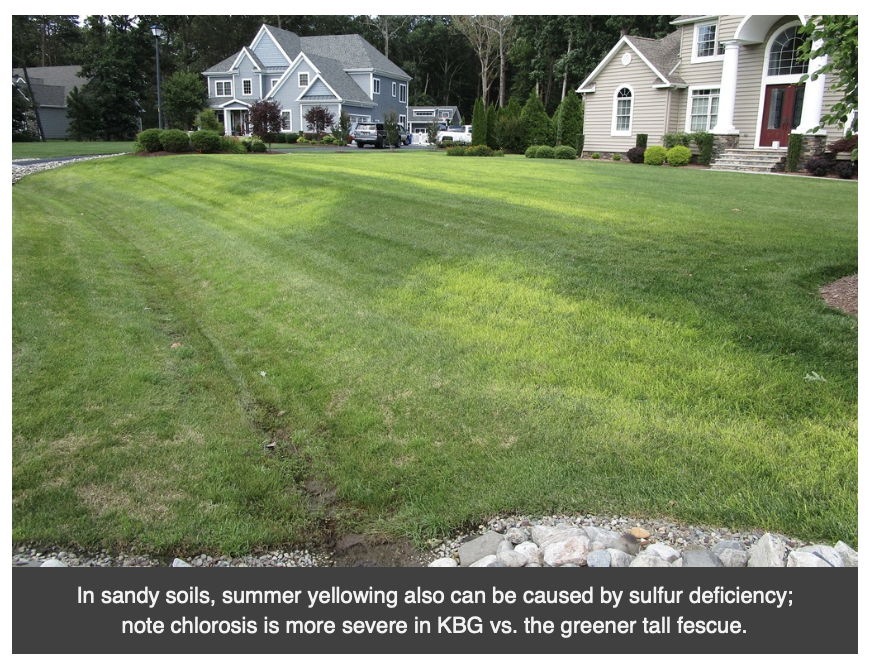
Elements like calcium (Ca), potassium (K) and magnesium (Mg) sometimes become unbalanced in sandy soils (which have low nutrient hold capacity). These imbalances can cause problems with sulfur (S) availability. According to Dr. Turner, yellowing caused by Ca, K, and Mg deficiencies are rare, even in sand-based golf greens. The chlorosis problem appearing in June and July 2020 on sandy soils is most likely caused by sulfur (S) deficiency. Normally, an S-deficiency is easily corrected by an application of either ammonium sulfate (which is too hot to apply to turfs other than bermudagrass in summer); gypsum (calcium sulfate [Ca SO4]; K-Mag [potassium magnesium sulfate, K2SO4.2MgSO4,] or Epsom salts [ magnesium sulfate; MgSO4]. The reason being that SO4 (sulfate) is the main form of S for plant uptake (hence green-up the response from gypsum; K-Mag; Epsom salts, and ammonium sulfate).
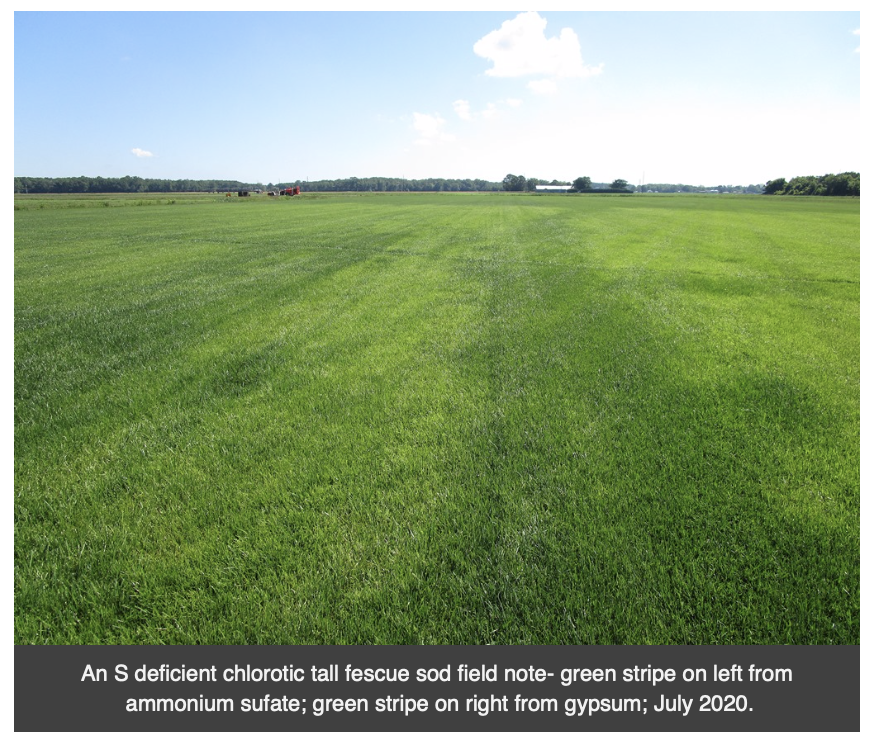
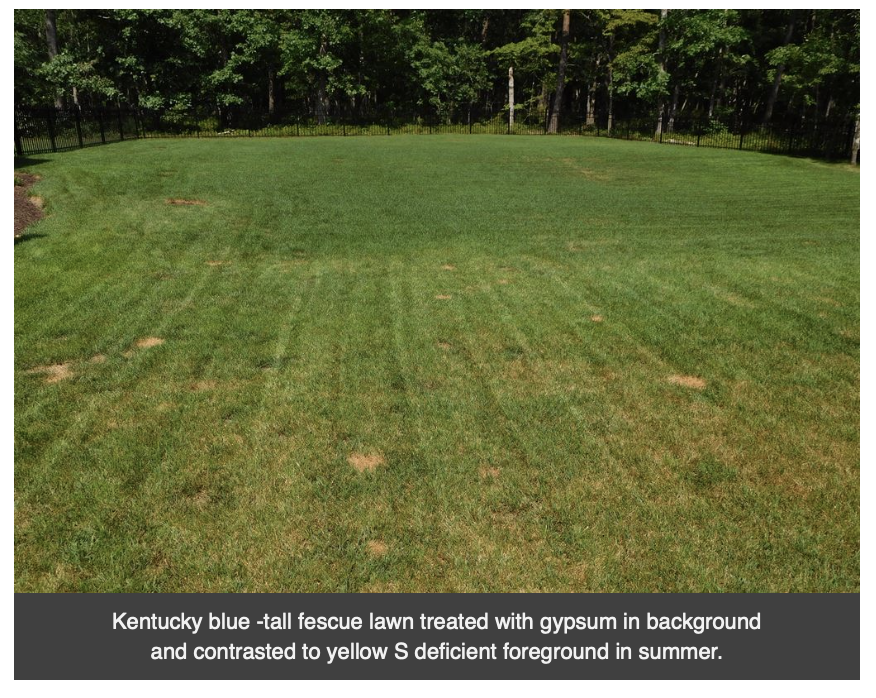
Sulfur is not a component of chlorophyll-the stuff that provides for green color in leaves of all plants. The mechanism for green-up using an SO4-based product is complicated. Basically, there are proteins dependent on S to bind to chlorophyll to stabilize green chlorophyll molecules. When S is deficient, chlorophyll degrades and chlorosis/yellowing is exhibited. Using elemental S (i.e., yellow powders and flowables known as “flowers of sulfur) to correct the problem is a big mistake, since elemental S (not SO4) rapidly acidifies soils and often is phytotoxic. Conversely, SO4 in gypsum, K-Mag and Epsom salts compounds contain oxygen (i.e., oxidized) and have no effect on soil pH. Ammonium sulfate [(NH4)2SO4], an old time nitrogen fertilizer; it is a powerful acidifier that its “salty/hydroscopic” nature often causes severe burning when applied in summer. The acidifying effect is not from the S in SO4, but from the 8 hydrogen ions (4×2)in the ammonium molecule.
Ascochyta Blight In Lawns: Much interest recently has been floated around an Iowa State University Horticultural Publication describing Ascochyta blight. This disease is more common in the mid-west in Kentucky bluegrass lawns, but seldom appears in the mid-Atlantic. Basically, Ascochyta it is what we call a weak pathogen. However, it mostly behaves as a saprophyte, by colonizing senescent or dying tissues . In most cases, the fungus develops in lawns that were mowed when stressed by drought, especially late spring-early summer droughts. Its classic symptom is bleached-white leaf tips, and the classic sign is minute black specks (i.e., fruiting bodies of the fungus) in bleached tips. The fruiting bodies (i.e., pycnidia that contain many tiny spores) can be seen with the naked-eye, but a hand lens is most helpful. Fungicides have no known effect on this disease.


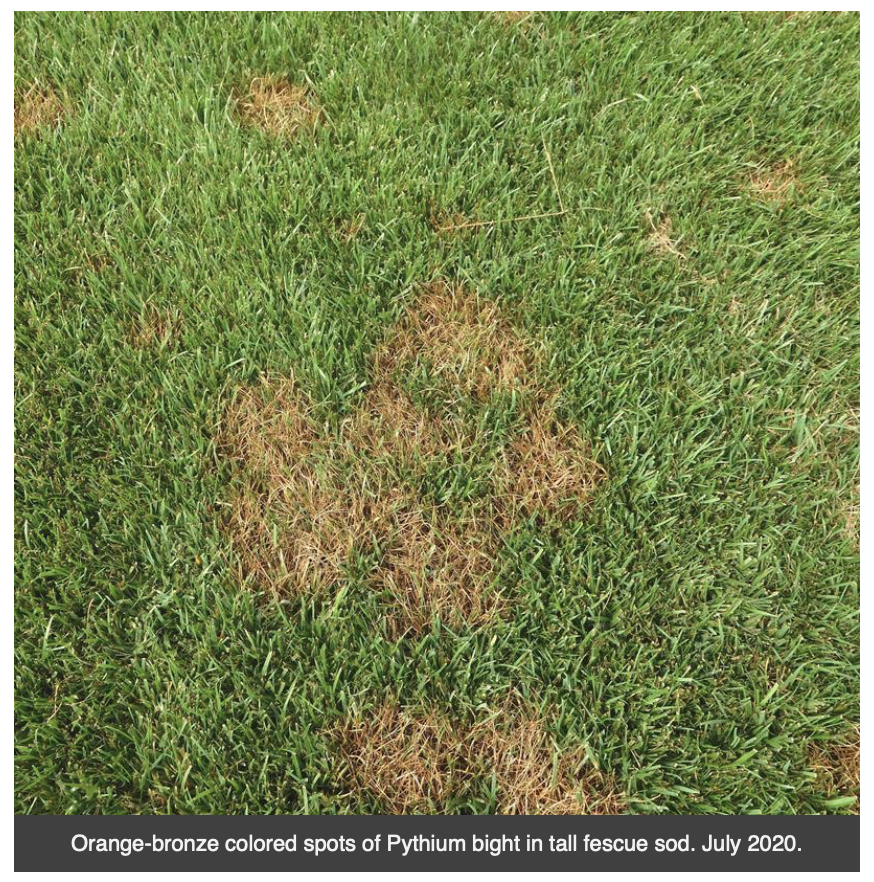
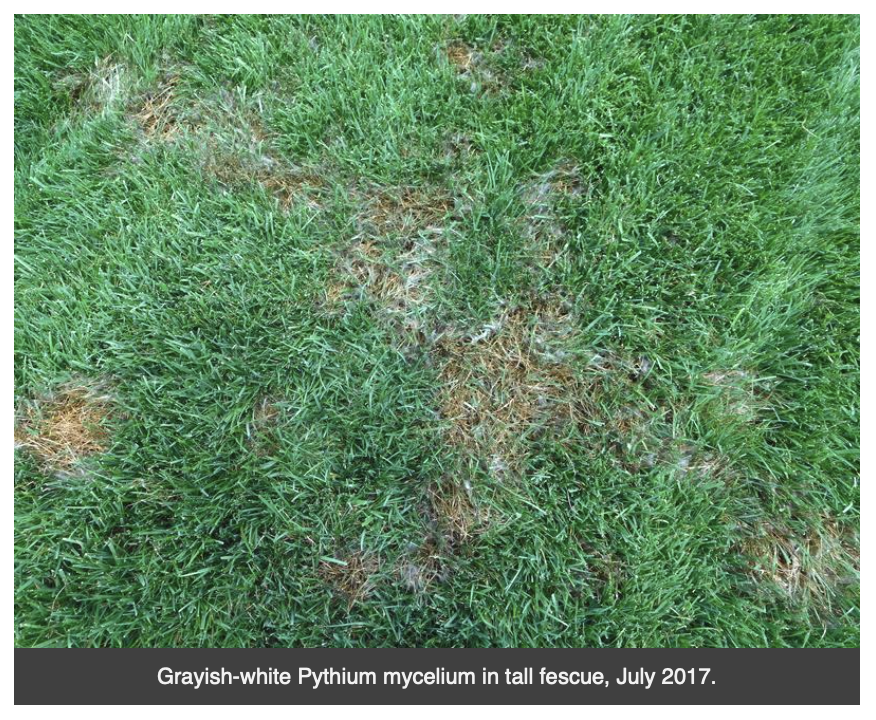
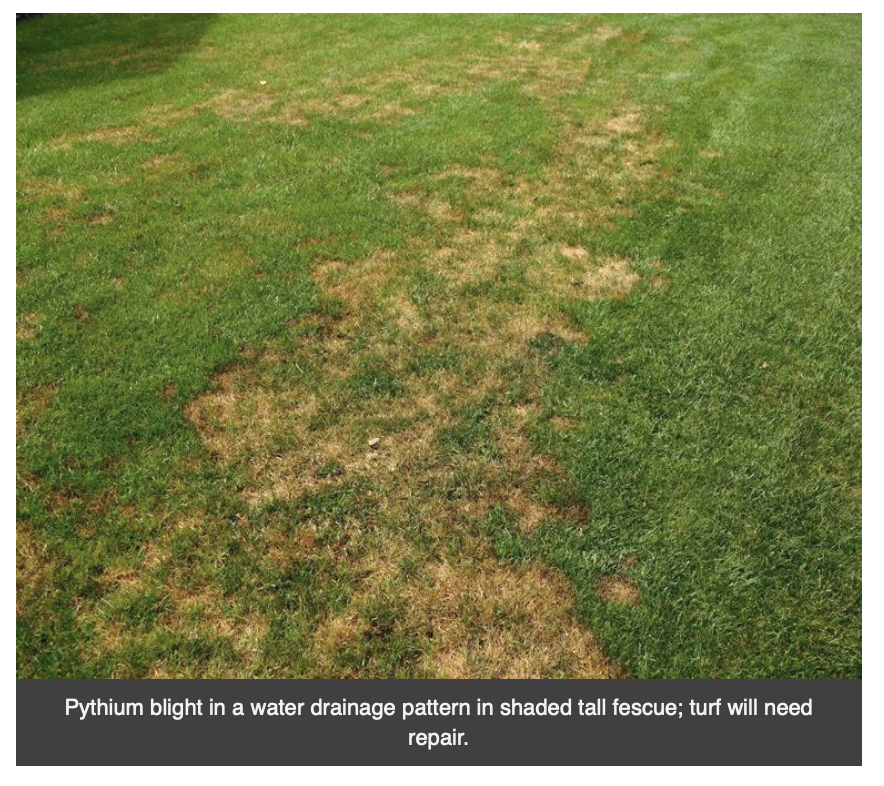
Pythium blight is a growing tall fescue problem in lawns, sod fields and irrigated roughs. It is especially common during dry periods of extreme heat, causing the need for extensive irrigation. The disease literally appears overnight, especially during periods when nighttime humidity levels are super high (>80%) and air temperatures remain in the high 70’s all night long. By far, thunderstorms are the cause of extremely rapid and devastating outbreaks of Pythium. Pythium blight first appears as orange or bronzed-colored spots, which mimic the kind of damage that comes with gasoline spills. Spots increase to about 6” in diam. and coalesce quickly. During morning hours you may see mycelium, which appears grayish-white, and “frothy or cottony” within the canopy. The peripheries of orange-bronze spots may have a grayish-black “smoke ring.” Smoke rings are active areas of fungal infection by newly developing mycelium causing water-soaking (and darkening on spot fringes) as leaves cells are being destroyed. Entire leaves turn brown, shrivel, and die quickly (usually within 24hrs). There are no distinctive leaf lesions, but recently collapsed leaves may have a slight soapy feel. Pythium blight is especially common in low areas like swales and in surface water drainage patterns and where air movement is restricted by shrubs, trees, fences and buildings.
Cultural management practices are of little or no value in preventing severe blighting if weather conditions are optimal for Pythium. Hence, where this disease is common, it is best managed by preventive applications (i.e., fungicide is applied before symptoms appear) of an appropriate fungicide. Fungicides that target Pythium-diseases include: Banol (propamocarb); Segway (cyazofamid); Signature ( fosetyl-Al) and other phosphites; and Subdue MAXX (mefenoxam/metalaxyl). Once the disease has been active for just a few days in tall fescue, most of the affected plants are dying or dead. Hence, a curative application generally will protect only non-infected plants. In tall fescue (but not close cut golf grasses), you have a chance of not losing large areas of turf, by applying a fungicide very early in disease development. Segway is regarded as being perhaps the fastest acting of Pythium-targeted fungicides and has the best chance of helping. It has been my observation; however, that Segway-treated tall fescue can retain its brilliant orange color for 3 to 5 or more days. Even with an early application at disease on-set, recovery of tall fescue is slow. In many cases, severely damaged tall fescue areas usually have to be repaired by seed or sod.
Thanks for reading! For more articles and information, visit the Dr. Pete's Turf Tips Archive.