
If you have had similar problems in the last year or two, they are likely to recur in 2020. Use your winter conference time to ask questions of speakers and/or network in hallways with friends, sales reps, University Extension specialists and others, who probably can offer insights and potential solutions. Weeds, diseases and insects are the most common and predictable major issues, however, there are a multitude of products and it’s tough to know what works best in many situations. Fluctuating weather conditions are the “wild card,” which greatly impact not only pest problems, but physiological disorders (drought, wet wilt, mechanical damage, etc.) as well. Conference time is the best time to sort out what can help you most in 2020. Some of the more common golf turf issues, as well as some surprises in 2019, are discussed below.
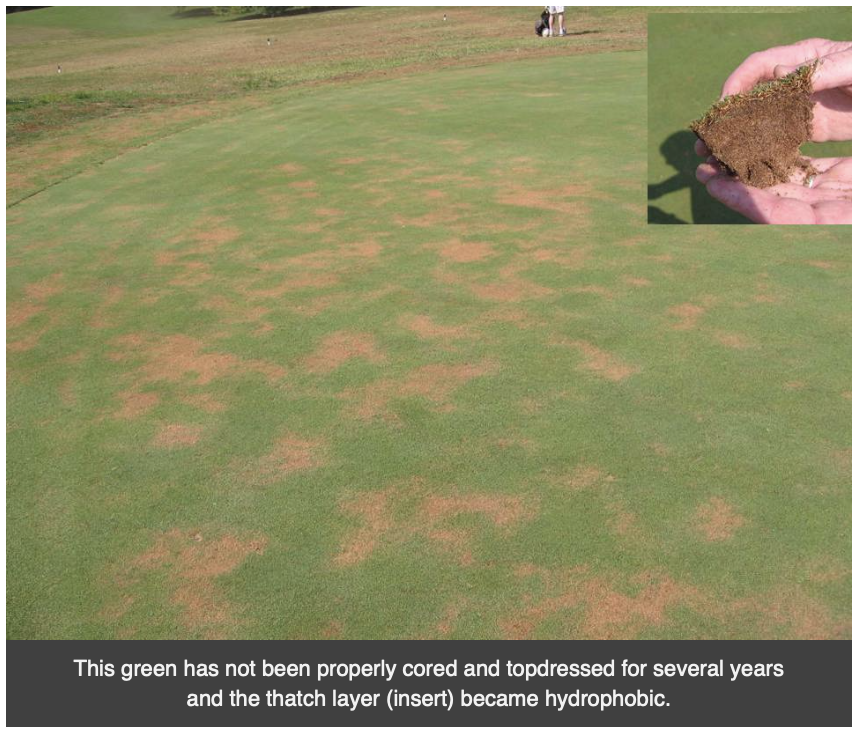
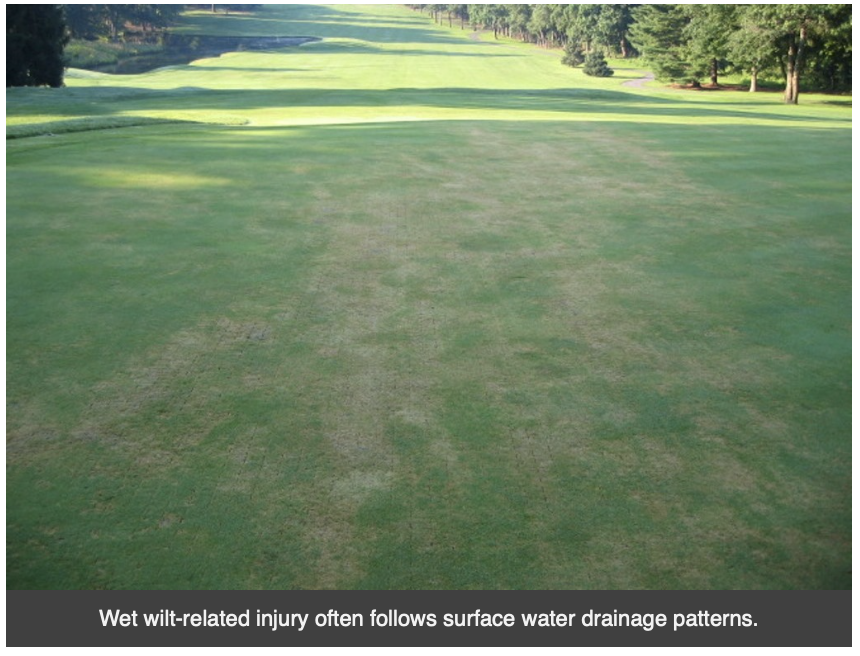
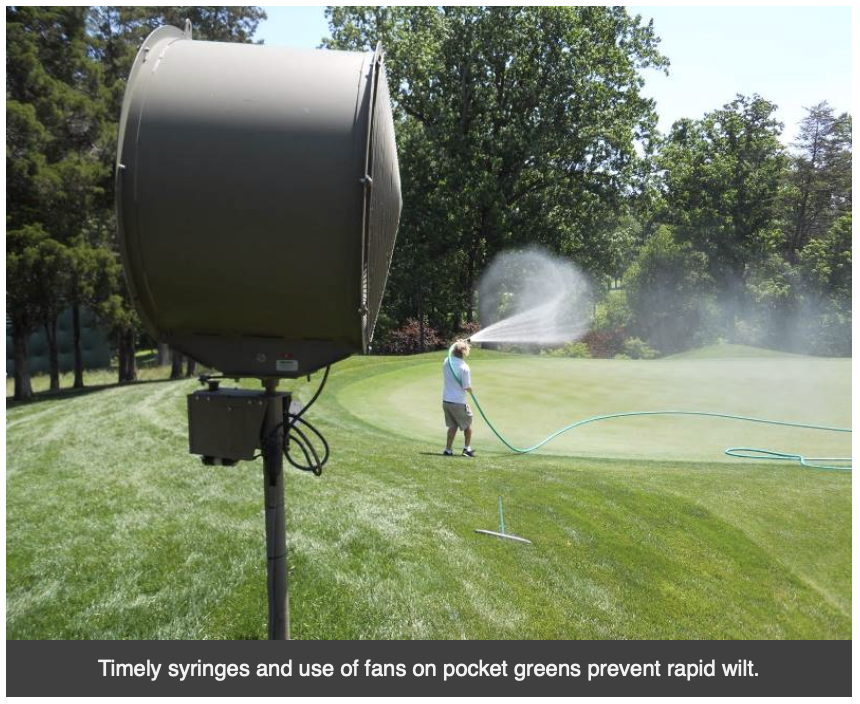
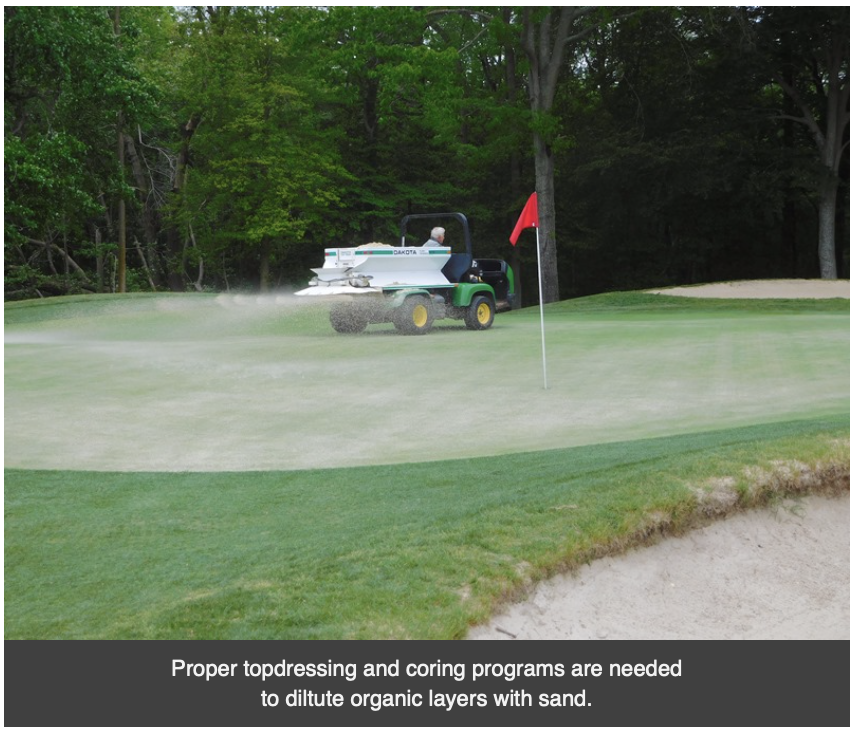
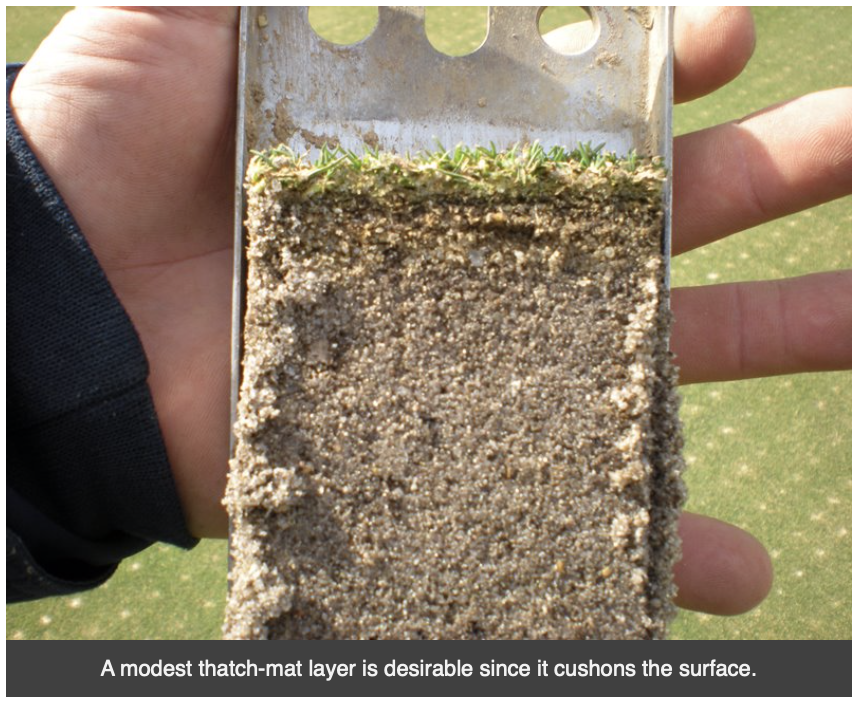
Organic“thatch” layers in bentgrass , especially in sand-based root zones (including sandy fairways on Delmarva), are a major cause of turf death in summer. Sand-based greens and tees often struggle in summer, especially when turf becomes either very dry or very wet. The problem lies in the organic layer that either rapidly dries during hot breezy weather or becomes excessively wet following a rainy day or a thunderstorm. In the case of drought-induced wilt (noted by turf turning a blue-gray color and obvious foot-printing), a timely syringe can alleviate the stress and avoid damage. However, late afternoon thunderstorms that saturate thatch layers in greens, followed by sunny conditions can result in rapid heat build-up and death due to a phenomena called “wet wilt.” Despite adequate soil moisture levels, during a wet wilt event, water in the organic-thatch layer super-heats fast on sunny and hot days, causing rapid break-down in cell integrity (i.e., cooks membranes and tissues to a consistency of sour kraut). Thatchy green can collapse in just a few hoursduring a wet-wilt event. Management-wise, frequent coring (many ways) and topdressing to dilute the organic layer with sand are the best management practices to deal with drought and wet-wilt events in greens in summer. Wet wilt events are particularly common in areas of poor air circulation, usually caused by trees. Shady, pocket greens in particular should be equipped with a fan to promote more rapid drying of the canopy and soil, and opens pores (stomata) on leaf surfaces that promote turf cooling.
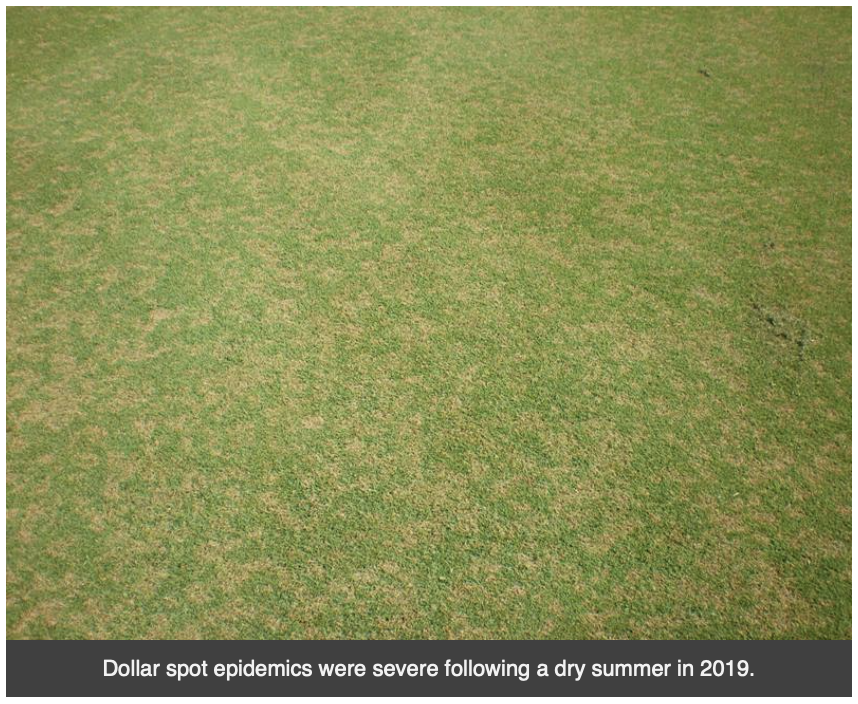
Dollar spot (DS) hit with a vengeance in some areas following the long summer drought in late September and continued into November. In our region, DS can develop as early as April and can be active as late as mid- December. In most years, DS appears around late May and intensifies throughout June. During July, when it gets hot and dry, DS subsides. Dollar spot typically becomes active again in late summer as day lengths become shorter and night temperatures moderate. These conditions promote potentially long-lasting DS epidemics in September and throughout most of October. Indian summer weather following early autumn frosts (which did not occur in 2019) often trigger a third epidemic in November or early December. Late season DS epidemics often come as a surprise, since most superintendents think they are off the hook by Halloween, and suspend fungicide applications to save money.
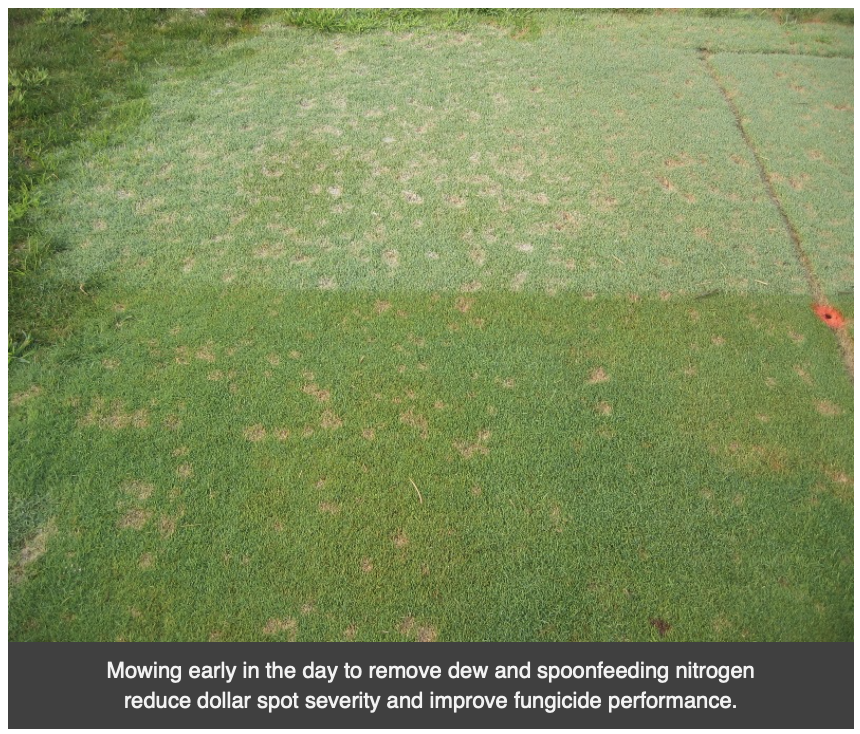
Several management inputs reduce DS severity and thus help to extend their residual effectiveness of fungicides. In particular, rolling greens and mowing early in the day to disperse dew greatly help to reduce dollar spot severity. Spraying low rates of nitrogen (e.g., 0.1 -1.2 lb. N/M) every 7 to 10 days during outbreaks significantlyreduces disease severity in greens, tees and approaches. Maintaining adequate soil moistureduring epidemics has a powerful influence on DS, since the drier soils are maintained (usually for green speed), the more severe the damage. Counter intuitively, timing of irrigation (i.e., AM versus PM) has no impact on dollar spot severity. Most wetting agents also have a suppression effect on DS.
Anthracnose appeared suddenly in annual bluegrass on golf greens in 2019. Anthracnose was among the top 3 diseases of mixed annual bluegrass-creeping bentgrass greens up until about 2000. The pathogen causes a basal rotand is much more common in annual bluegrass than creeping bentgrass. The disease is promoted by mowing extremely low, maintaining low nitrogen fertility, and mechanical damage from mowers. The 2019 outbreak was likely due to an extended wet and overcast spring and early summer. Wet greens are more easily damaged by mowers and frequent rain leaches nitrogen rapidly. As noted below, maintaining a light and frequent nitrogen fertility program is key to suppression of both dollar spot and anthracnose.
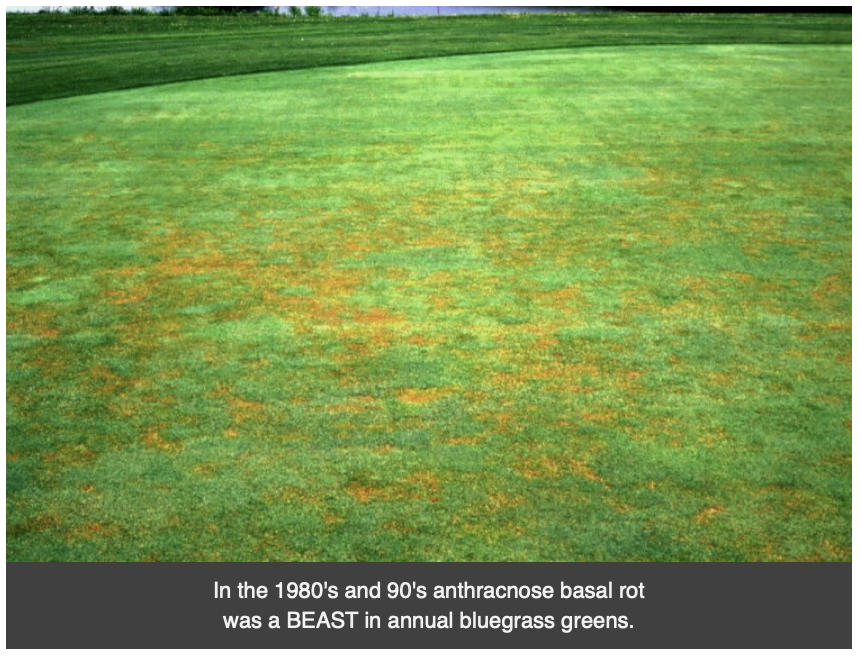
Anthracnose-affected turf on greens initially develops a reddish-brown, orange or yellow color and thins-out in irregularly shaped patterns a few inches to several feet or more in size. Infected annual bluegrass plants often develop a brilliant yellow color before dying. Anthracnose generally cannot be definitively diagnosed from a standing positon, even by the practiced eye. When discoloration or thinning is first observed, managers are advised to carefully look on stem bases for the infection mats, which during the early stages of the disease appear as small (pinhead-sized), black “fly specks.” In advanced stages, black aggregates of fungal mycelium can be found on infected sheaths, stolons or stem bases. The spore bearing acervuli with short, black hairs and the black mycelial aggregates can be seen on infected tissues with a hand lens. Once blackening develop on sheath or leaf tissue, the basal rot phase is advanced and plants die. For mysterious reasons, the disease seldom attacks both annual bluegrass and creeping bentgrass on the same green or even on the same golf course.
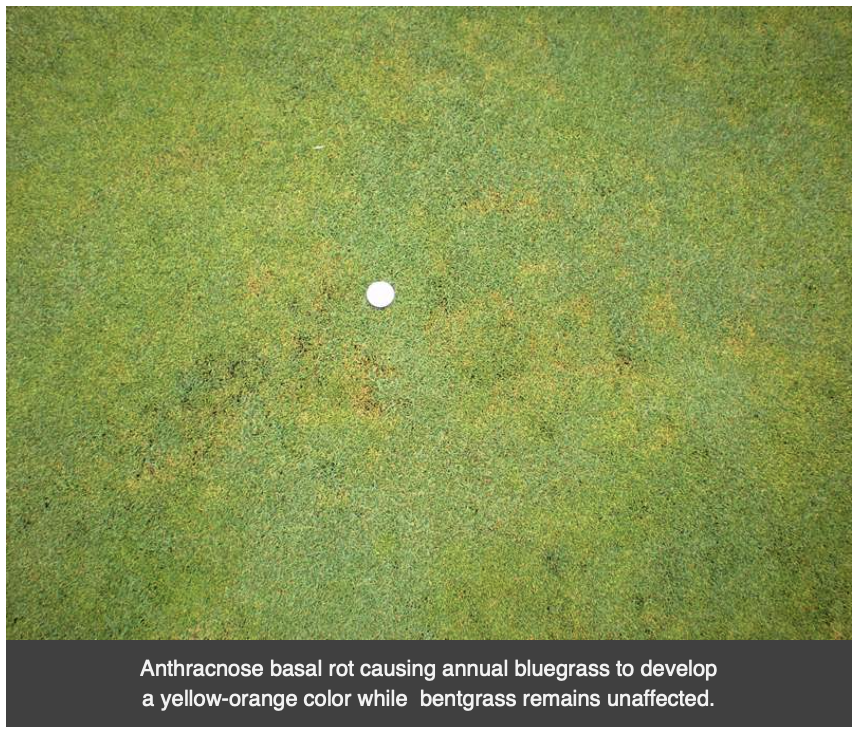
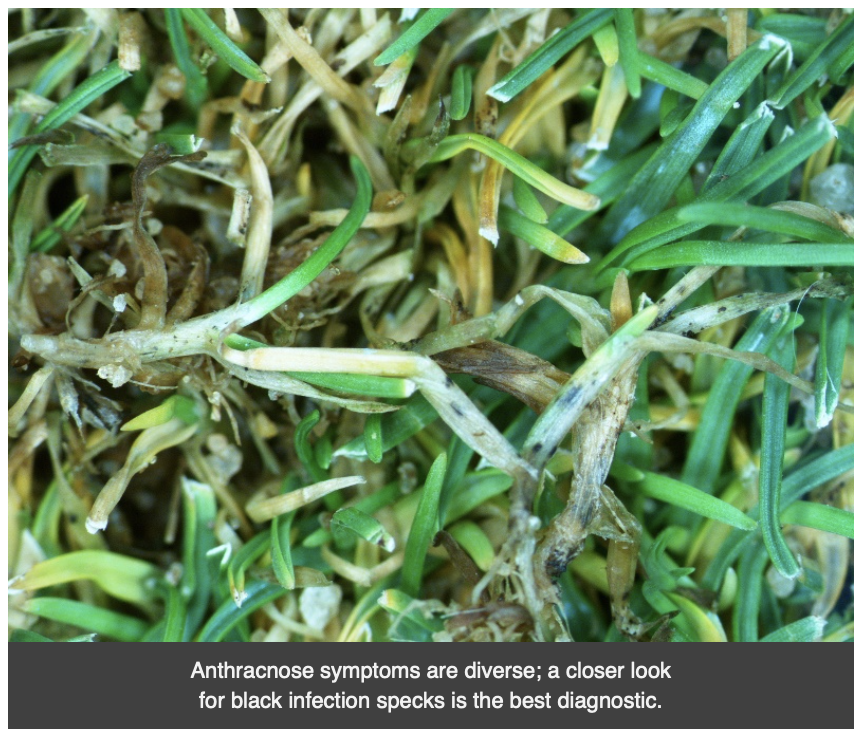
Anthracnose basal rot is very difficult to control once annual bluegrass turf shows signs of thinning. It was research conducted at Rutgers University that changed the trend. Researches demonstrated that sprayingsmall amounts of nitrogen weekly(about 0.125 lb N/M) and increasing mowing height to 0140” improved turf health to the point where fungicides became more highly effective. It was also about this time when we learned that the strobilurin class of fungicides (e.g., Heritage, Insignia, Fame, Disarm, others) were highly effective and superior to many of the older chemistries. When active, fungicide applications may be needed on a 7 to 10 day interval to stop the epidemic. For curative control, a contact(e.g., Daconil, Medallion, Secure, others) should be in the mix. Fungicides should be applied in 75 to 100 gallons water per acre to improve stem base coverage on greens and thus control.
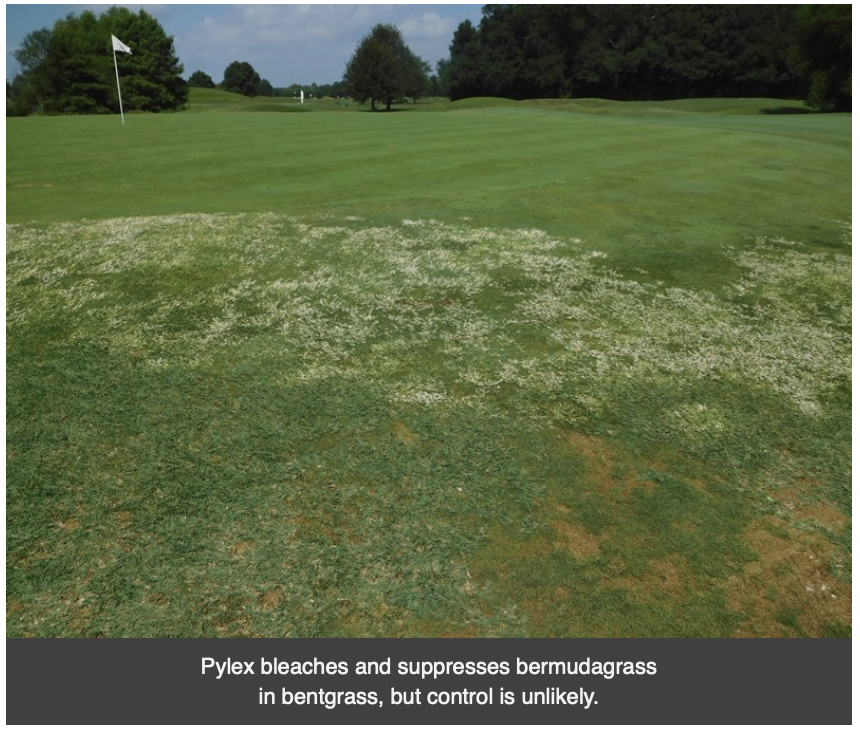
Bermudagrassencroaching into creeping bentgrass is an intractable problem. I have seen attempts to non-selectivity (i.e., Round-up) kill bermudagrass in tees, followed by cutting out the dead sod to a depth of > 2.0.” Miraculously and unbelievably, it almost always recovers (probably from bits and pieces of stolons and rhizomes) and reappears again in 2-3 years. Pylex, if handled carefully and faithfully, can only suppressbermudagrass spread at rates safe to use on bentgrass. Simply stated, we have no effective methods, either physically, non-selectively or selectively, that will totally control common bermudagrass in bentgrass.
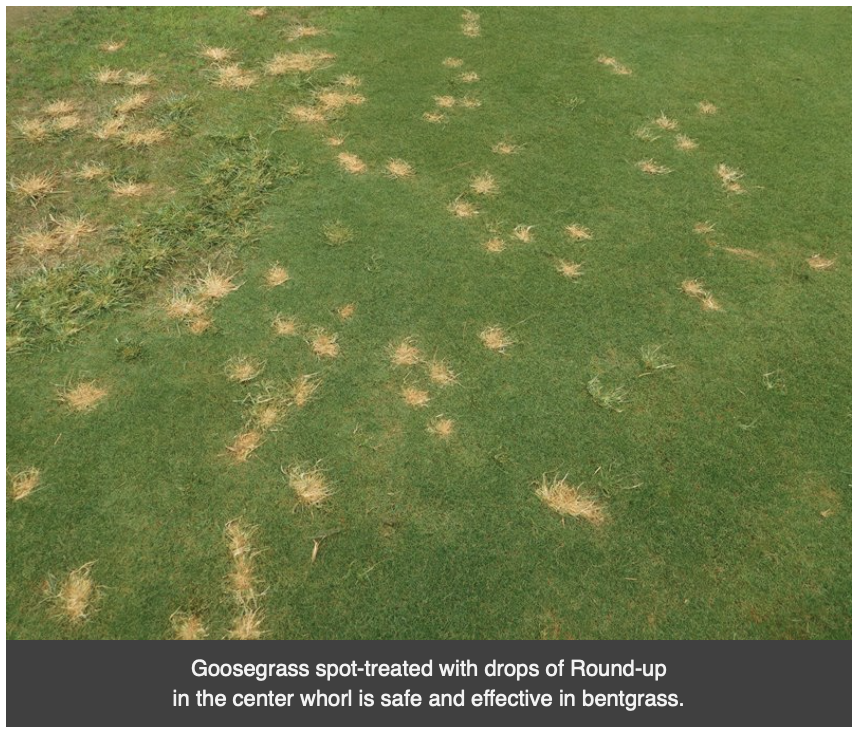
Goosegrass has forever been a scourge in and around greens. Unlike in the case of bermudagrass, Pylex can be used effectively at very low rates to control goosegrass in bentgrass, but it takes careful calibration. Recently, I observed an interesting alterative used at my home course in Delaware. They have found that spot-treating goosegrass with Round-up in bentgrass approaches and collars is highly effective and safe. I would expect Round-up to wick-out to kill adjacent bentgrass. However, a steady hand spritzing a few drops of Roundup into the center whorl of multi-tillered goosegrass works and is safe.
My thanks to Steve McDondald (Turfgrass Disease Solutions) for the heads-up on anthracnose outbreak this year.