

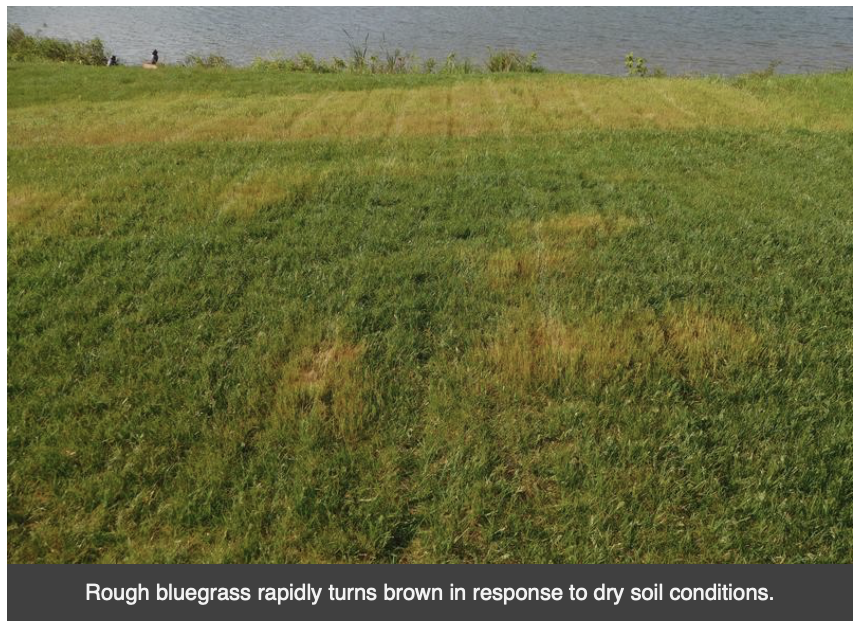
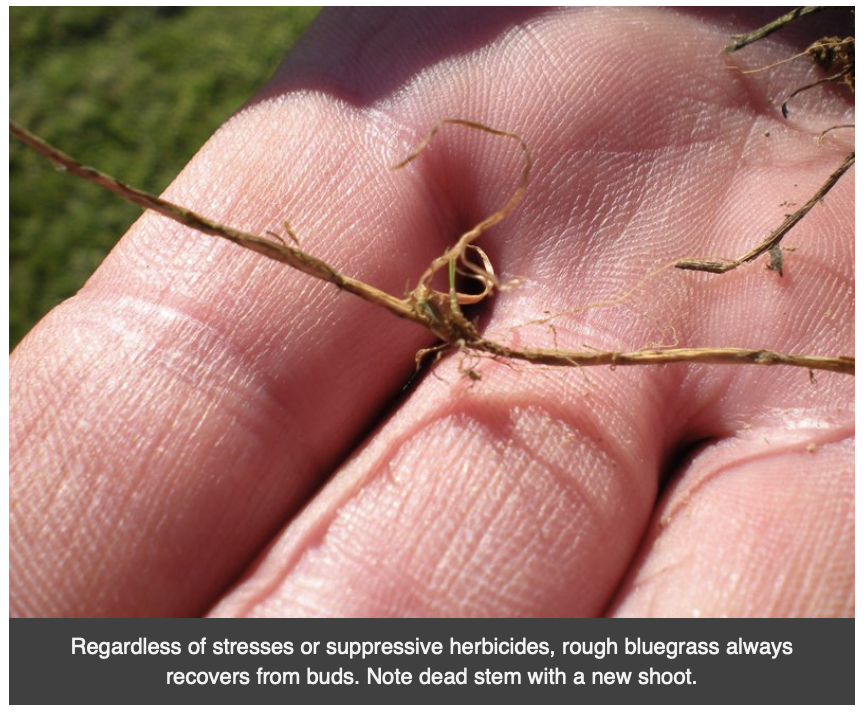
Lawn care operators (LCO’s) encounter similar problems from year to year. In each year, however, weather patterns always are the “wild card.” Weather conditions often explain the nature of pest activity, the erratic behavior of pesticides, and are the basis of all environmental stresses. We began 2019 with a cold, dreary, and very wet winter, spring and early summer. LCO’s experienced lots of red thread blighting in lawns throughout spring, which was due mostly to prolonged periods of overcast and wet weather. Fast forward to a July and early August at which time weather conditions were marked by large numbers of days >90F and nights > 70F. Advent high temperatures in June and July promoted brown patch, which is common in lawns. The big drought of 2019 hit and lasted for most of August and September Lawns contaminated with rough bluegrass (i.e., Poa triv; roughstalk) and annual bluegrass (i.e., Poa, Poa annua) quickly turned brown. Drought dormant rough bluegrass ALWAYS recovers, but annual bluegrass dies-out leaving lots of ugly dead areasin lawns. Among broadleaf weeds, spurges (prostate and spotted) had another banner year.
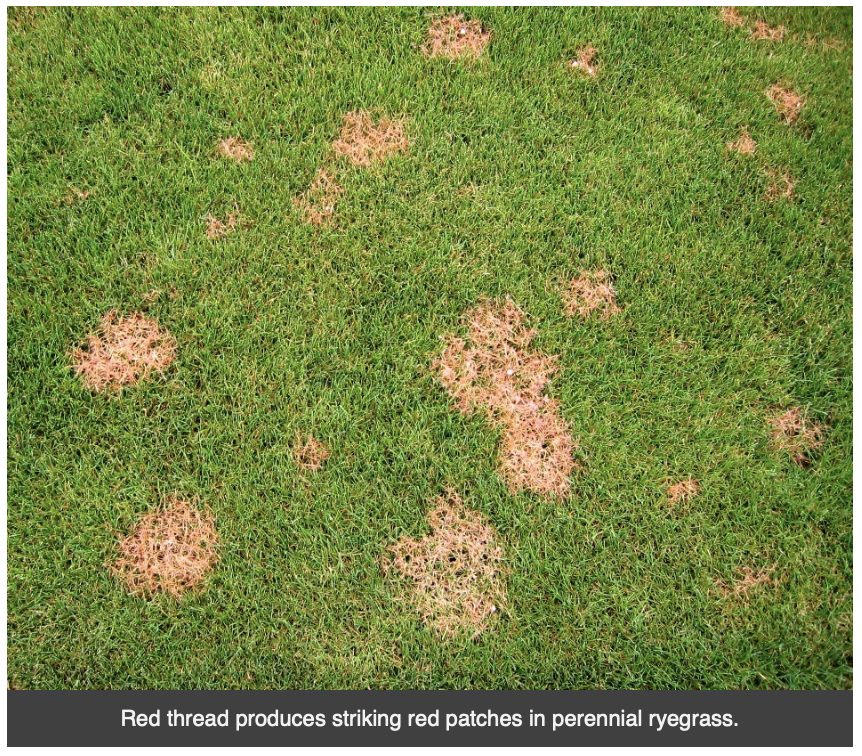
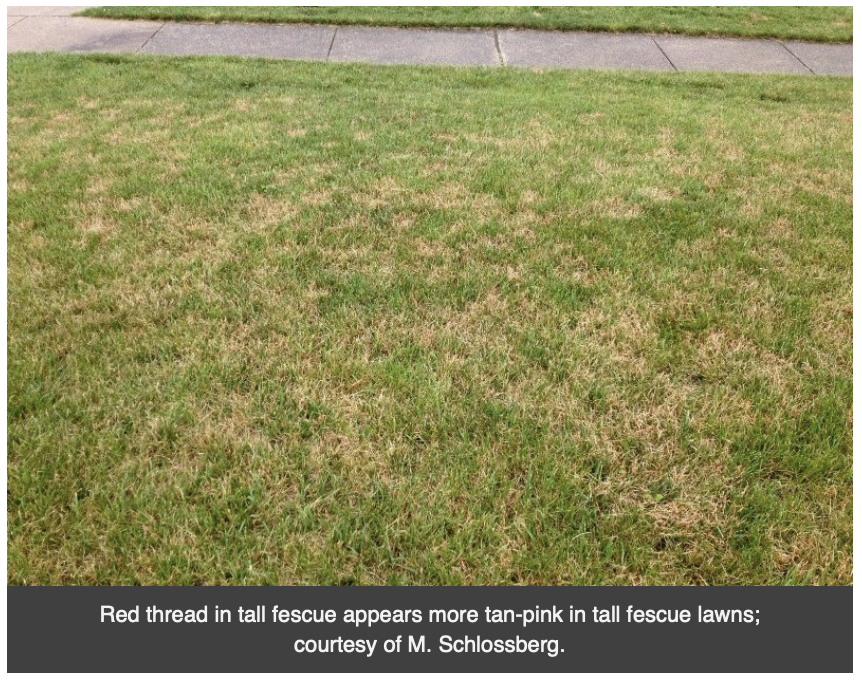
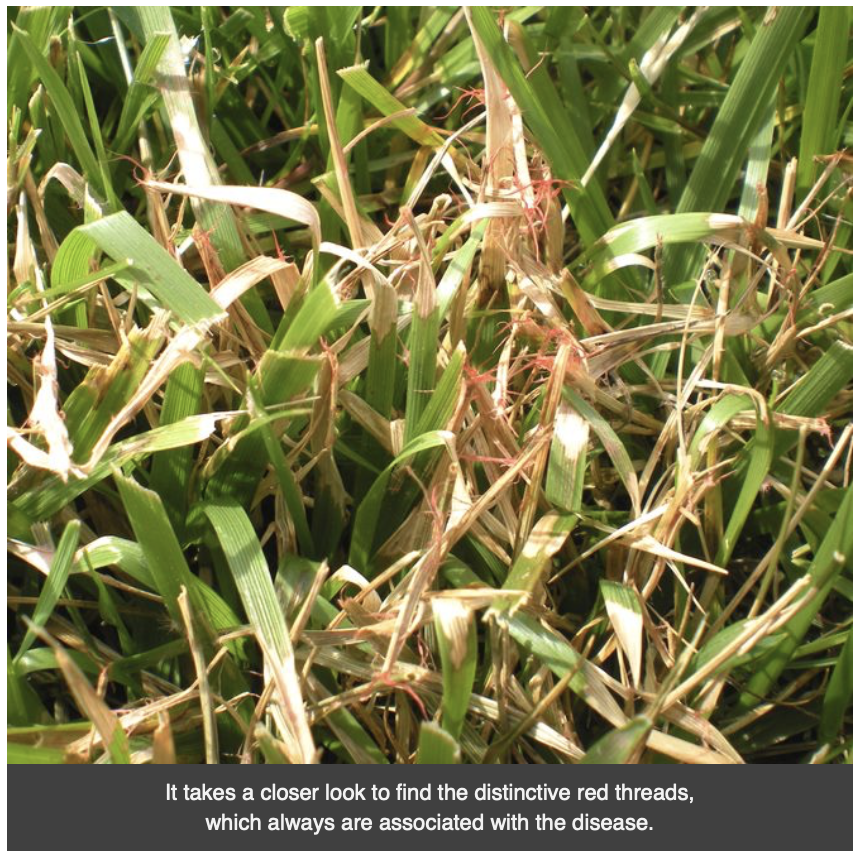
Red thread was the first significant disease problem in appear in lawns in spring 2019. Red thread is most common in perennial ryegrass, but it has established itself as a common and disfiguring disease of tall fescue since the advent of finer-textured and more dense cultivars.The symptoms and signs of red thread are distinctive. In the presence of morning dew or water from rain, a corral pink or reddish layer of gelatinous fungal growth (mycelium) can easily be seen on leaves and sheaths. When leaves dry, the fungal mycelium becomes pale pink in color and can be seen on the straw-brown or tan tissues of dead leaves and sheaths. Pink, cotton candy-like flocks of mycelium may develop on infected leaves. Bright red, hard and brittle strands of fungal mycelium (‘red threads’ or sclerotia) are almost always present. The ‘red threads’ fall into thatch and serve as “long-lived” resting structures for the fungus. Without going into details –it is a myththat red thread is a sign of inadequate nitrogen fertility in professionally managed lawns. In most cases red thread develops during chilly and overcast weather, which slows growth of tall fescue in the spring, giving the pathogen a competitive advantage. Affected tall fescue lawns invariably recover following sunny and dry weather, and an application of nitrogen at that time speeds turf recovery. The most important spin-off problem is that the blighting occurs when lots of weeds are emerging in spring at a time when density is reduced due to foliar blighting. Most fungicides are highly effective on red thread in a single application, and their use is recommended in situations where blighting is so severe that nitrogen will not be fast enough to promote rapid recovery of stand density.
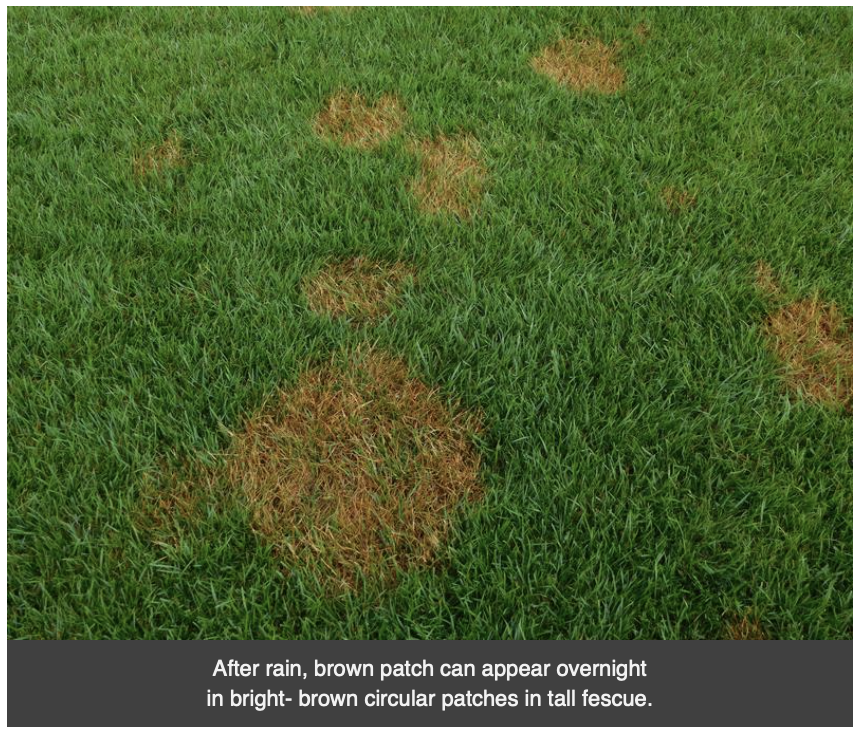
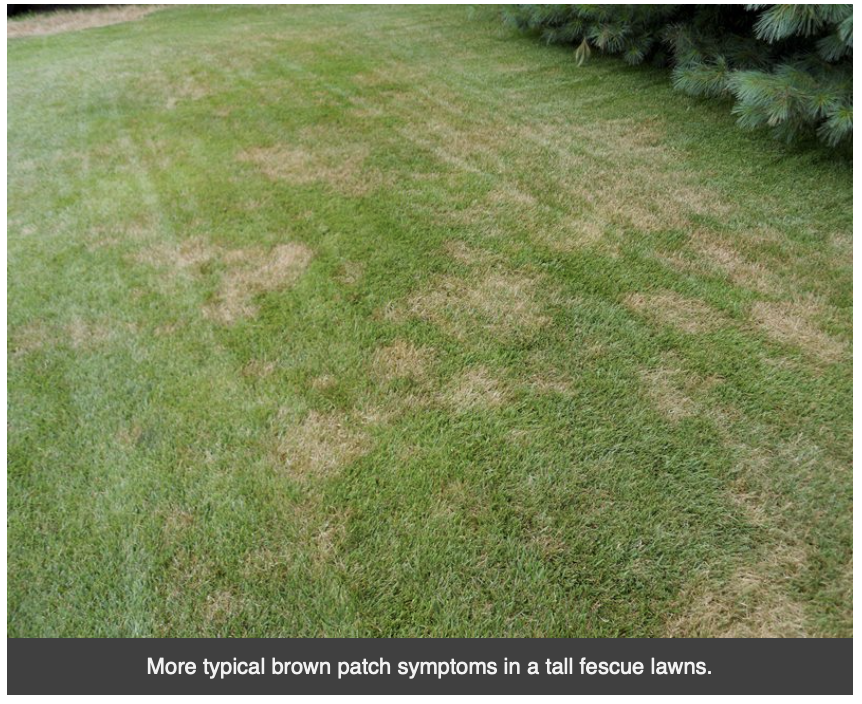
Brown patch is a chronic disease that we would expect to see in annually in tall fescue lawns. As the name implies, brown patch symptoms appear as generally circular areas of brown and blighted turf 6” to over 2’ in diameter. At the edge of patches you may see during early morning hours what appears to be a “smoke ring” or a grayish-black cottony growth called mycelium. Brown patch can develop overnight and cause fairy large circular patches of bright-brown turf. The pathogen is strictly a foliar blighter and turf invariably recovers, but its effects are to give lawns an objectionable appearance for very long periodsof time and it breaks down density inviting weeds. Fungicides (best to use a pre-pack mix of 2 different types) are used in about 25% of irrigated LCO lawns. Fungicides can provide up to 18-21 days control, but will not last that long if there is frequent thunderstorm activity.
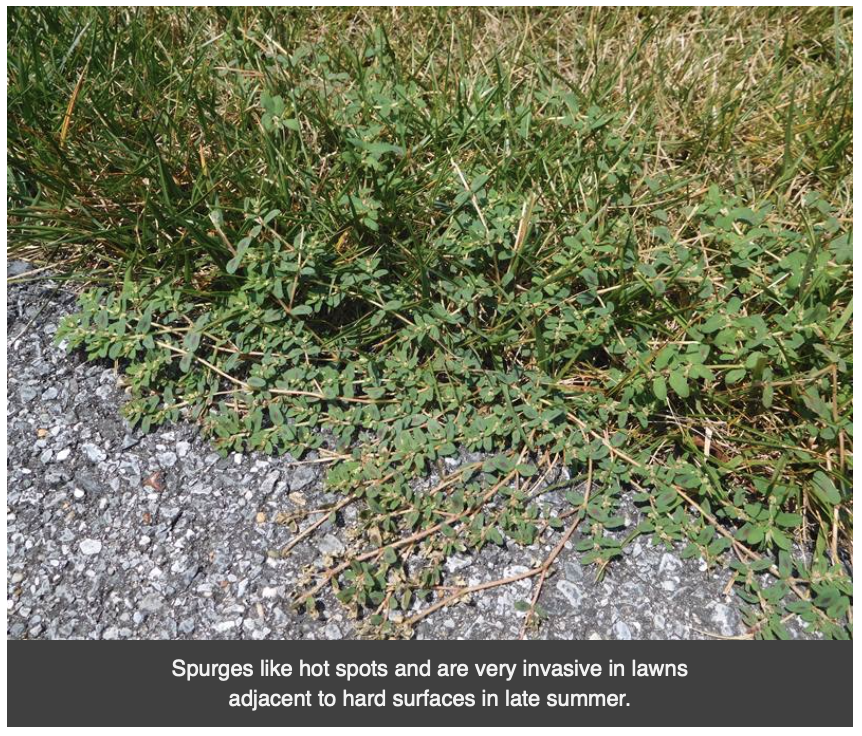
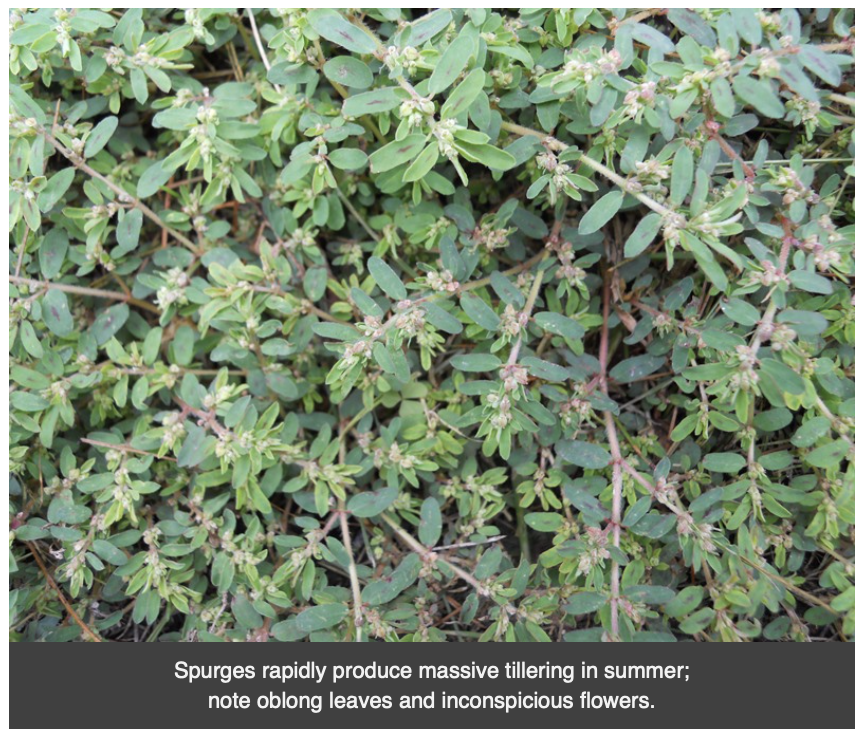
Spurges (prostrate and spotted)are notorious for their capacity to explode out of the ground and rapidly produce massive numbers of ugly tillers in summer. Even in the absence of irrigation, all it takes is a thunderstorm to get spurges emerged. Most weeds germinate during spring because soils are moist and warming. Spurges, however, do not begin to emerge in large numbers until soils accumulate a lot of heat in July, and emergence accelerates throughout August and into September. Spurge invasion of lawn areas adjacent to sidewalks and driveways are especially ugly and present one of the greatest summer challengers to LCO’s. Spurge leaves are produced opposite on stems and initially are egg-shaped, but as they mature leaves become elongated, and oblong to linear in shape. Individual leaves may or may not have a reddish or purple-colored spot near the center of leaves. Numerous stems radiate from the base and grow prostrate throughout turf. Plants produce a shallow taproot and stems ooze a white, milky substance when cut. Inconspicuous flowers aggregate in clusters in the axils of leaves throughout summer, which results in the production of enormous numbers of seed to repeat the problem. Gallery (isoxaben) probably is the best premergence herbicide for targeting broadleaf weeds, but it is expensive to use, especially in combination with pre’s that target crabgrass (e.g., Barricade, Dimension, Pendulum, others). Spring-applied premergence herbicides usually breakdown in late summer, coinciding with the major emergence patterns of spurges. Even those LCO’s who double band Gallery plus another pre along lawn-hardtop edges in spring, will have degraded by August. LCO’s usually offer spot treatment of spurges and other weeds in the summer. Broadleaf herbicides (usually in pre-pack combo’s of 2-3 different herbicides) can be highly effective in a single application, but only if soils are moist. These same herbicides, however, will not control spurges grown in non-irrigated drought-stressed lawns. The dreaded call backoften occurs, because although the spot-application may have been highly effective, new spurge seed invariably germinate among dead plants and can rapidly produce huge numbers of ugly tillers in as little as 2 or 3 weeks.
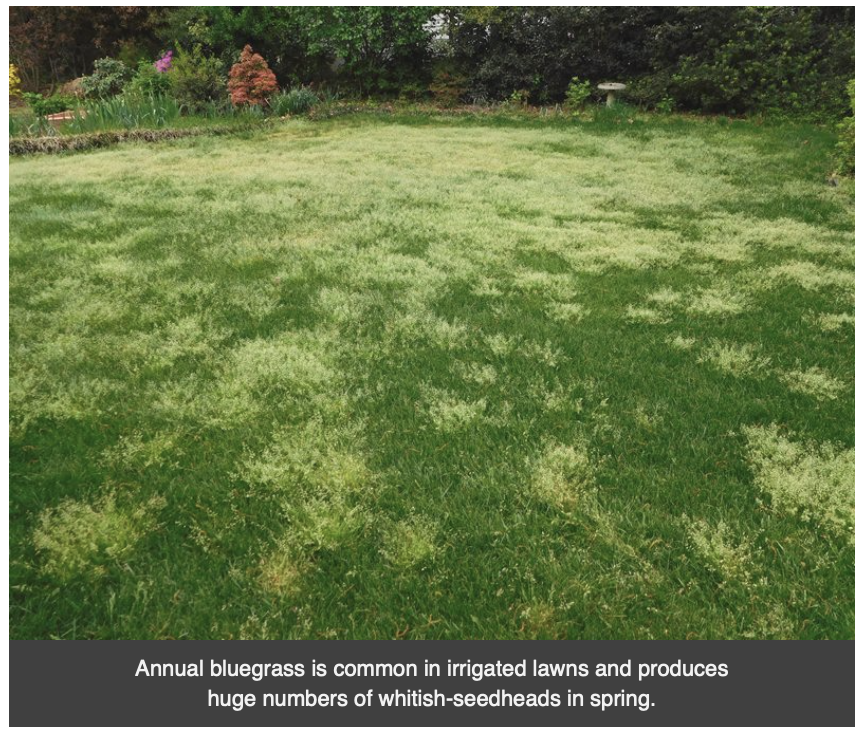
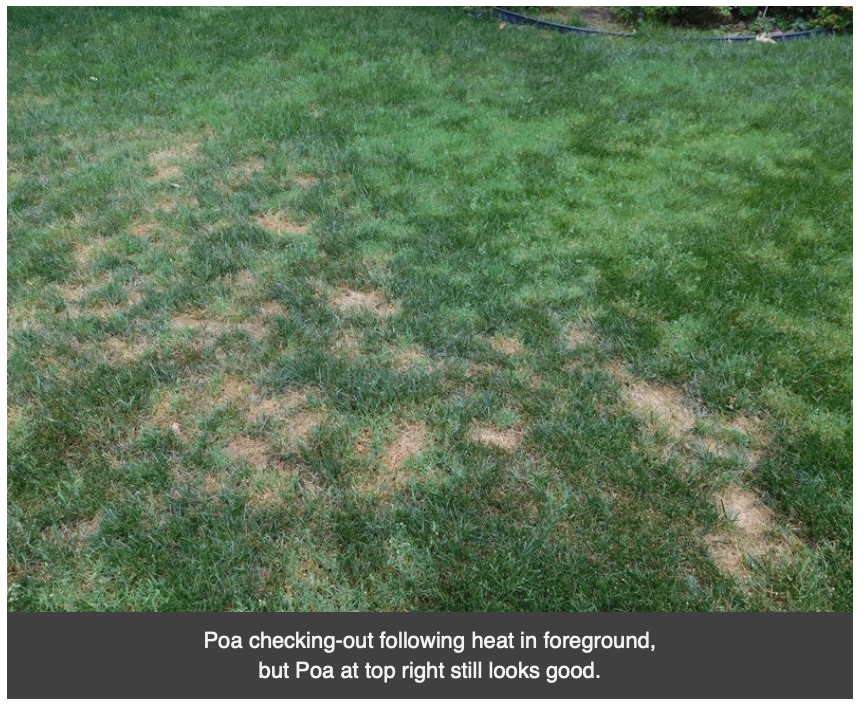
Annual bluegrass (aka Poa).There are annual and perennial biotypes of annual bluegrass. Annual bluegrass found in lawns and sod farms are usually true annual types (i.e., seed germinate in the fall and early winter; plants are yellow-green in color; produce large numbers of seedheads in spring and then die in summer in response to either heat and/or drought stress). Perennial biotypes (can live indefinitely) are largely found on golf greens; they are dark- green and produce very few seedheads. Annual bluegrass in lawns appears as yellow-green clumps initially and often develops in dense yellow-green patches. Seedheads are produced in huge numbers (esp. April and May). In lawns, seedheads appears as greenish-white clusters of flowers. Annual bluegrass is by far most dominating in wet areas and especially wet shade. It has a pleasing appearance during winter and early spring, but after flowering and the advent of heat or drought stress, it dies rapidly –called “checking-out” in the trade. The problem for LCO’s is that during their first and second rounds, annual bluegrass looks good to most technicians. However, after it dies – the “dreaded call-back” will come. If you did not know that the annual bluegrass was present in spring, then one may never guess why there are dead spots in the lawn in July. Annual bluegrass control is very complicated and expensive, and only is possible with proper herbicide use and diligence. The best approach is to renovate with Round-up, but be prepared when it returns from seed in the fall in smaller and more manageable amounts.
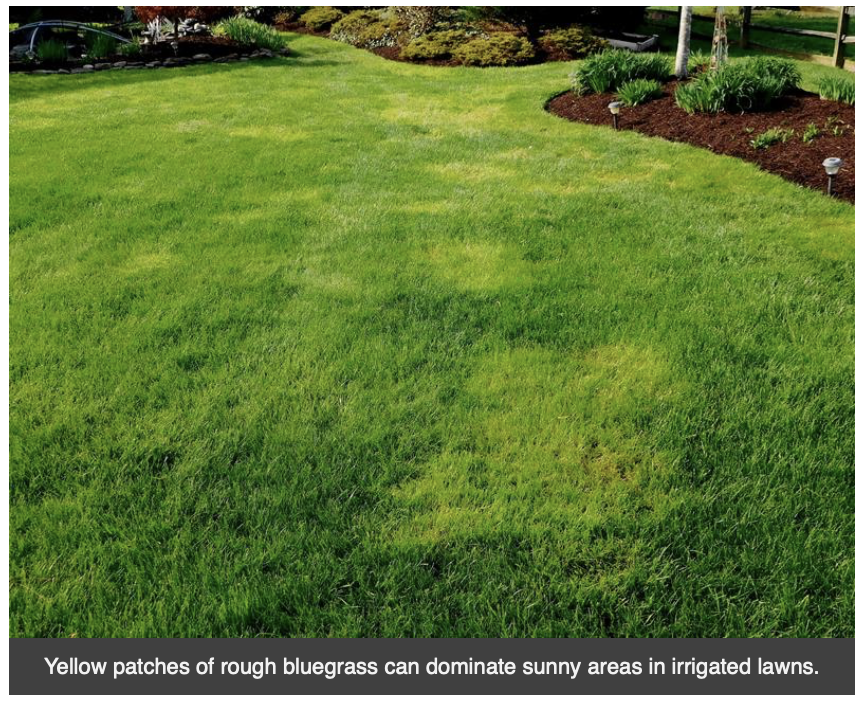
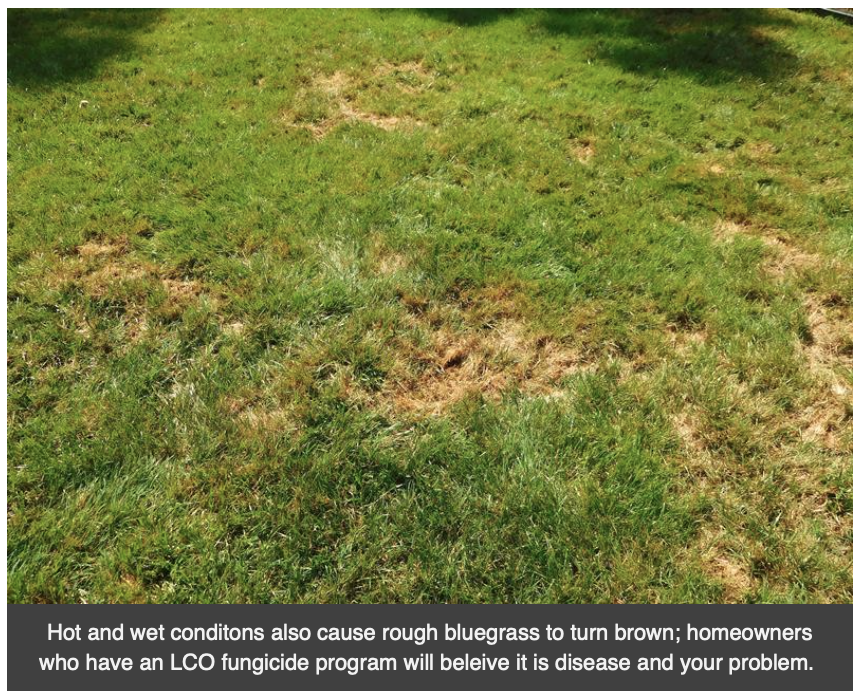
Rough bluegrass (aka Poa triv., roughstalk) is a perennial grass that cannot be selectively controlled. It is common in most irrigated lawns in the Mid-Atlantic. Mature patches of rough bluegrass are naturally yellow-green in color, which contrasts strikingly with other, darker-green grasses such as tall fescue and Kentucky bluegrass. For homeowners, it can be highly objectionable and when summer hits it can become a lawn nightmare. For LCO’s, it is an intractable problem. Rough bluegrass usually is most invasive in shaded and wet areas, but spreads rapidly into sunny areas in irrigated lawns. What makes RBG so noxious is that its trailing tillers and stolons out-compete the more desirable tall fescue and Kentucky bluegrass. I have seen lawns in mixed sun and shade environments to have up to 75% RBG cover. A major problem with RBG is that it rapidly turns brown during periods of wilt, even in the springtime. During summer, when there are heavy rain events, followed by sunny and hot weather, RBG develops a bronzed appearance and abruptly collapses. Although it looks dead, it will recover from buds on stems.Homeowners on a fungicide program will swear it is a disease that you did not properly control. Renovation is the only solution, yet seed in soil can cause a recurrence of the same problem in just 2-3 years.
Thank you to Mark Schlossberg (ProLawnPlus) and Travis Pits (Lawns Unlimited) for their suggestions on key subjects.