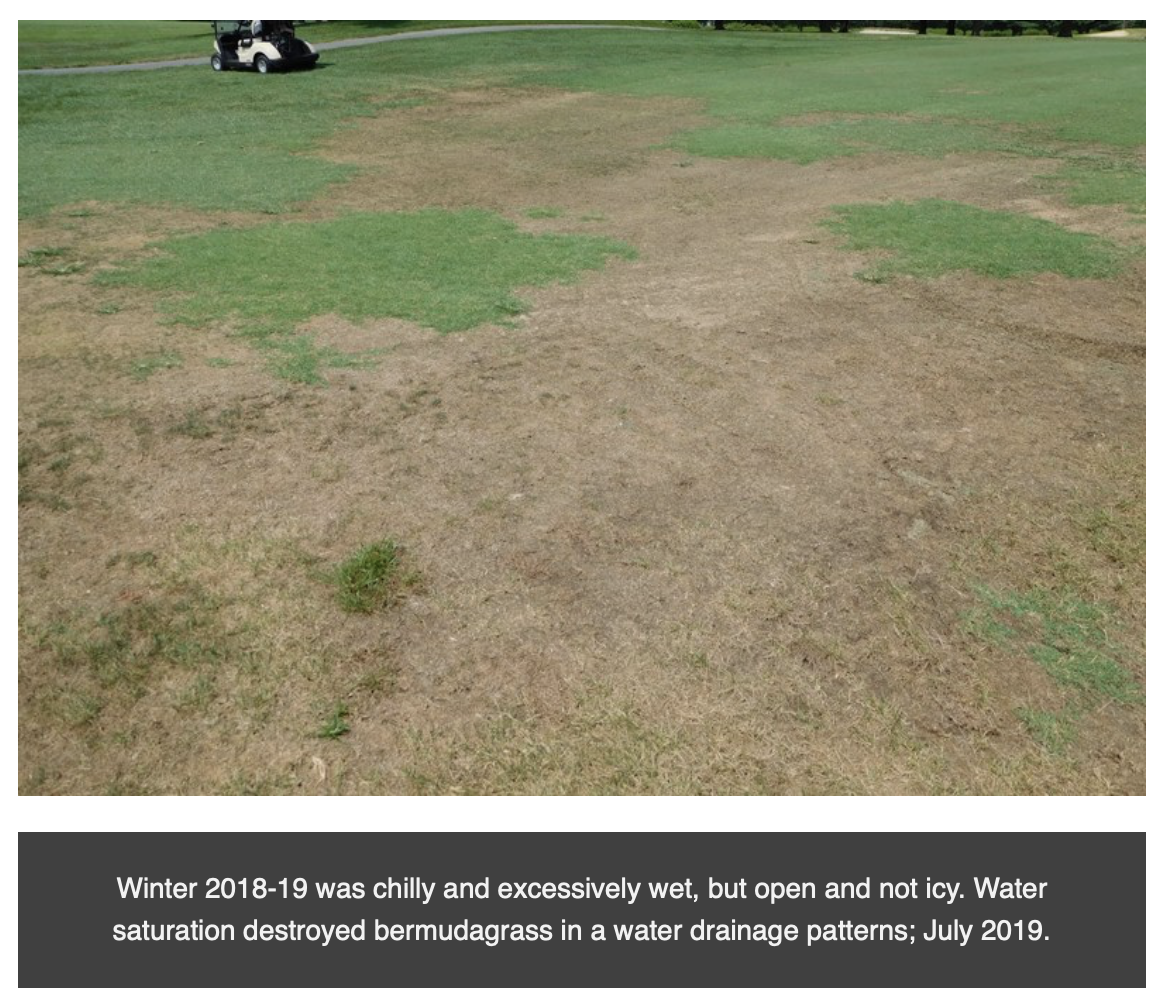
I normally begin each newsletter with a brief summary of weather conditions and how they have impacted turfgrass health and management. Weather patterns often explain the nature of pest activity, the erratic behavior of pesticides, and are the basis of all environmental stresses. We began with a cold, dreary, and very wet late winter and spring. One of the strangest phenomena I have experienced is how this dreary-wet-winter weather had adversely impacted bermudagrass on golf courses. Last winter was cold, but there were no long periods of bitter cold or ice; indeed it was mostly a snow and ice -free open winter. Normally, it is severe and bitter cold and icy winter conditions that savage bermudagrass; so why was this warm-season-grass so adversely impacted this year? Simply stated, it was due to long periods of saturated soil conditions. Hydrated surface stems (stolons), were killed by a combination of excessive surface wetness and night temperatures below freezing. The prolonged saturated soils caused oxygen depletion (i.e., anoxia) at the surface where stems reside and highly hydrated stems (i.e., not winter hardened) were prone to cell damage from frosty nights. Photo’s tell the story, since complete kills were mostly in water drainage patterns, swales and wherever water puddled.
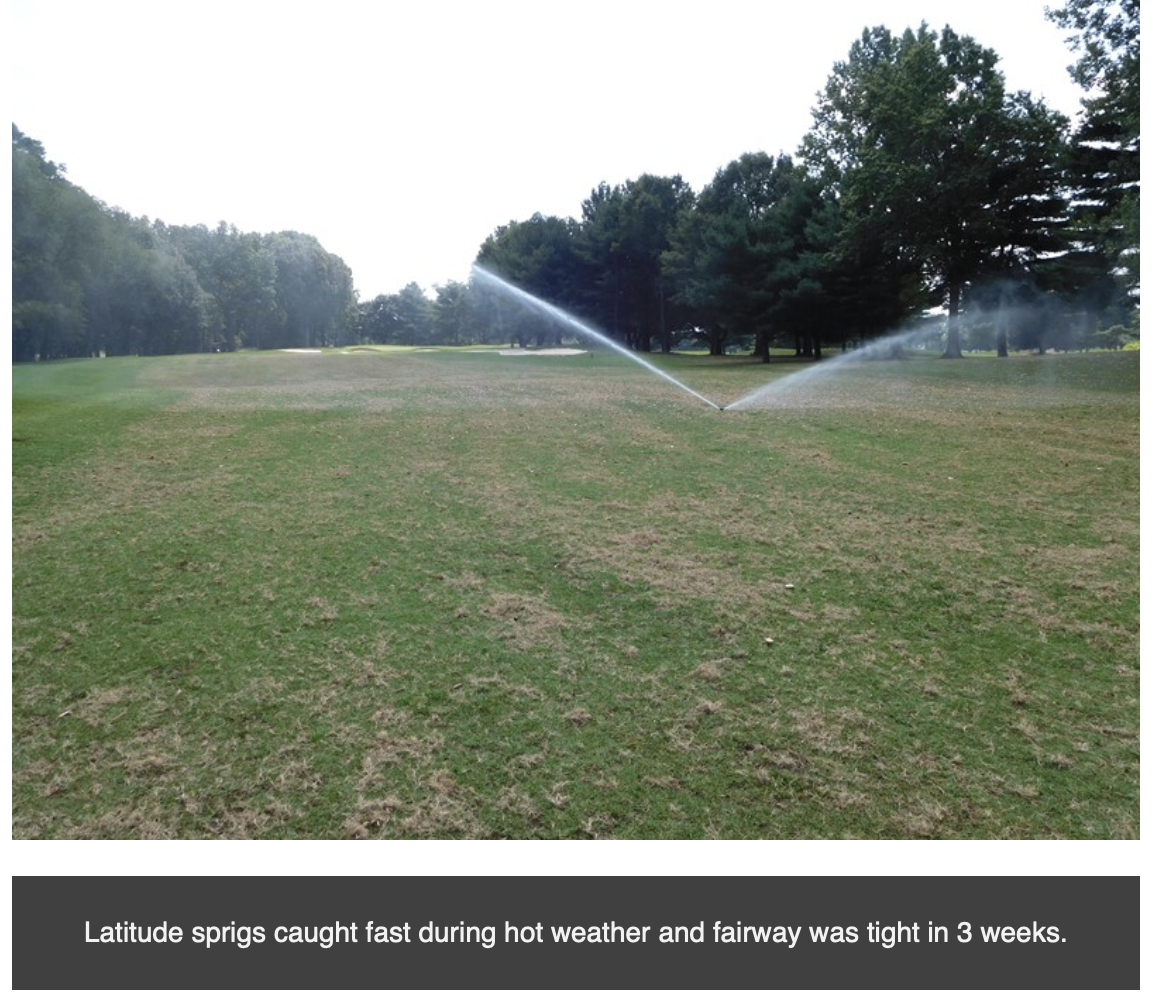
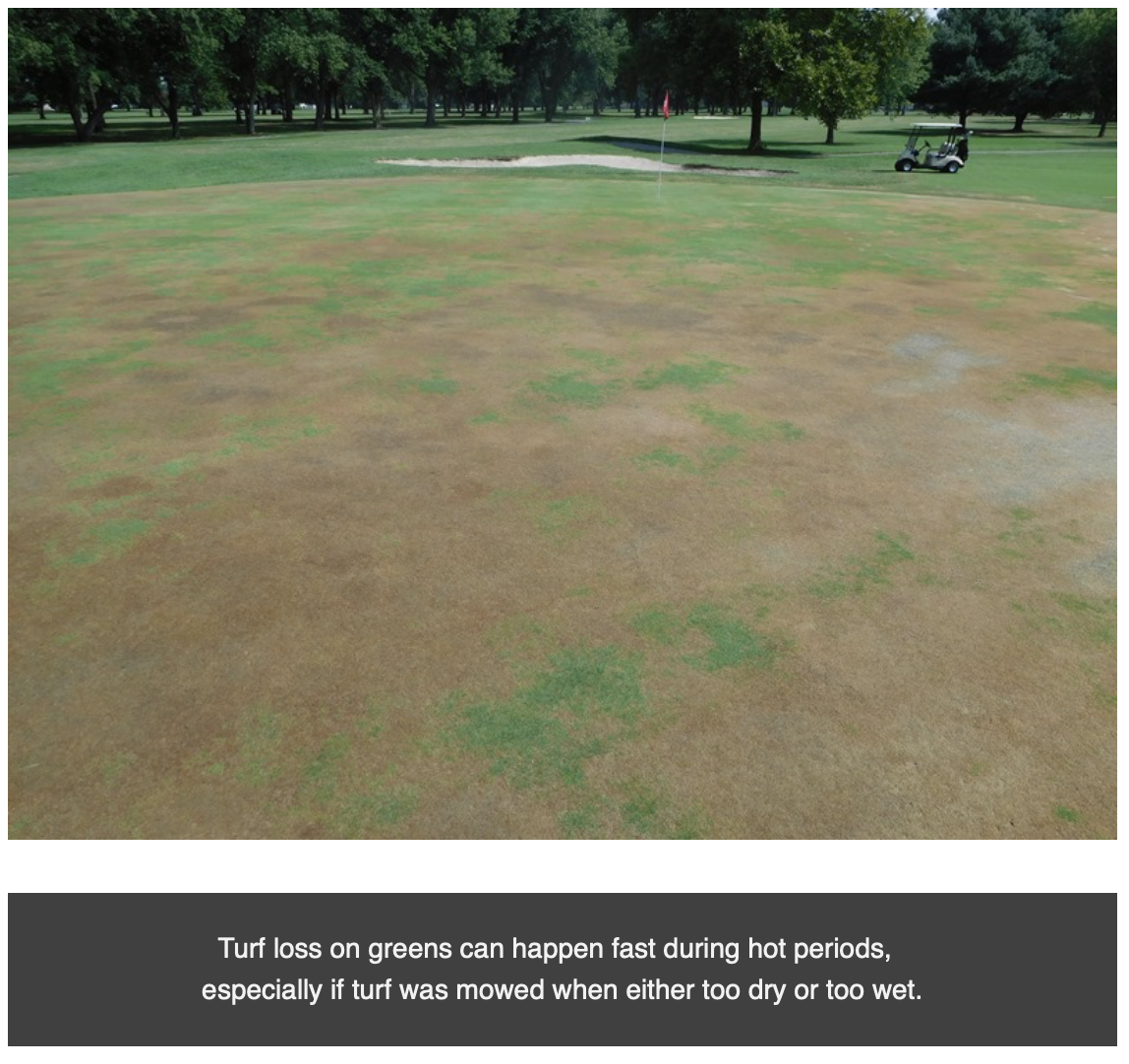
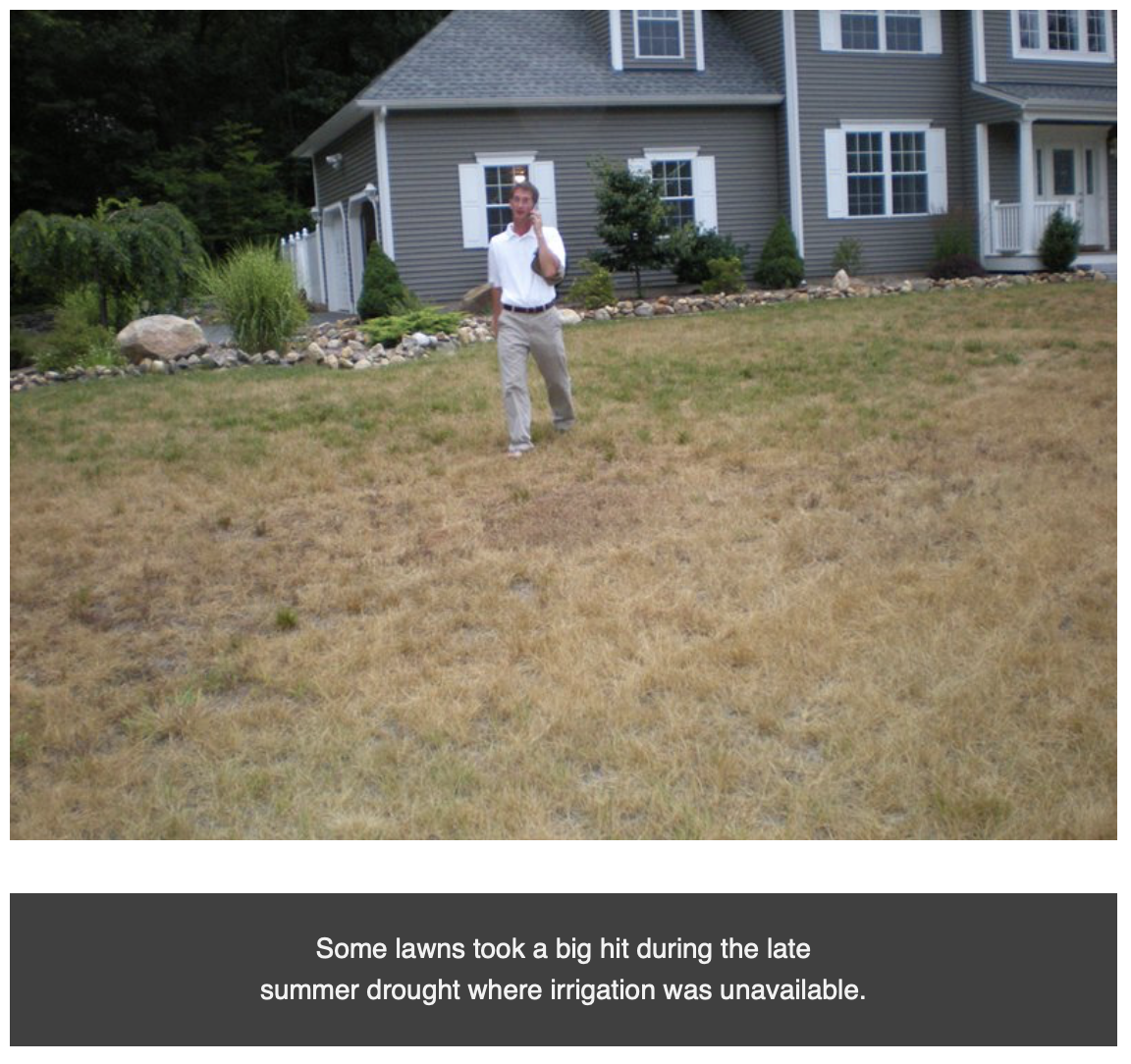
Fast forward to a July and early August marked by large numbers of days >90F and nights > 70F. Additionally, rain events and thunderstorm activity were fairly common. The combination of wet and hot soils triggered formidable stresses on turfgrass health in the July-August period. Late August and September changed dramatically – there was little rain, temperatures were warmer than average, and drought stress became a major issue. Some green’s took “the hit” during bright sunny and hot weather and drought stress. Heat and drought pose their own obvious stress impacts. During bright, hot and dry weather, greens in particular require a lot of visual attention, especially in late afternoon. Wilt can hit fast, and if a timely syringe is not applied, plants can quickly hit the permanent wilting point and die. Sometimes, turf enters drought dormancy and only can be revived by labor intensive syringes. A big hit can come when wilted turf is subjected to lots of water on hot and sunny afternoon. The combination of heat and saturated soils often causes wet wilt (i.e., despite wet soils, roots cannot uptake water for physiological reasons). Plants succumb rapidly, especially when mowed in the morning during a wet wilt or a dry wilt event.
Hot weather and thunderstorms stimulated weed breakthrough and rapid growth in July and early August. Weeds have an amazing capacity of aggressive growth and invasiveness in summer. In spite of the best efforts, and with all possible pre and postemergence herbicide combinations, weed breakthrough invariably happens in August. We depend mostly on premergence herbicides. These chemicals are highly effective, but only for a limited period. Summers marked by hot weather and thunderstorm activity cause a rapid break-down of herbicidal activity, due largely to the activity of microbes. Breakdown is especially fast along sidewalks, cart paths, roads, slopes and wherever heat builds fast to both weaken turf and promote depletion of herbicide active ingredient.
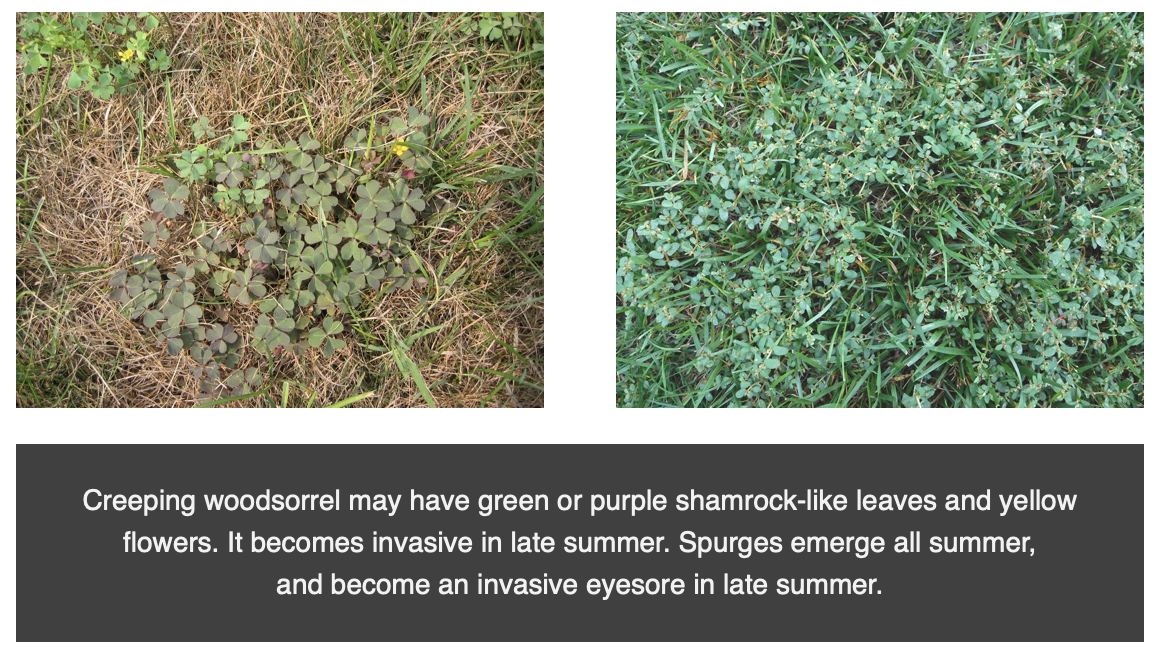
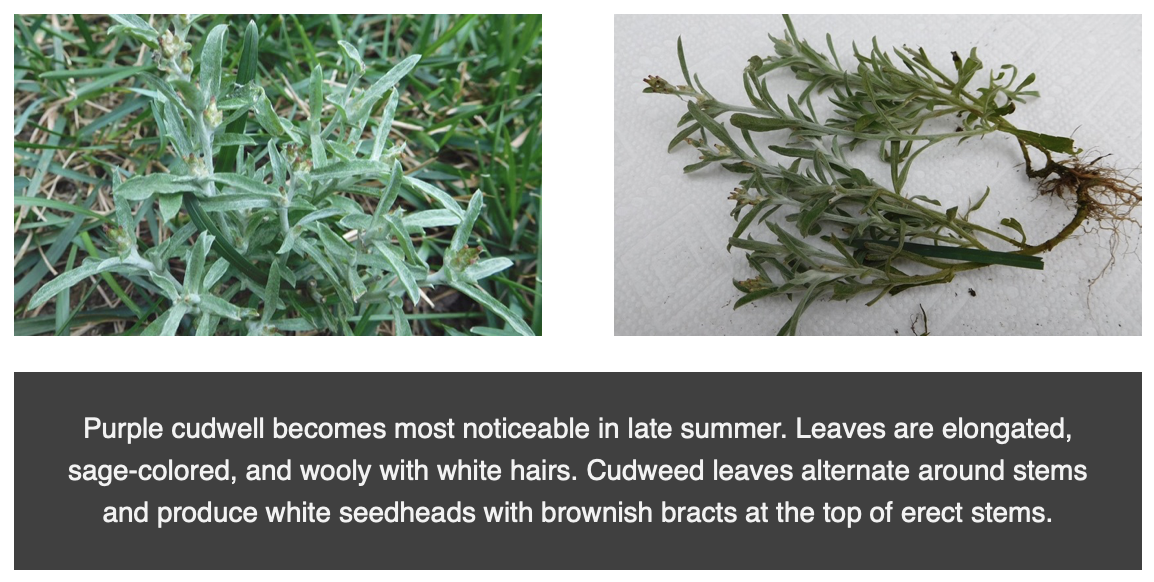
There are so many weed species, it is tough to keep their ecology and emergence patterns in focus. As days shorten in September, however, there remain a multitude of weeds that continue to emerge. Most notable is annual bluegrass, which won’t make its visual presence known until early spring. Among broadleaf weeds, creeping woodsorrel, spurges and cudweed have continued to emerge since Labor Day and are now flowering.
Woodsorrels (yellow and creeping) produce three (trifoliate) distinctive heart-shaped leaflets that are reminiscent of a shamrock. Creeping woodsorrel has green or purplish leaves and produces low growing stems (i.e., stolons) that root at nodes. Creeping woodsorrel can produce dense mats of vegetation that can out-compete turf. Woodsorrel flowers are bright yellow and have 5 petals. Spurges (spotted and prostrate)leaves develop opposite on stems, and as they mature they become oblong to linear in shape. Individual leaves may or may not have a reddish or purple-colored spot. Numerous stems radiate from the base and grow prostrate throughout turf. Plants produce a taproot and stems ooze a white, milky substance when cut. Tiny, white and papery flowers aggregate in clusters in leaf axils throughout summer and fall. Purple Cudweed emerges in summer, but in our region, it is most common in fall seeded stands or where density is poor in September. Leaves have a gray-green or sage-like color. Unlike sage, the odor of foliage is faintly sweet. Leaves, and especially upper stems, appear whitish due to a wooly cover of dense hairs. Basal leaves form a rosette, but as stems elongate, leaves develop alternately on stems that can grow to 4-5” in height between weekly mowing’s in lawns and roughs . Leaves are wooly, elongated and grass-like, and have wavy margins. Very small, white flowers with numerous petals are formed at the ends of erect stems. Flowers initially are enclosed in brownish covers called bracts. Two and three-way combinations of broadleaf herbicides work well in controlling all of the aforementioned, but soils need to be moist at application time. The big problem, however, is that you can control what you see, but soon new plants will emerge, and people may think your product did not work.
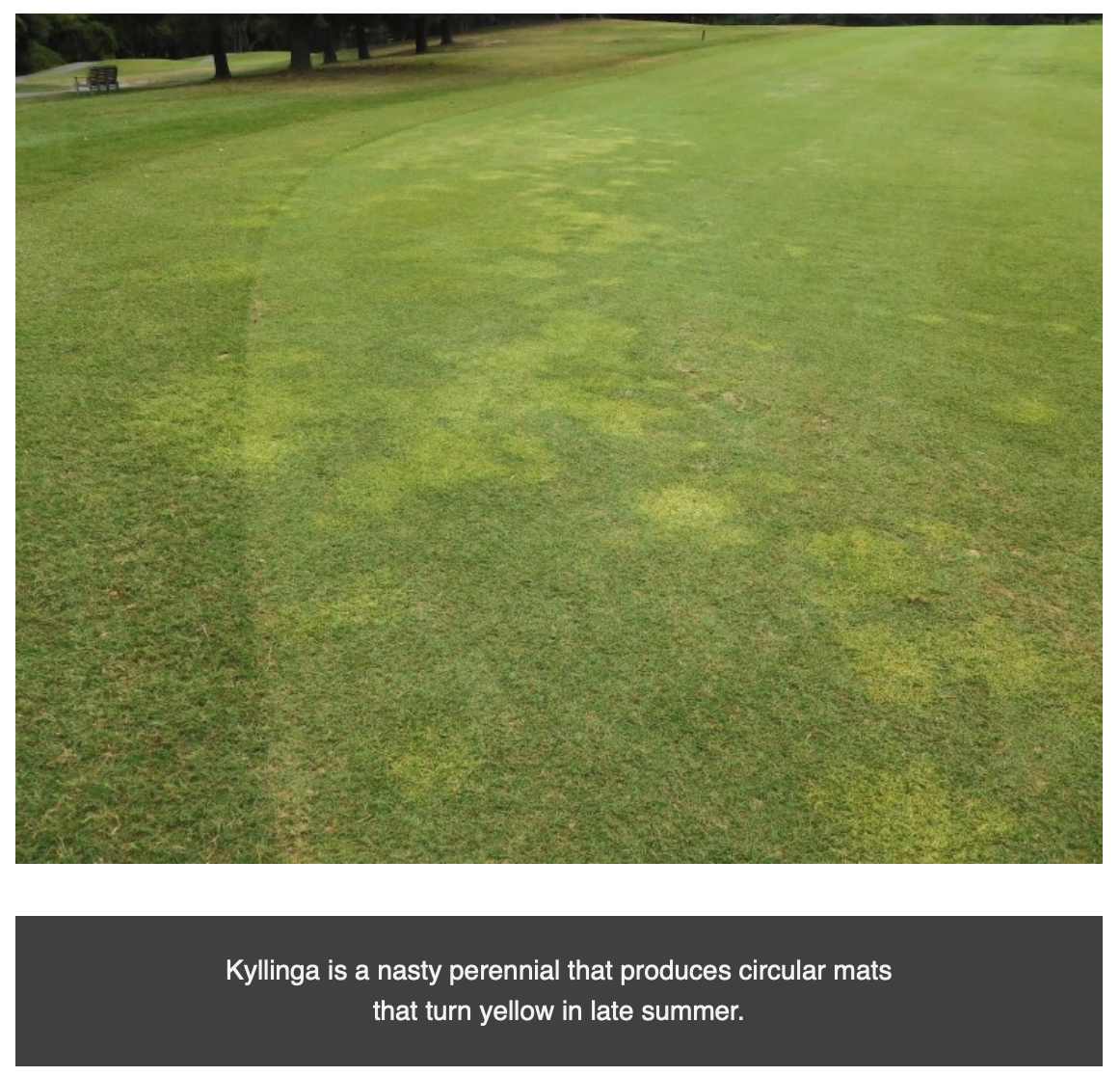
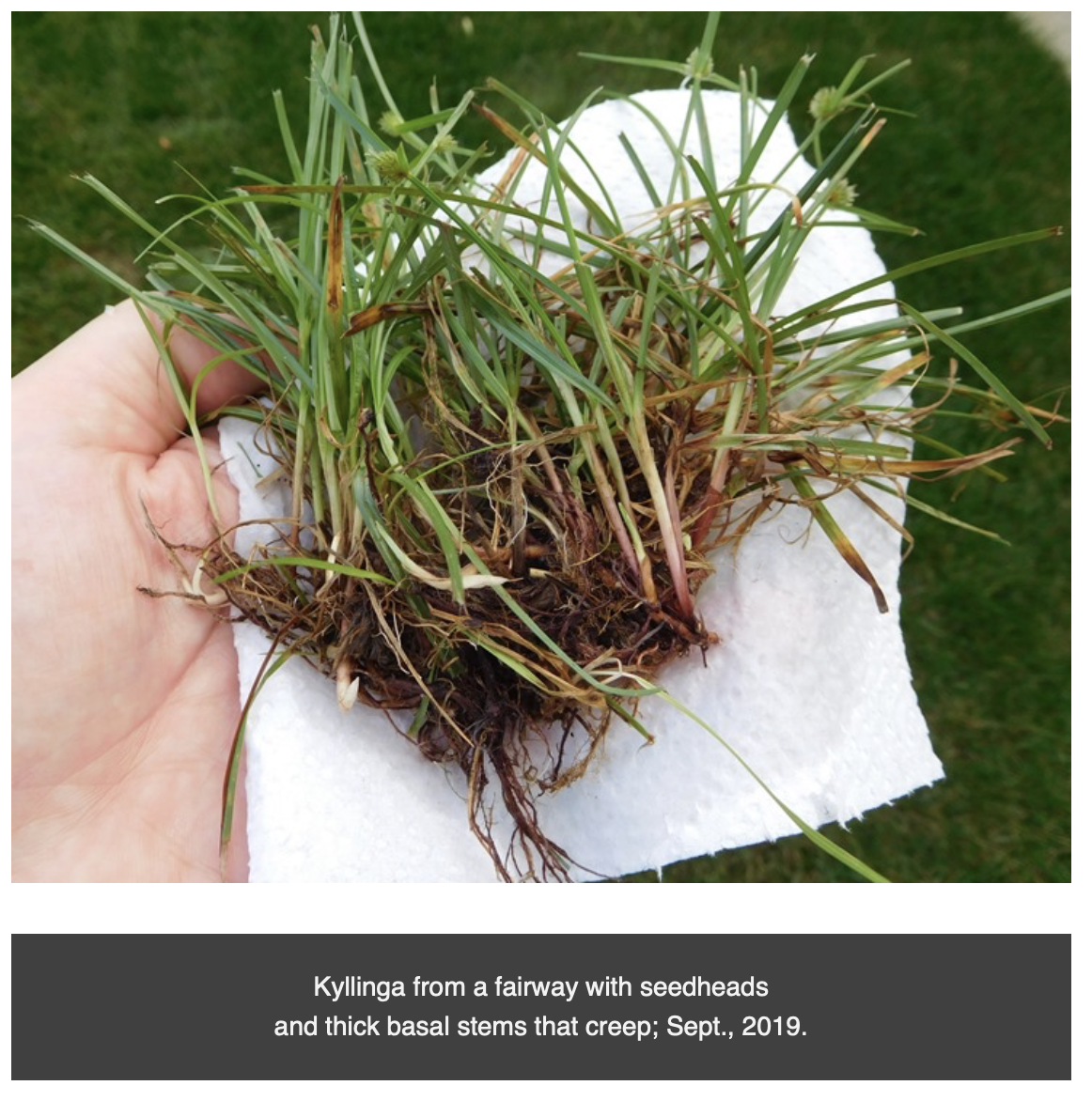
Kyllinga is a member of the sedge family and emerges sporadically throughout the summer. Kyllinga initially is similar in appearance to yellow nutsedge, but it grows more slowly and generally plants go unnoticed for long periods. Indeed, many turf mangers don’t recognize a Kyllinga problem until early September, when seedheads become abundant. Seedheads form in abundance in even low cut fairways and collars. Plants form dense, circular mats due to aggressive stem (rhizomes) growth ,and mats often turn yellow in late summer. Kyllinga seedheads are yellow-green and flowers develop in globe-like clusters. Currently, there are no effective premergence herbicides that target sedges. Postemergence herbicides targeting sedges include Celero, Dismiss and Prosedge/Sedgehammer . Kyllinga is especially difficult to control given its extensive network of rhizomes and at least two applications, and often more, are required. Professional’s either swear by or swear at the aforementioned herbicides. Timing is very important in control of Kyllinga. On golf courses, Kyllinga is best controlled when the first application is made just after mats become apparent in late May. A second application is needed 21-25 days later, but some plants often survive via rhizomes. The problem is that these weeds emerge all summer and thus multiple applications may become necessary. In lawns, Kyllinga is best targeted in the fall in spot applications.