
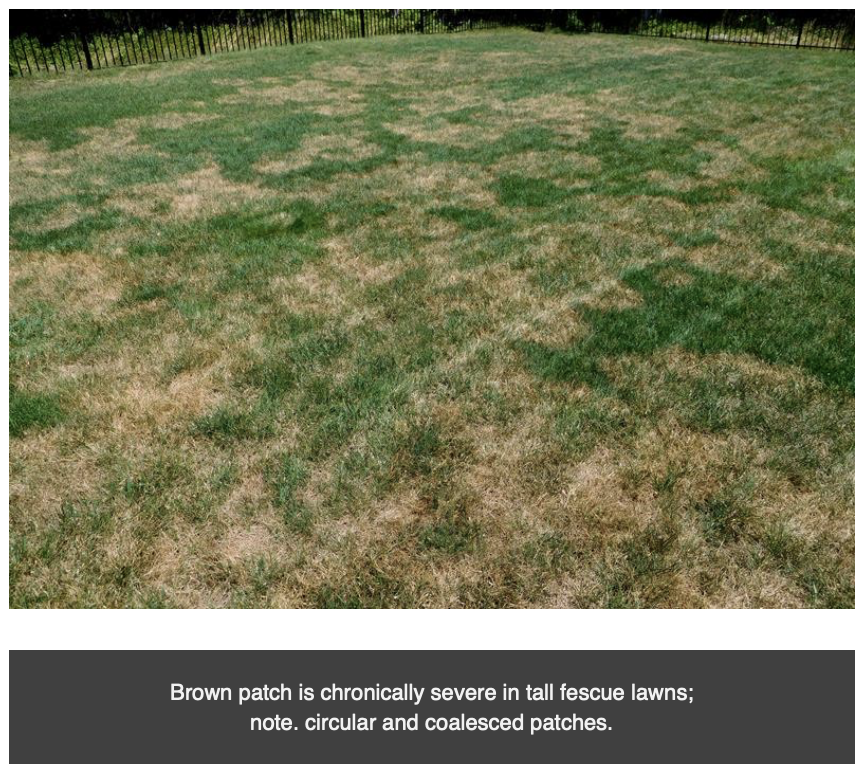
This summer has been hot (numerous days ≥ 90oF and most nights > 70oF) and humid; marked by periods of drought; then broken intermittently by a few rainy days and lots of thunderstorm activity. Turf subjected to heat and drought stress followed by soil saturation events (i.e., hot-stinky soils) are ideal for fungal diseases and physiological disorders. It is summers’ like 2019 that remind us why the mid-Atlantic has the reputation as being one of the toughest regions in which to grow quality cool and warm-season turfgrasses.
You would have to be an “old timer” to remember when summer patch was the most destructive of Kentucky bluegrass (KBG). KBG was the most widely grown turf species for use on lawns, golf fairways and most other turfs areas for decades. By the 1980’s, area golf course superintendents began to shift away from KBG by over-seeding fairways and tees with perennial ryegrass and lawn care pro’s began to shift lawns into tall fescue. KBG had many problems including numerous insect pests (e.g., grubs, chinch bugs, billbugs, webworms and even armyworms ), numerous diseases, and thick organic thatch layers that choked large turf areas in summer. Summer patch, however, was the major reason to get away from KBG since we had no cost-effective fungicides at the time. Today, KBG is widely used as a component in tall fescue sod production and seed mixtures. Generally, tall fescue is mixed with about 10% KBG. The KBG cultivars used in sod production are highly aggressive, rhizome-forming grasses. Rhizomes enable sod producers to grow crops in as little as 8 months’ time, depending on help from “Mother Nature. “ It is the aggressive rhizomes that can allow KBG to push tall fescue out of stands over time.
Summer patch once was known as Fusaruim blight. The Fusaria are common fungi associated with diseases and stressed tissues since they are common saprophytes ( i.e., fungi that attack senescing, dying and dead tissues). Eventually, Dr. Richard Smiley at Cornell University discovered that the disease was incited by a root pathogen ( Magnaporthe poae ;described by scientists at the Univ. of Rhode Island) and named it summer patch. Summer patch is most severe in hot, wet and compacted soils and in sunny environs. Initial symptoms appear as straw-colored 1-3” diameter patches, not unlike dollar spot. Circular patches rapidly increase in size from 6 to 18” in diameter and when root infection is active, plants at the outer periphery of patches develop a yellow or copper/bronze color. Heathy turf may persist in the center of patches, known as frog eyes. In mixed stands, the grass in the center of frog-eyes often is tall fescue (which is immune to summer patch). Eventually, turf collapses in depressions called “carter pits.” When large numbers of blighted patches coalesce, affected areas appear non-uniformly blighted and often pitted.
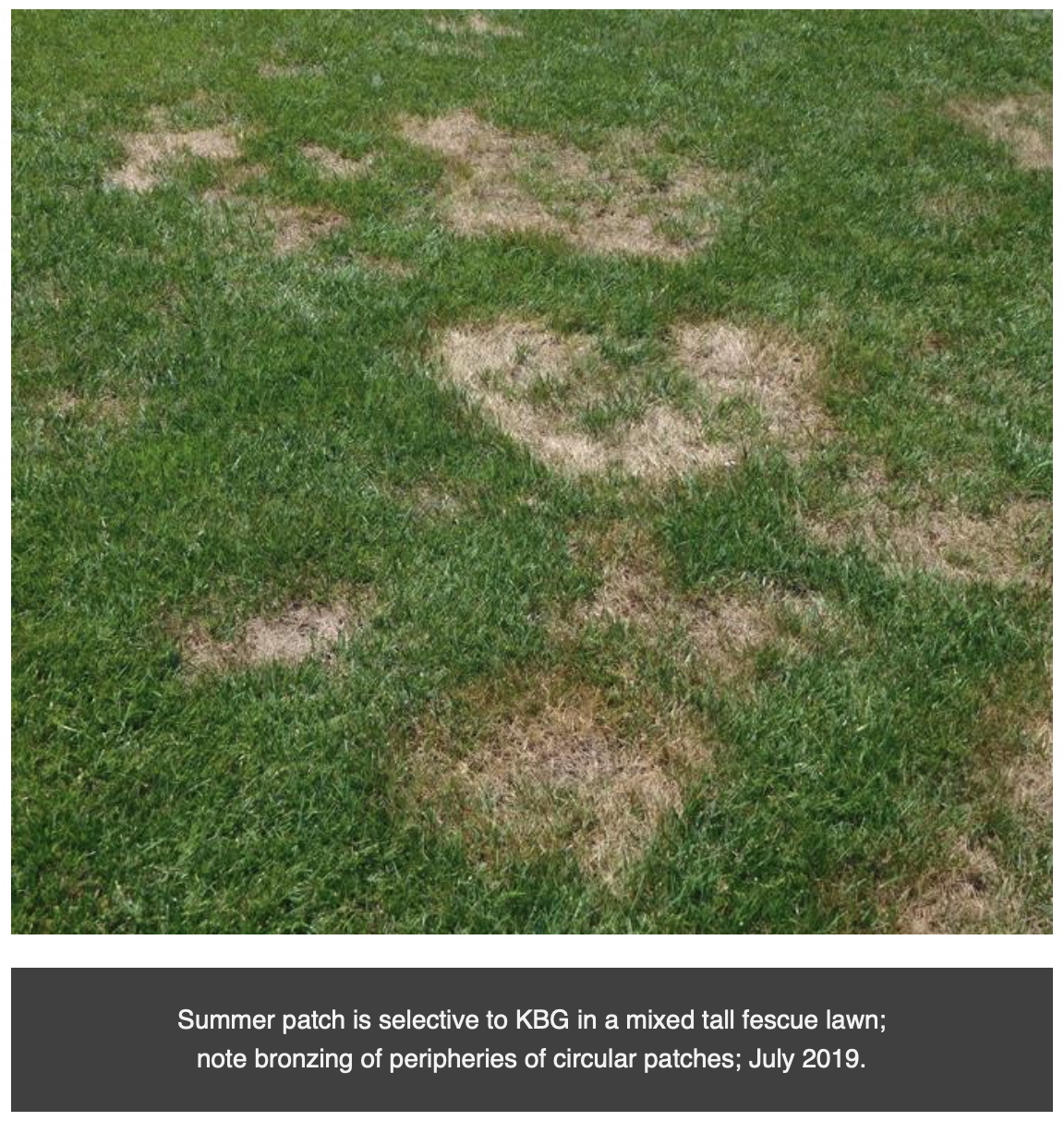
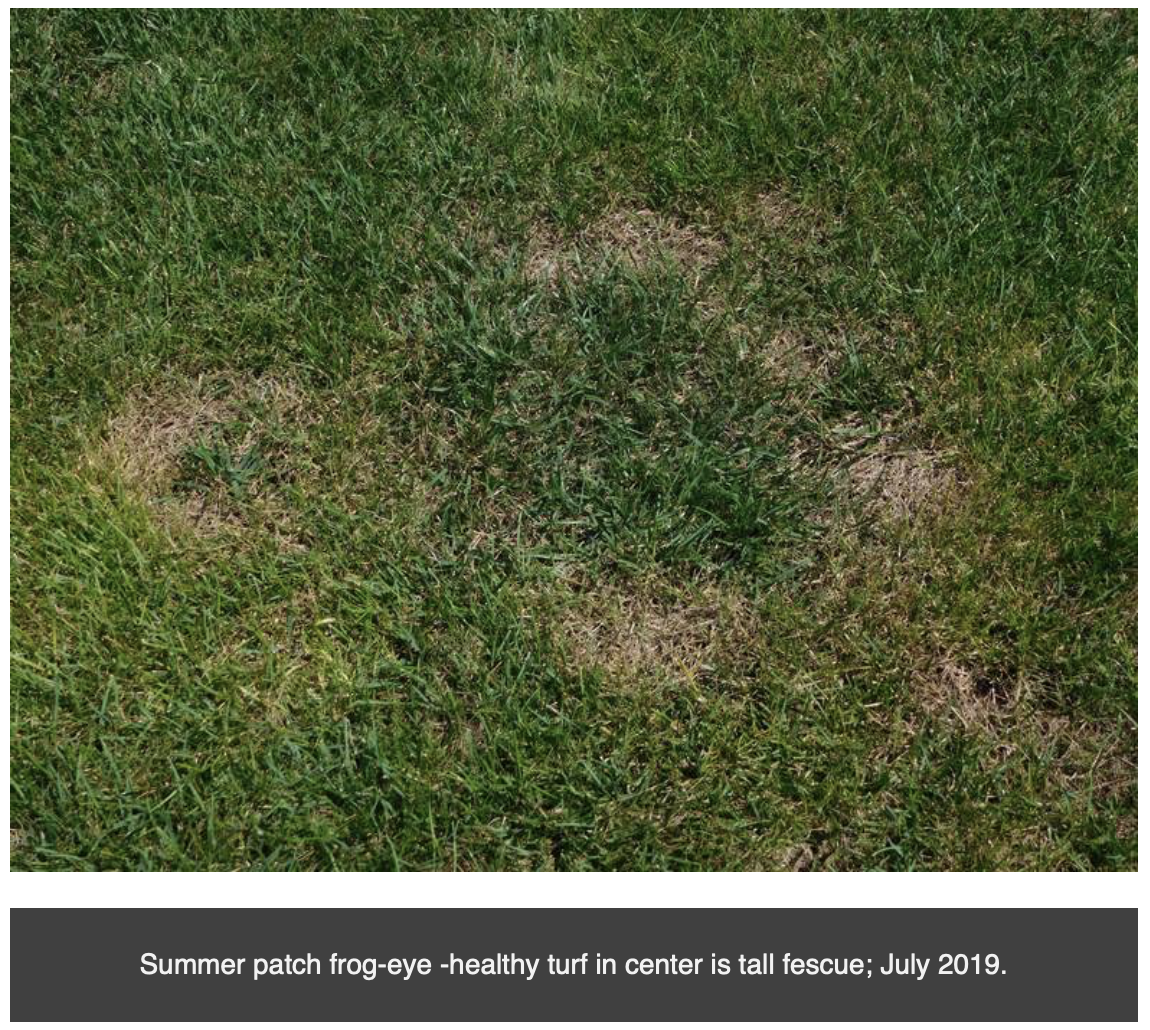
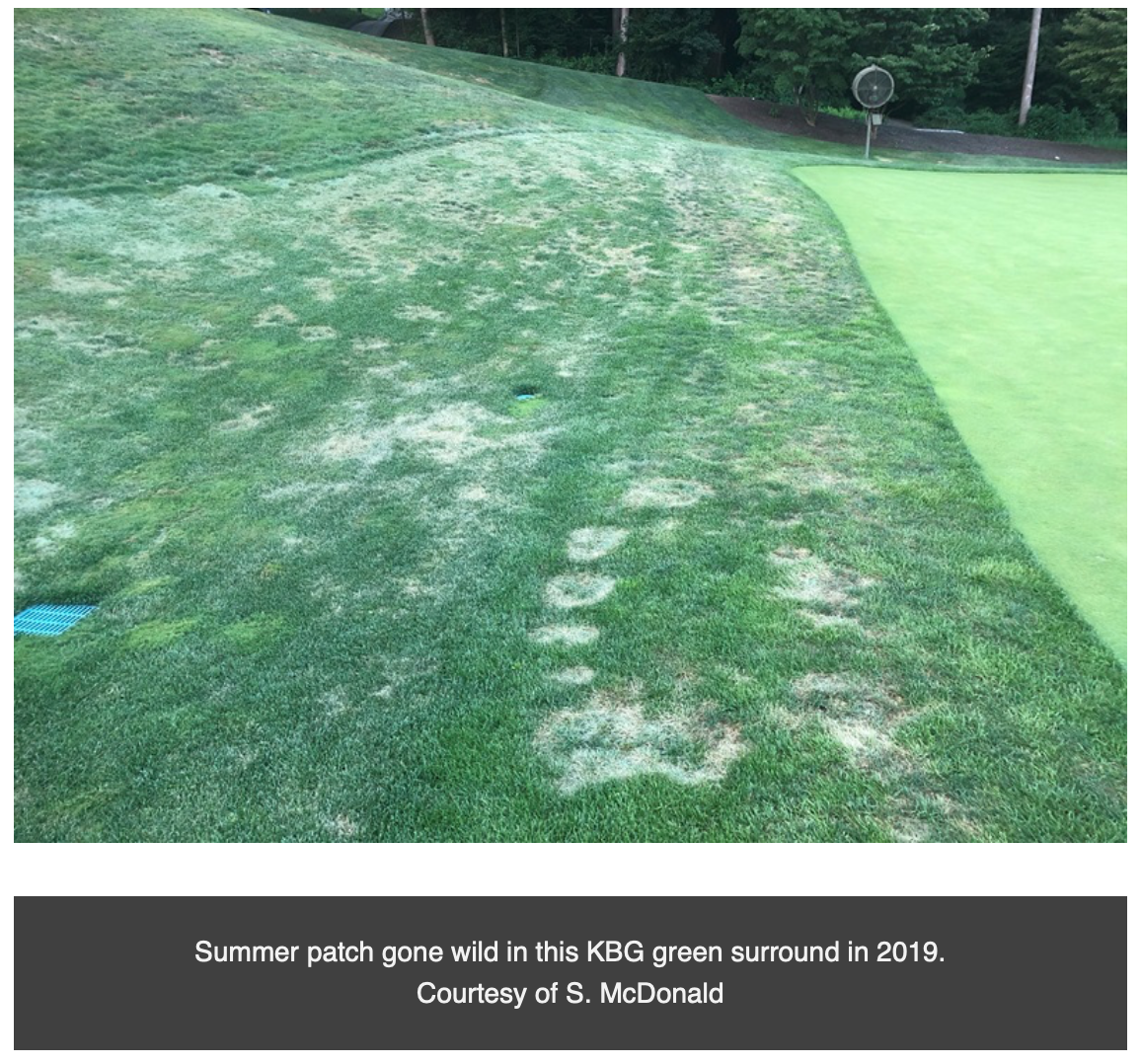
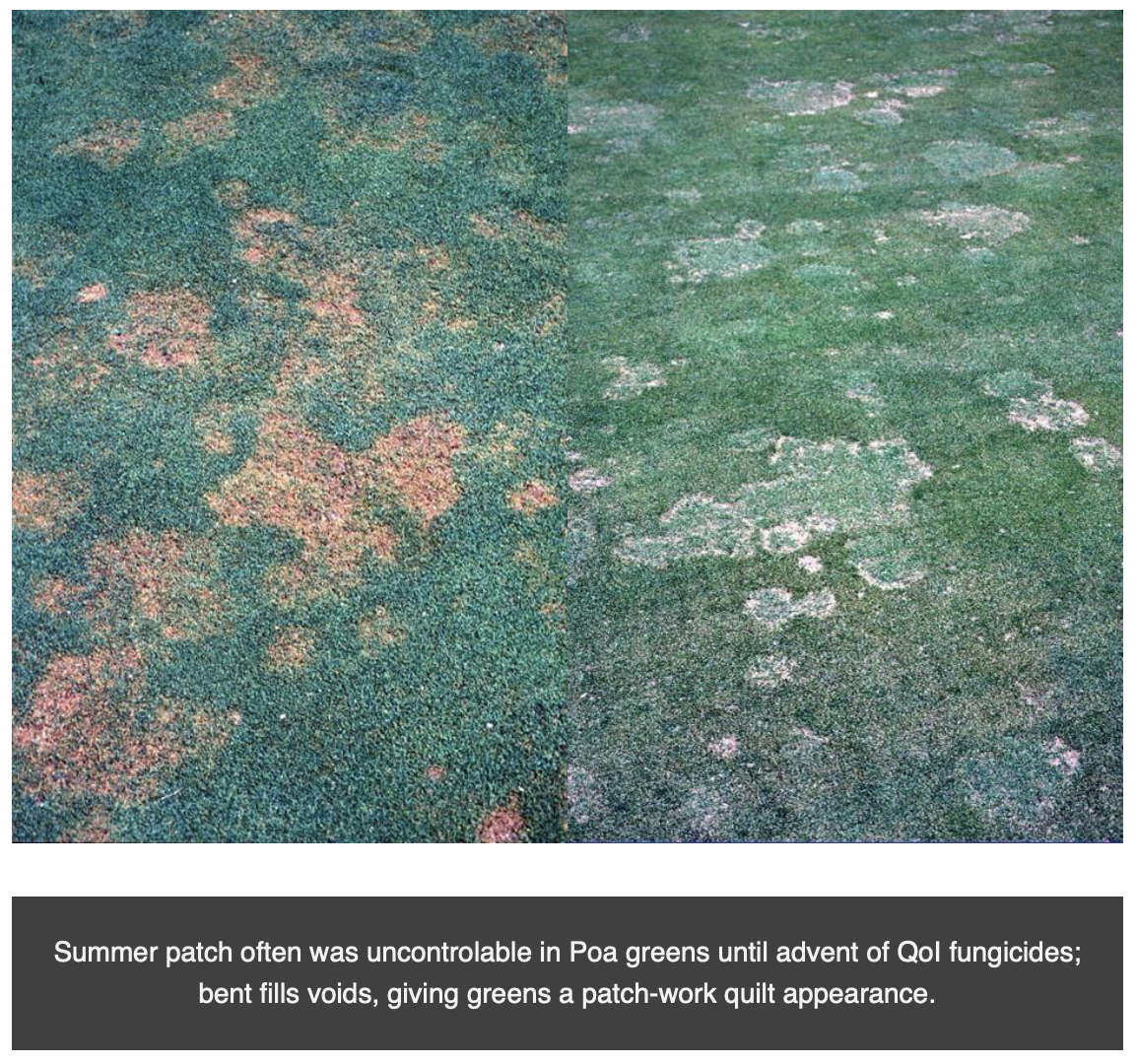
In annual bluegrass grown on greens, summer patch appears as circular, yellow to reddish-brown patches. In mixed stands, creeping bentgrass eventually fills dead Poaareas, giving greens a patch-work quilt appearance. Since the advent of and frequent use of strobilurin fungicides (e.g., Heritage, Insignia, Dismiss, others), which effectively target several root pathogens on greens, the disease has become far less common.
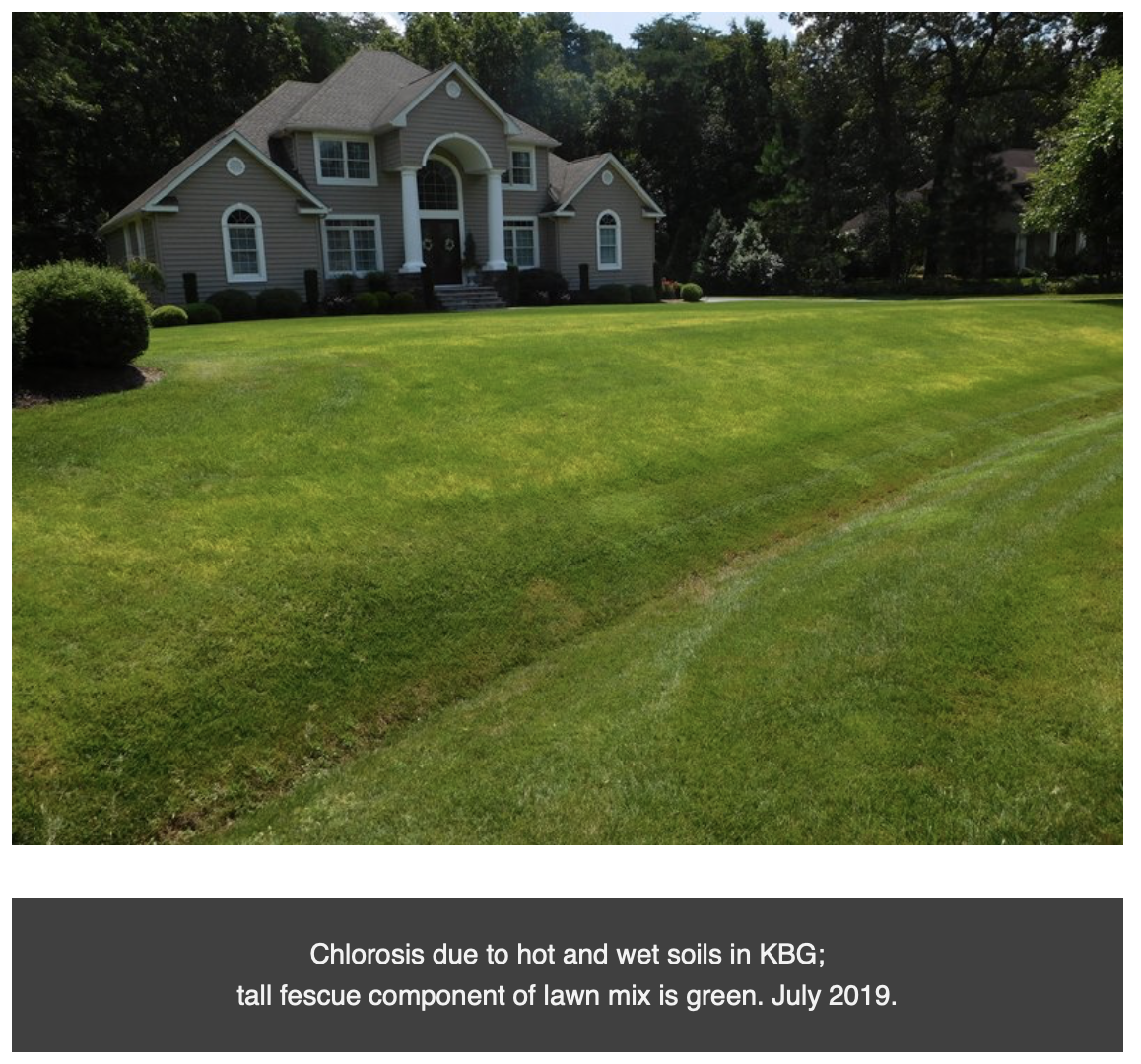
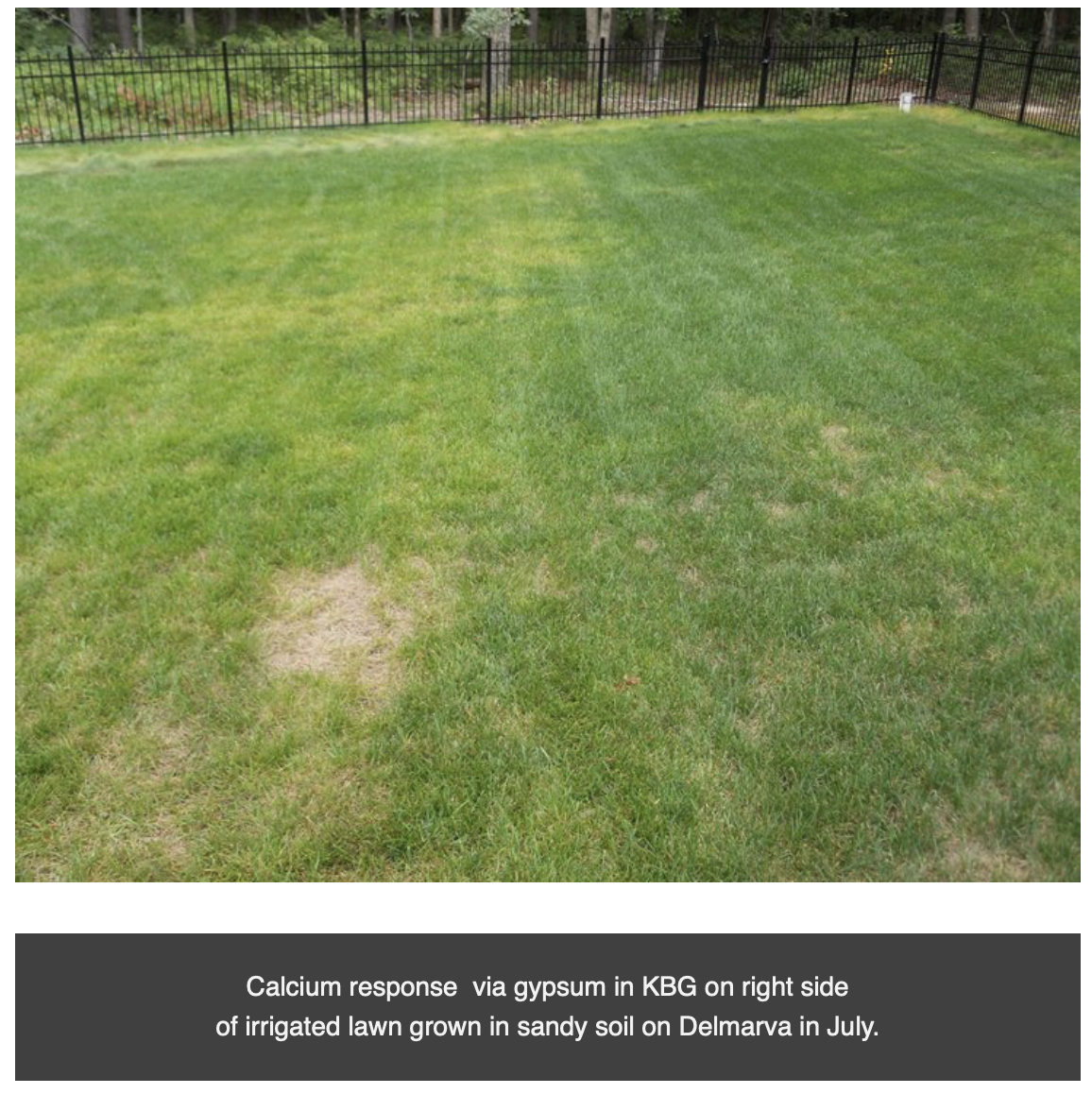
Another problem in lawns sodded or seeded to KBG and tall fescue mixes is that under irrigation and even a moderate nitrogen fertility program, the KBG component is likely to dominate over a period of 3 to 5 years. During summers when soils become wet and hot, the KBG component may develop a brilliant yellow color or chlorosis. Chlorotic leaves often display rapid and/or lanky elongation (etiolation), and as a result, some call the condition “mad tiller” disease. The yellowing and elongated leaf tissue in this case, however, has nothing to with neither pathogen nor nitrogen fertility. It simply is a physiological response to hot and wet soils. Plants just cannot produce enough chlorophyll (i.e., green pigment) to maintain green color given rapid leaf elongation in response to hot and wet soils. Eventually, as air temperatures moderate and soils become drier, turf will regain its normal green color. In some cases, especially in acidic sand-based lawns on Delmarva, calcium may become unavailable and chlorophyll production is inhibited. In this situation, a greening response may occur within 10 days of an application of calcium in the form of gypsum (CaSO4).
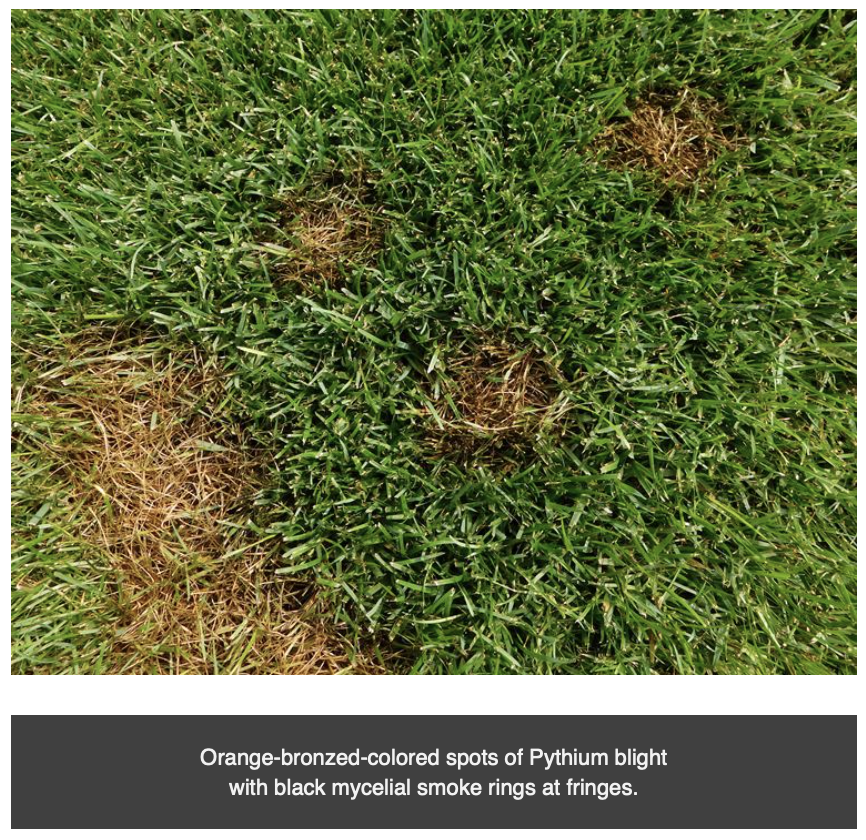
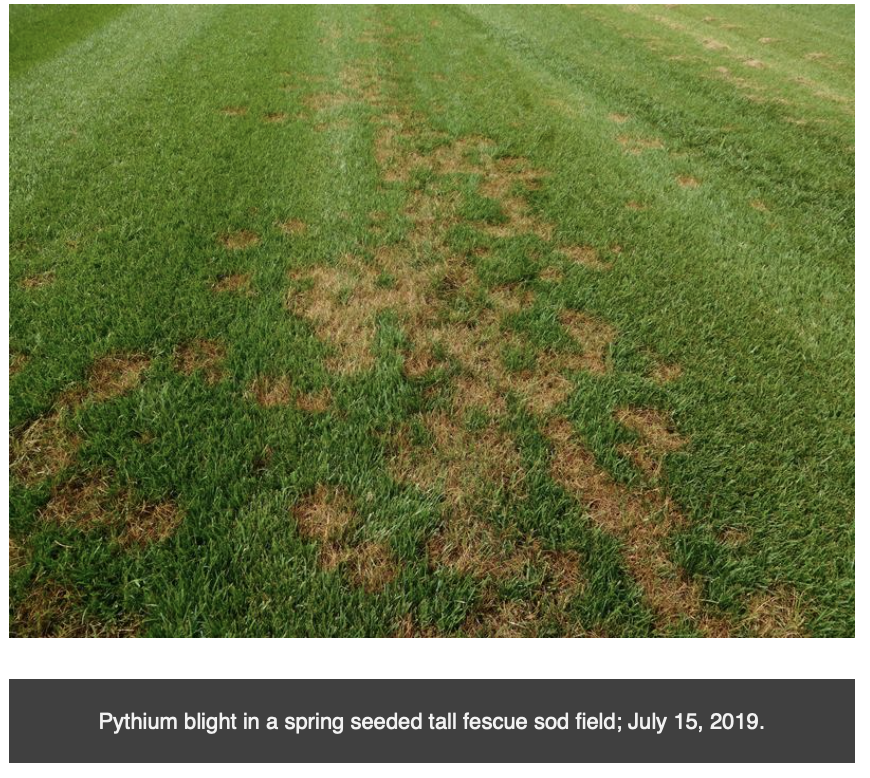
Brown patch and dollar spot are chronic tall fescue diseases, but turf managers are beginning to recognize Pythium blight and gray leaf spot as “expensive” problems, especially in sod production and in immature lawns and roughs. Pythium blight is a “wildcard” since it strikes fast and often with fatal results. Pythium blight first appears as orange or bronzed-colored spots, which mimic the kind of damage that comes with gasoline spills. Spots increase to about 6” in diam. and coalesce quickly. During early morning hours you may see mycelium, which appears grayish-white, and “frothy or cottony” within the canopy. Sometimes the orange-bronze spots appear black around edges (i.e., smoke rings). Entire leaves turn brown, shrivel, and die by late morning. There are no distinctive leaf lesions, but recently collapsed and matted leaves may have a soapy feel. Pythium blight is especially common in surface water drainage patterns and where air movement is restricted by shrubs, trees, fences and buildings. Quick action is needed to prevent severe damage. Pythium blight is most cost effectively controlled with preventive use of phosphites (usually described as potassium phosphite; and monopotassium or dipotassium salts of phosphorous acid). Once Pythium appears, phosphites will not afford protection. For curative Pythium blight control, Segway (cyazofamid) is the preferred product; however, it is very expensive. Subdue MAXX (mefenoxam) is less costly and has curative activity, however, bronzed-symptoms may persist for 7 or more days following use. Curative applications only protect non-infected plants. Thus, severely damaged areas may have to be repaired by seed or sod.
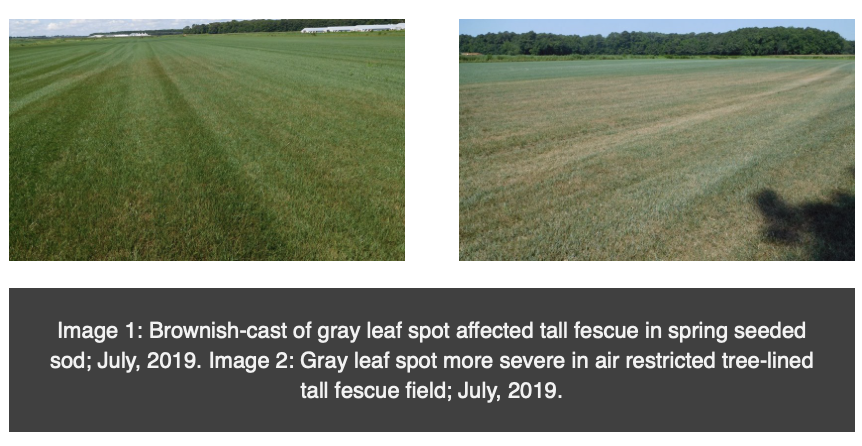
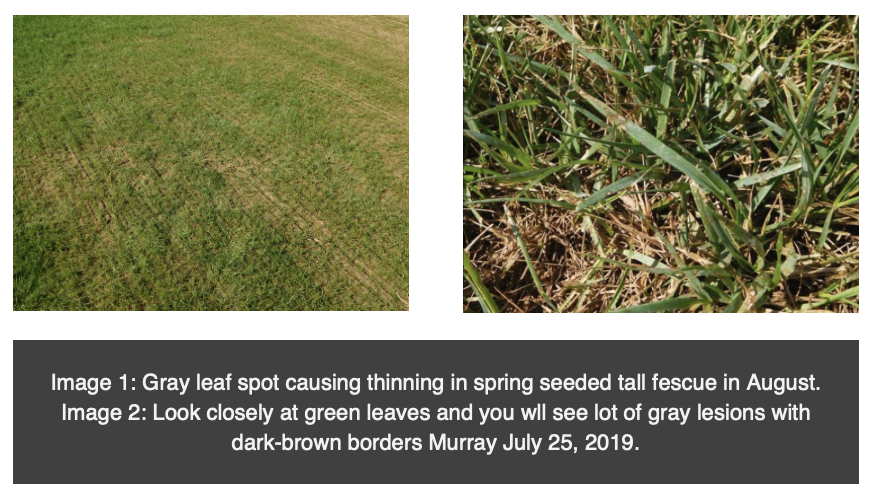
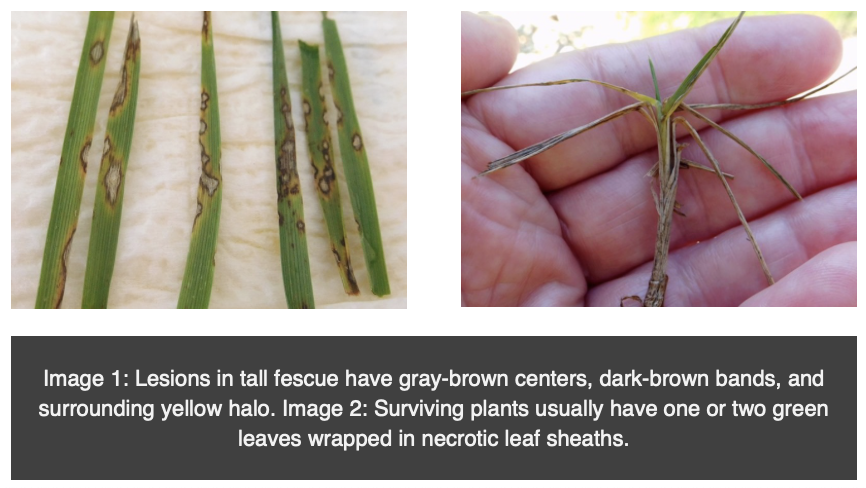
Gray leaf spot(GLS) is a growing disease problem in tall fescue sod production. It is prevalent from mid-July through October. It is promoted by high temperature and drought stress, and thunderstorm or heavy rain activity. It is believed that spores are carried in rain storms from the Caribbean or Gulf regions. It is likely, however, that the fungus survives winter in much of the mid-Atlantic transition zone regions (i.e., non-mountain areas south of Mason-Dixon Line).It often attacks spring seeded tall fescue, but it more rapidly destructive in late summer-fall seeded stands in October-November. GLS often appears initially adjacent to tree-lined areas that inhibit air circulation. From a distance, affected areas appear drought (i.e., grayish-wilted) stressed or brownish. The disease often develops in tall fescue in spotty light-brown-colored patterns of blighted and shriveled leaves. Leaf lesions are numerous, and variously shaped and colored. Initial lesions are round, water-soaked-gray and may have a yellow halo. Older lesions develop a gray center with chestnut to dark-reddish-brown discoloration of tissues surrounding the center. Lesions forming on margins of leaves are grayish, irregularly shaped and have dark-reddish-brown borders and yellow halos. Among blighted, brown, shriveled and collapsed leaves a few surviving plants may be found. Leaves and sheaths of survivors are severely blighted, and normally only 1 or 2 green leaves are present. Survivors provide the only means of tall fescue recovery; however, the KBG in sod and seed mixes is unaffected and will help fill dead areas in the late fall-spring period.
Vigilant scouting of known “hot spots” for GLS in young tall fescue should begin in early July. Preventive application(s) of fungicide(s) is the best approach where the disease is chronic, since a curative approach normally involves higher rates and more frequent applications. The QoI / strobilurin fungicides (i.e., Dismiss, Heritage, Insignia, others) are very effective and provide for long residual control. Affirm/Endorse, 3336 Plus (aka T-methyl, others), and Velista also are very effective. DMI/SI (i.e., Banner, Bayleton, Eagle, Tourney, Trinity, Triton, Torque, others) have fair to good activity, but these fungicides perform much better when mixed with a contact or QoI fungicide. For curative control, it is extremely important to tank-mix one of the aforementioned with a contact (i.e., Daconil, chlorothalonil generics; or Fore/Dithane, mancozeb generics) to more quickly subdue the pathogen. The GLS fungus rapidly develops resistance to 3336Plus, (thiophante-methyl or TM, others). Heavy reliance on Heritage (azoxystrobin) also has resulted in resistance. Rotating, and tank-mixing fungicides, greatly reduces potential resistance problems.
Thanks for reading! For more articles and information, visit the Dr. Pete's Turf Tips Archive.