
Annual bluegrass or “Poa” always will be with us. It is among the most enigmatic (i.e., something that is mysterious, puzzling and perplexing) weeds of turf. Prior to 2007, it was widely believed that Poa could germinate all year, but mostly in the spring. There had been no studies to prove otherwise. Its undocumented emergence patterns were unmasked by Dr. John Kaminski in 2007, then a graduate student at the University Maryland. Poa always will remain an enigma, because of its genetic diversity (including annual and perennial biotypes) and ability to produce enormous numbers of seed at any mowing height. I’ve seen it just about everywhere in my travels, including above timberline in the Colorado Rockies and Big Sur in California. I’m told it can be found near geysers in Yellowstone National Park.
Poa Emergence Patterns: John Kaminski, Ph.D. working in the field (not greenhouse), found that most annual bluegrass seed emerged at daily average air temperatures ranging from 61 to 68ºF, and that little germination occurred when daily average air temperatures fell below 46ºF. In the mid-Atlantic region , annual bluegrass typically begins emerging in large numbers following a major rain event in early September. The Maryland study showed that 63 to 78% of all annual bluegrass seedlings emerge between early September and mid-October, and 90% of seedlings emerge by early December. Annual bluegrass will germinate from early winter to spring as long as soils are not frozen, but the major emergence period is in the autumn. Interestingly, a California study involving vegetable crops showed that their annual bluegrass emergence patterns closely mimicked the Maryland study in turf. Substantial populations of annual bluegrass can emerge in spring, but usually this occurs where winter-kill of annual bluegrass is common (e.g., Canada). Disturbing soil to re-seed winter-killed areas in spring brings annual bluegrass seed to the surface and stimulates germination in the absence of competition from turf.

Chasing A Rainbow: I have worked over 30 years with herbicides to target Poa. Preemergence-wise, we found herbicides like Bensumec (bensulide), Dimension (dithiopyr) and others to be effective in the 70-80% range. The problem is that there are restrictions on using these herbicides on greens. Also, these premergence herbicides will have no effect on existing Poa. Hence, if your greens are 30% Poa, they may be more like 40% in spring following a fall application of a pre-herbicide. Additionally, most superintendents, then and now, feel very uncomfortable in using any herbicides on greens (especially long residual types like pre’s.) for many potentially damaging reasons.
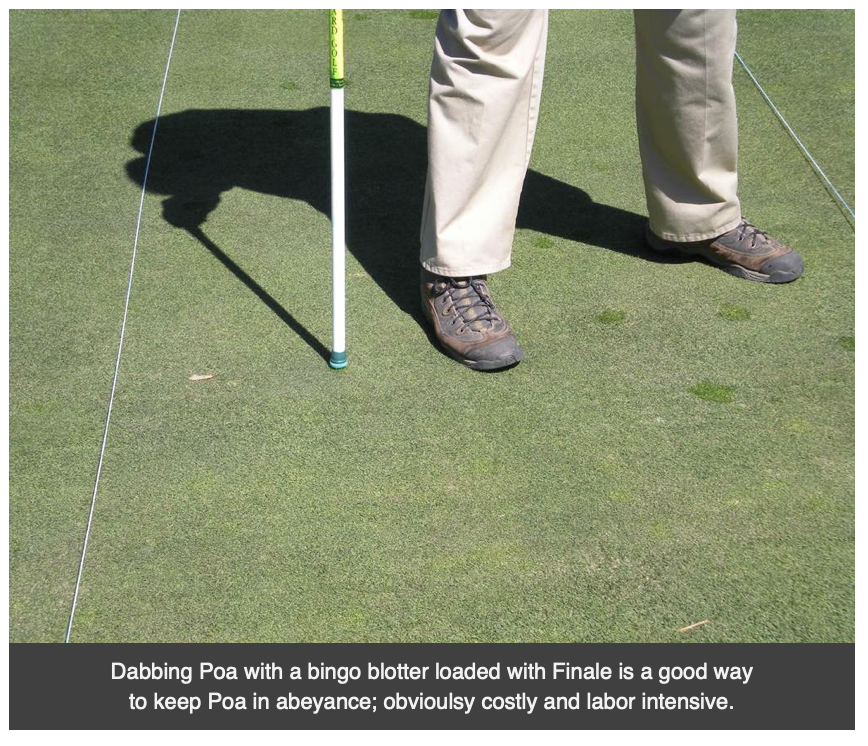
Postemergence: For postemergence control, we began looking at desiccants like Endothall and Paraquat, which were being tested by superintendents in the Pacific Northwest with some success. In the mid-Atlantic, we found at very low rates that they could turn bentgrass battleship gray, and just when you thought one more application would get the Poa, the next application would blow both the bentgrass and Poa away. Superintendents who have very small spots at manageable levels began spot-treating Poa on greens with bingo markers with Finale ( glufosinate) in the 1980’s. Finale is a nonselective systemic that does not have the wicking activity common with Round-up (glyphosate). Spot-treating does keep Poa in abeyance and it is still good practice; but only if you have the time, money and sufficient labor.
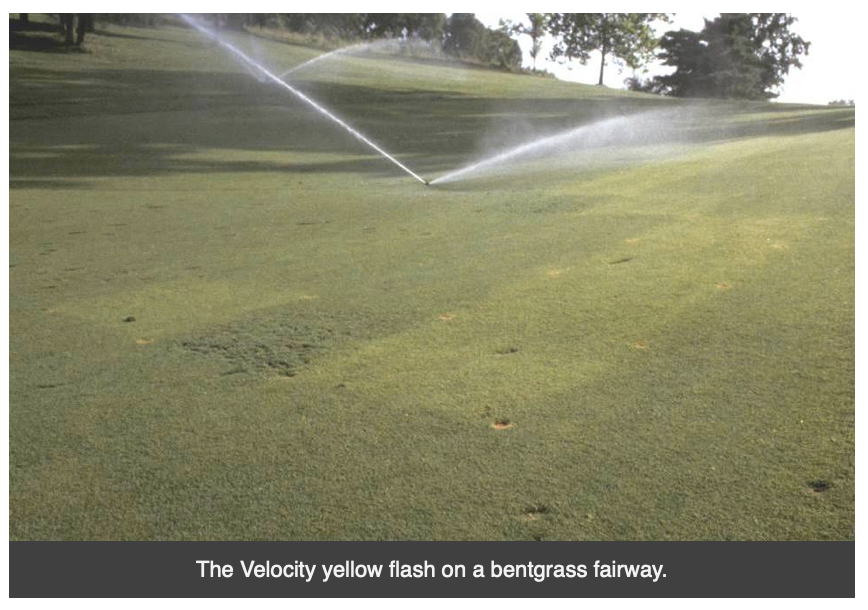
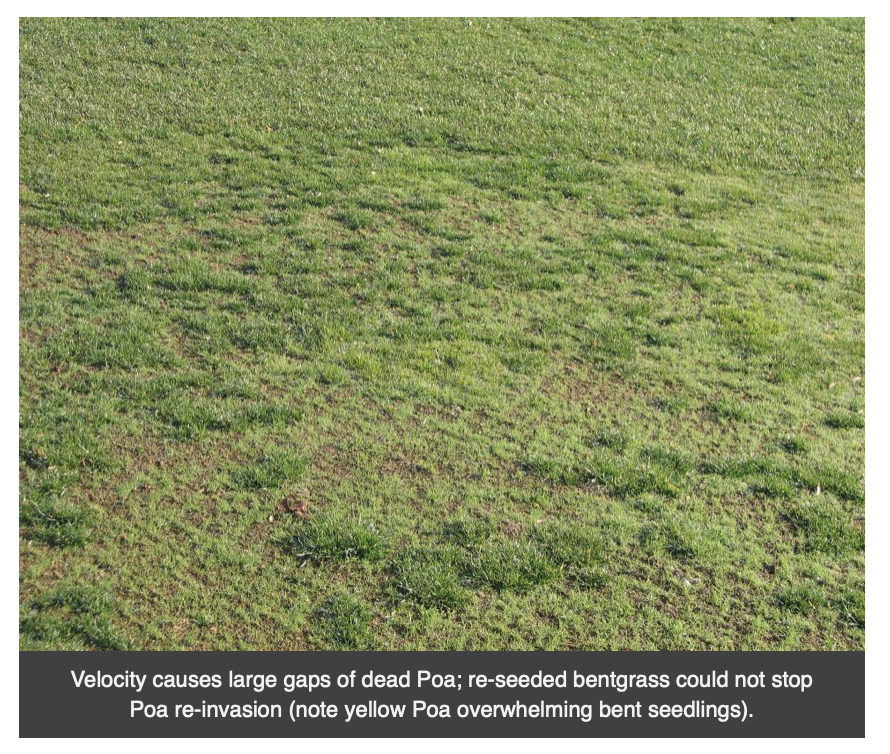
One of the first promising postemergence herbicides was Prograss (ethofumesate). It worked great in perennial ryegrass. Eventually, we learned that Prograss was too dangerous to use on bentgrass greens, tees and fairways, especially wet and shaded areas. Sometimes we observed that fall applications to shaded greens could result in huge bentgrass losses over winter. Velocity (bispyrbac-sodium) and Exonerate (amicarbazone) became the next great hopes. Exonerate was a total bust in our Maryland studies, since it has a high phytotoxicity potential and sometimes killed more bentgrass than Poa. Velocity showed promise, but it sporadically caused extreme yellowing (“The Yellow Flash”) in bentgrass and was not labelled for greens. In bentgrass fairways, we learned that Velocity was best used in mid-summer in two applications. The timing was chosen since Velocity could be so highly effective that it would leave large voids where Poa was dominant. Hence, it became necessary to ensure that the two necessary applications be completed by August, so that bare areas could be re-seeded with time enough to achieve a dense enough bentgrass canopy to compete with fall germinating Poa. Yellowing, potential for large voids and the invariable ability of Poa to re-invade Velocity-treated areas were the great weaknesses of this herbicide.

New Possibilities Emerge For Greens: Around 2010, I began testing the plant growth regulator Trimmit (paclobutrazol). My good friend, Stan Zontek (USGA Agronomist, RIP) told me he thought he was seeing substantial Poa reductions on greens where Trimmit was being used in the fall and spring, and queried if it might have preemergence activity. It was one of the best tips I ever got- too bad I couldn’t put it on a horse and win some cash. PoaCure (methiozolin) was registered in late 2019, which I had the opportunity to test in 2011 and 2012.
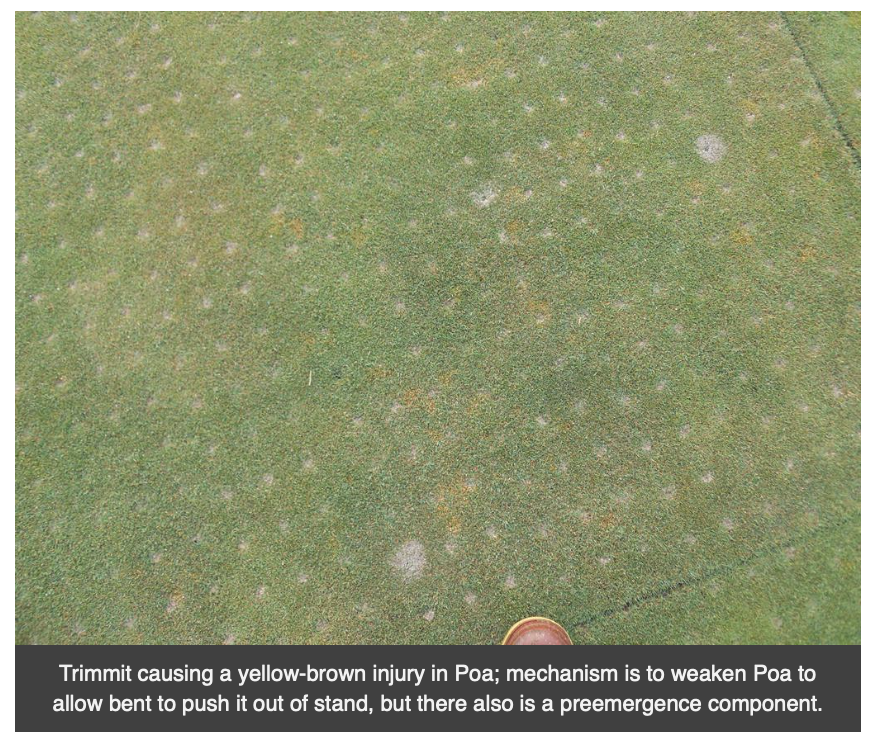
Trimmit: Label rates for greens range from 6.4 to 16.0 ounces of product per acre. You can’t depend on the label for all situations, and superintendent must do his/her own testing to find rates and timings that work best for them. Trimmit rates need to be tailored and normally the warmer it gets a higher rate may be needed to achieve the similar growth suppression effects. There are two mechanisms at play. Spring and fall applications of Trimmit suppress existing Poa and enhances the ability of bentgrass to compete with and reduce Poa populations . Trimmit stimulates aggressive stolon growth that enables bentgrass to literally push Poa out of the stand. The second mechanism is that fall applied Trimmit provides remarkably good preemergence Poa control. The actual mechanism by which Poa is controlled preemergence with Trimmit is unknown. It seems likely, however, that as a Poa seed germinates the radicle or first rudimentary root (which precedes appearance of the first leaf) absorbs Trimmit and a normal root system does not develop. Thus, plants perish before they can be seen.
Given the very close chemical relatedness of Trimmit and Cutless (flurprimidol), I think it safe to assume that Cutless would perform in a manner similar to Trimmit. Extrapolating from only 2 years of research (i.e., much confirmation work is needed), over 80% pre-Poa control was achieved by applying Trimmit at 12 oz product per acre on a 14 day interval beginning in early September and continuing through late October. During mild winter periods, if you observe that Poa is outgrowing the bentgrass, another application is suggested (see frost comments below). Trimmit/Cutless should again be applied similarly from late March through mid-to-late June.
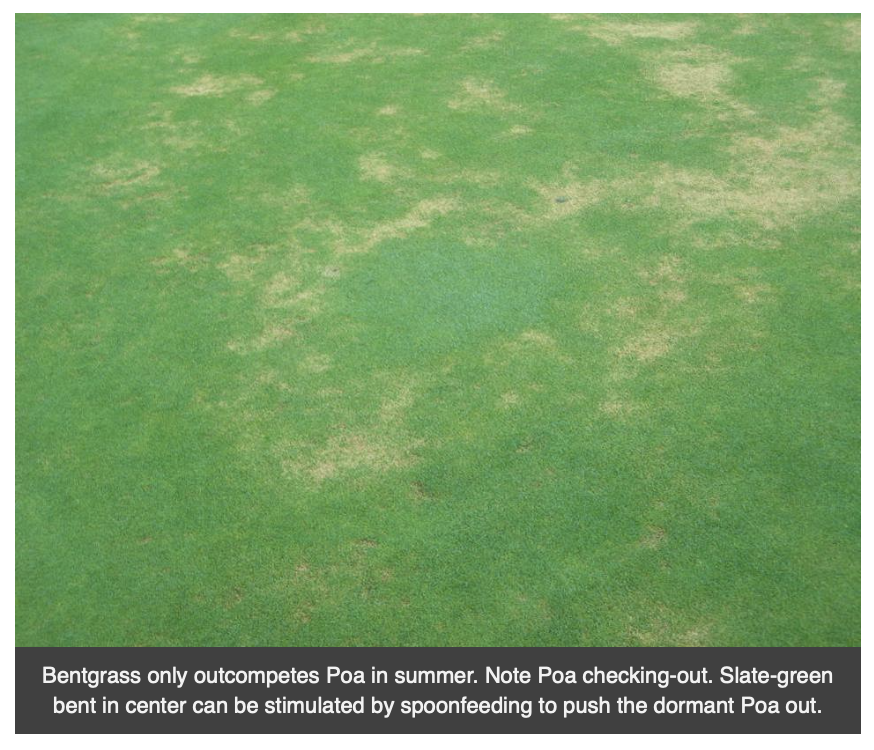
For the inexperienced, I suggest applying Trimmit at 6.0 oz product per acre (or low label Cutless rate ) beginning around Labor Day on a weekly interval to gain some comfort with these products. Once confident, you can increase the rate and apply on a 14 day interval. You may want to choose to experiment by only treating half of the practice green or maybe small areas one or two greens where Poa levels are rising. Once the heat of summer arrives, many superintendents switch to Primo for safety reasons. A spoon-feeding program (involves spraying ≈ 0.2 lb N/1000 sq ft every 10-14 days) stimulates bentgrass to outcompete Poa, which is naturally suppressed by high temperature summer stress (see Creeping Bentgrass Management for more info).
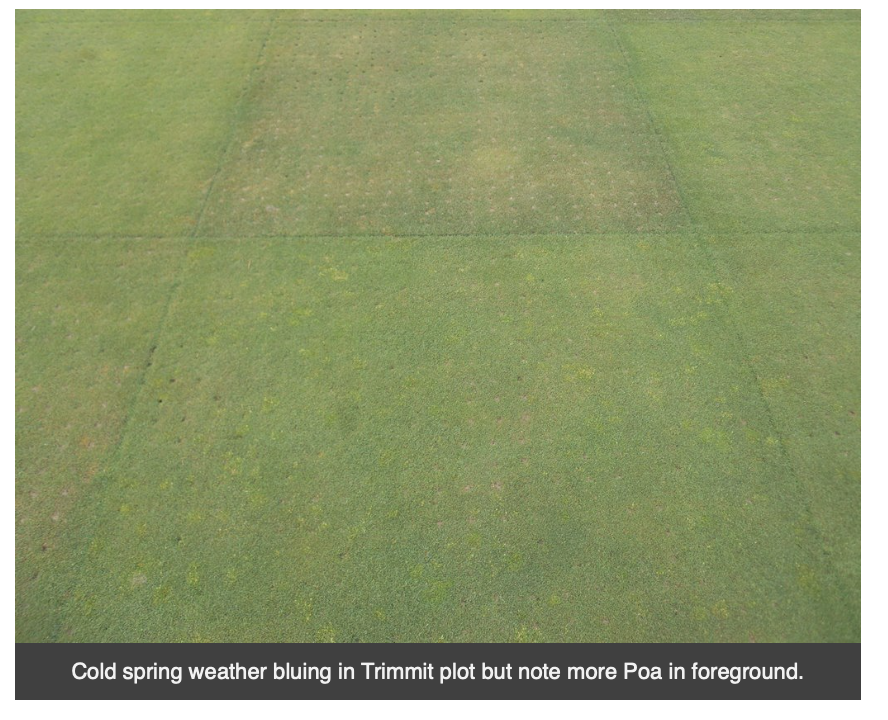
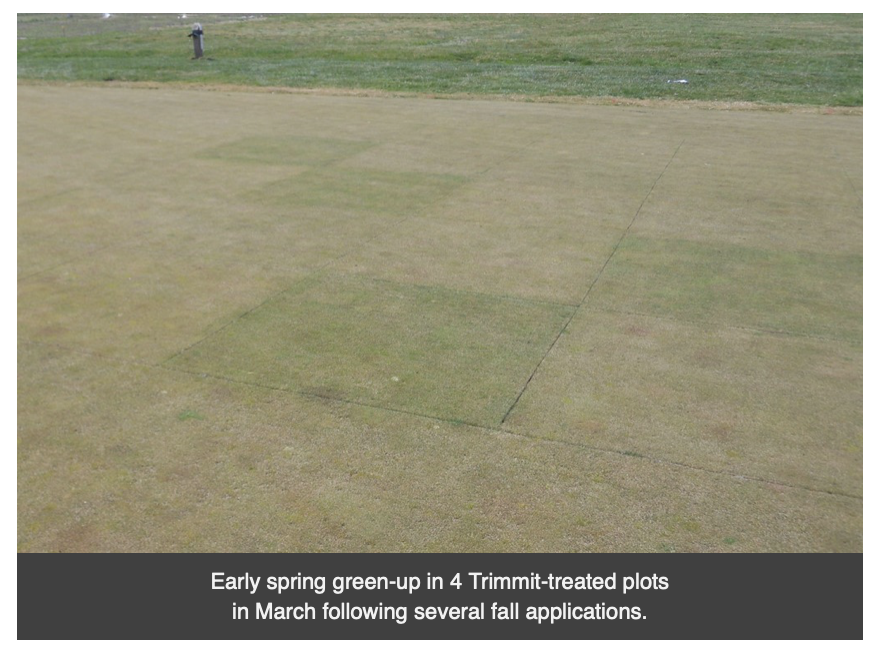
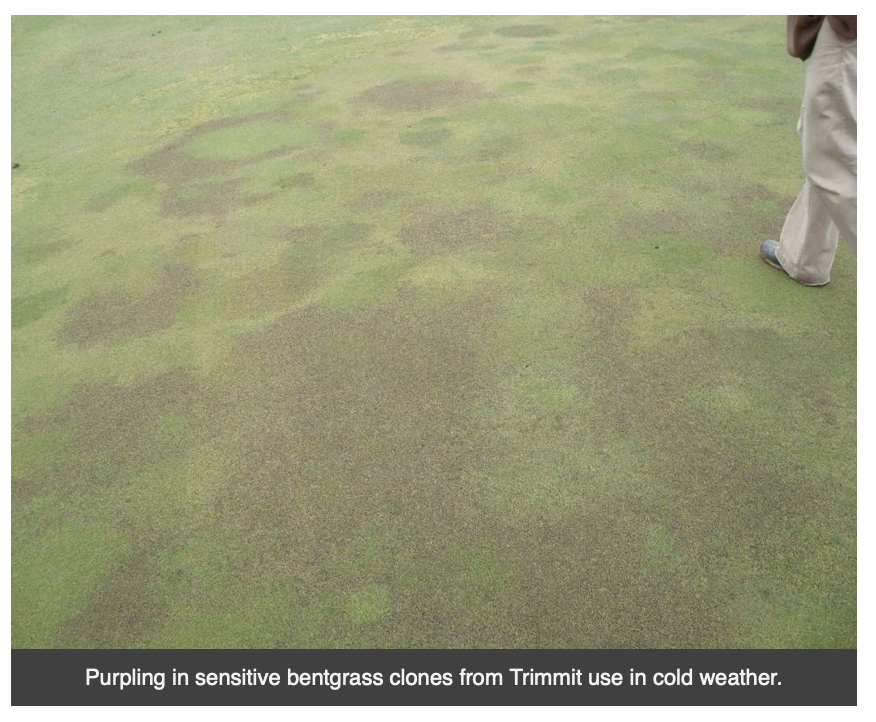
Trimmit /Cutless applied in spring and fall, when there are chilly or frosty nights, can cause bentgrass discoloration, which normally appears as a reddening or bluish-gray discoloration and sometimes a thinning response. Hence, Trimmit/Cutless should not be used if several nights of frost are in the immediate forecast. Affected Poa typically turns a yellow-measly color. Interestingly, we also found both a severe bluing response in winter followed by greening response in Trimmit-treated plots in March. It also should be noted that tall fescue and Kentucky bluegrass around greens can be badly discolored and deformed by Trimmit.
Every superintendent must get acquainted with using Trimmit/Cutless. There are no fast and hard rates or rules that apply to all. You need to play with rates and timings to find your comfort level. Further, it should be noted that neither Trimmit nor Cutless will eliminate Poa. Normally on older greens, a Poa population plateau will occur at about 10-15%. Thereafter, additional Trimmit/Cutless applications have no significant effect. Unfortunately, if the Trimmit/Cutless program is abandoned, Poa populations will rebound substantially in just one year. So, you will find yourself on a treadmill until a complimentary product comes along. PoaCure [methiozolin] appears to be part of the answer.
PoaCure: PoaCure was labeled in late 2019 by Moghu Research Center in South Korea. Its support staff in the U.S. is in Gainesville, VA. There is no distribution company, and orders are taken off the web or phone. What concerns me is the potential for yet unknown negative effects of piggy-backing applications of PoaCure and Trimmit/Cutless in spring and fall applications. The PoaCure label, however, clearly states that no plant growth regulators (i.e., Trimmit, Cutless, others), except Primo, should be applied until Poa control has been complete or about 30 days after the final application. Do not mix PoaCure with any other products. There is a lot of other important information on the label not discussed herein.
PoaCure has both pre and post activity and can suppress seedheads. Keep in mind, if your greens exceed 15% Poa you likely will be presented with large dead spots that will require re-seeding. Hence, it is best to use PoaCure where you have mostly small, scattered spots in the range of 1 – 3” inches in diam. In our region, applications should be made between October and November when night temperatures are above 50ºF and day temperatures are ≤ 80ºF. Follow-up applications likely will be necessary the following April to June period, before day temperatures exceed 80ºF. Rates range from 0.2 to 0.4 gal. product per acre (0.6 to 1.2 fl. oz/ 1000 sq ft), but the label recommends 0.6 fl oz. product /1000 sq ft PoaCure for greens use in the Mid-Atlantic region. PoaCure should be applied at least twice on a 14 to 21 day interval. There are little or no symptoms of Poa injury for at least 14 days. Following the second application, Poa begins to develop a yellow color. If satisfied, a third application may be beneficial, assuming severe heat or frost conditions are highly unlikely. To achieve the best possible results, two fall and two spring applications are usually needed. It also should be noted that there likely will be some Poa survivors.
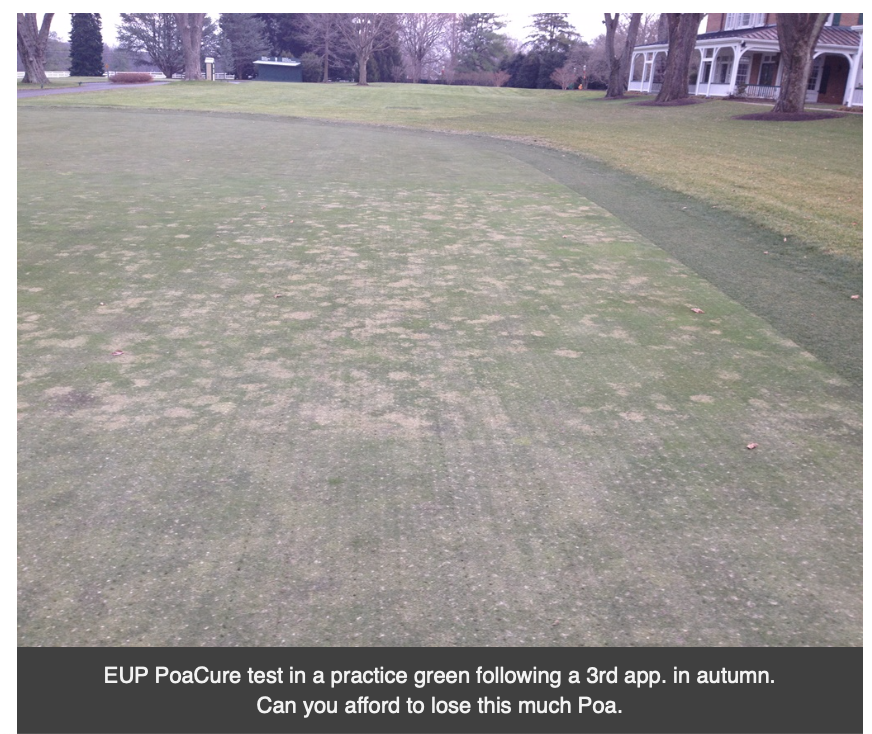
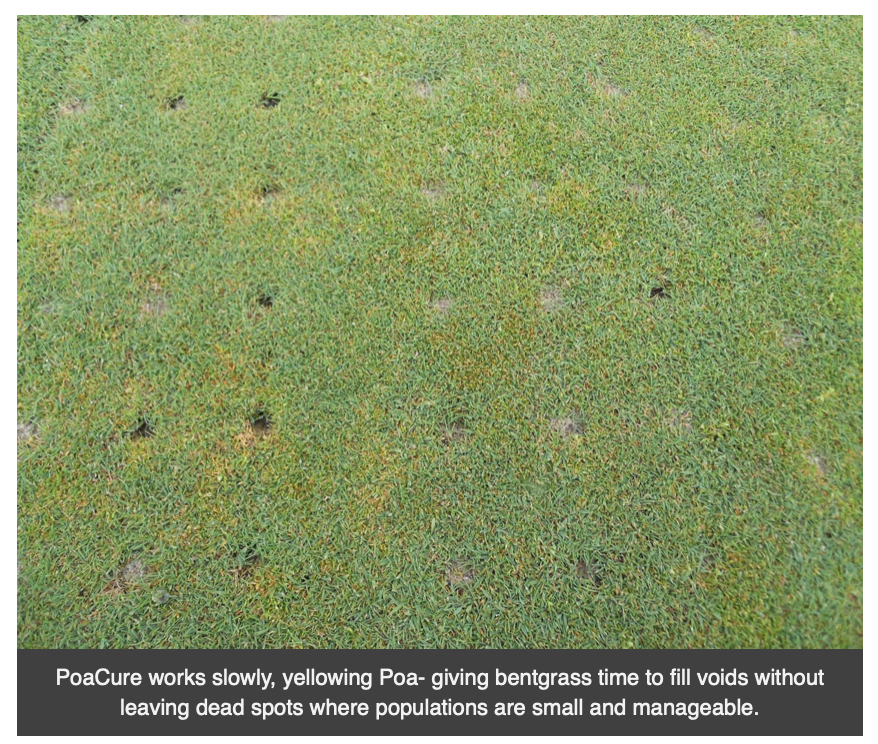
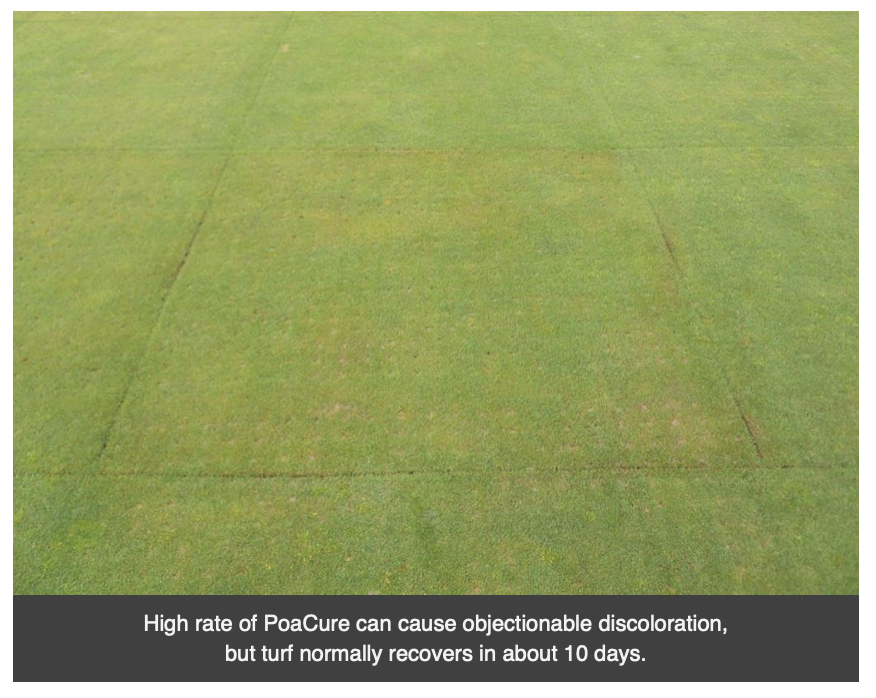
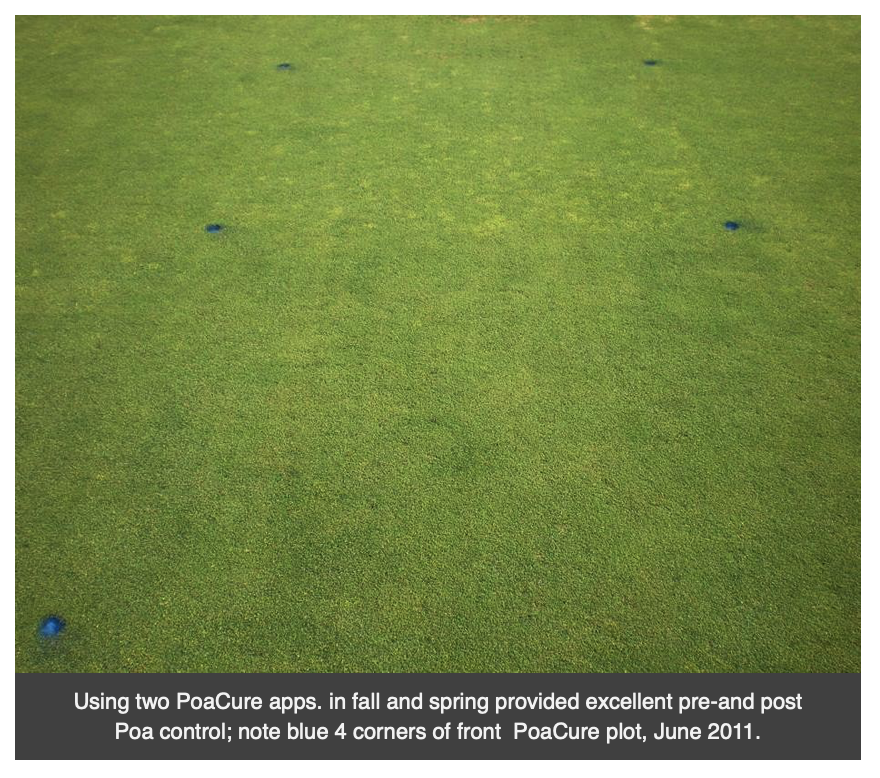
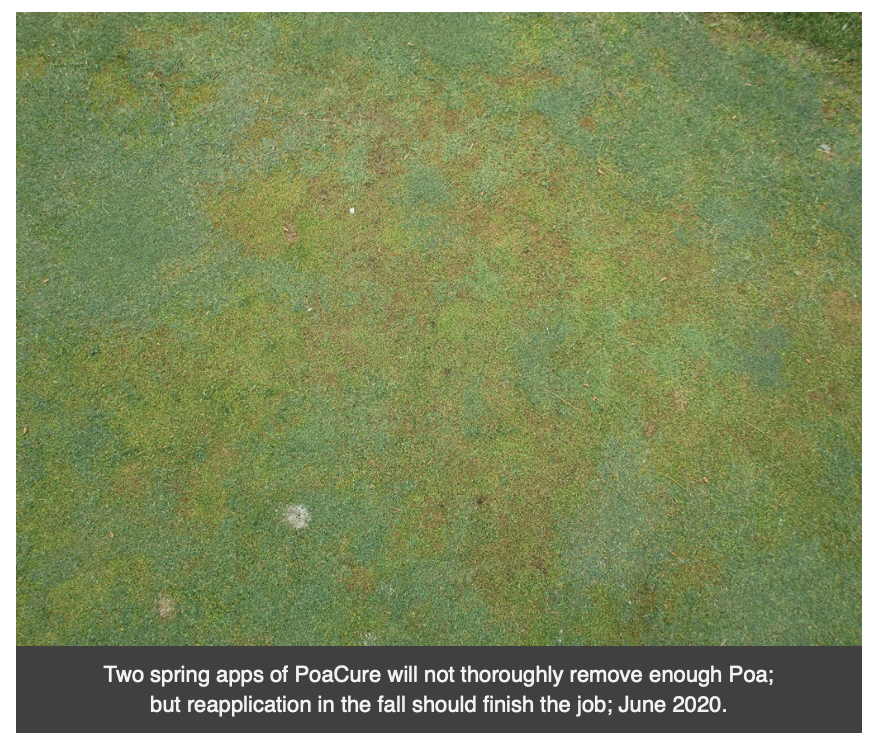
An interesting strength of PoaCure is that Poa death is very slow, which allows the creeping bentgrass to use tillering and its stolons to grow into weak and/or dying Poa spots ( most 1-3” diam. in our studies), resulting in little or no disfiguring dead spots. We also noted following the second application using the high rate some short-lived discoloration (purplish-brown lasting 7-10 days). More discoloration and other potential injurious effects of PoaCure can be intensified when used on wet and shaded greens. I think it safe to say that goes for all herbicides applied to greens. Superintendents should have an accurate estimate of Poa levels. Many managers underestimate the amount of Poa present, and can be presented with large dead areas and lots of criticisms! All superintendent need to get comfortable with new products and especially herbicides used on greens. I always advise superintendents to do their own testing on a practice green to learn how best to safely use new herbicides.
Thanks for reading! For more articles and information, visit the Dr. Pete's Turf Tips Archive.