
Gray leaf spot (GLS) did not become recognized as an important disease in our region until 1995, when it destroyed many acres of perennial ryegrass on golf courses in the mid-Atlantic. During the epidemics of 1995 and 1998, the disease appeared in July during periods of extreme heat and drought stress. In more recent years, it has been a disease beginning around Labor Day, but in 2015 it hit Baltimore area golf courses in mid-July and became apparent on Delmarva in mid-August. While no one has figured out the environmental factors that trigger GLS, in 2015 it was associated with heavy rain events followed by sunny and hot weather.
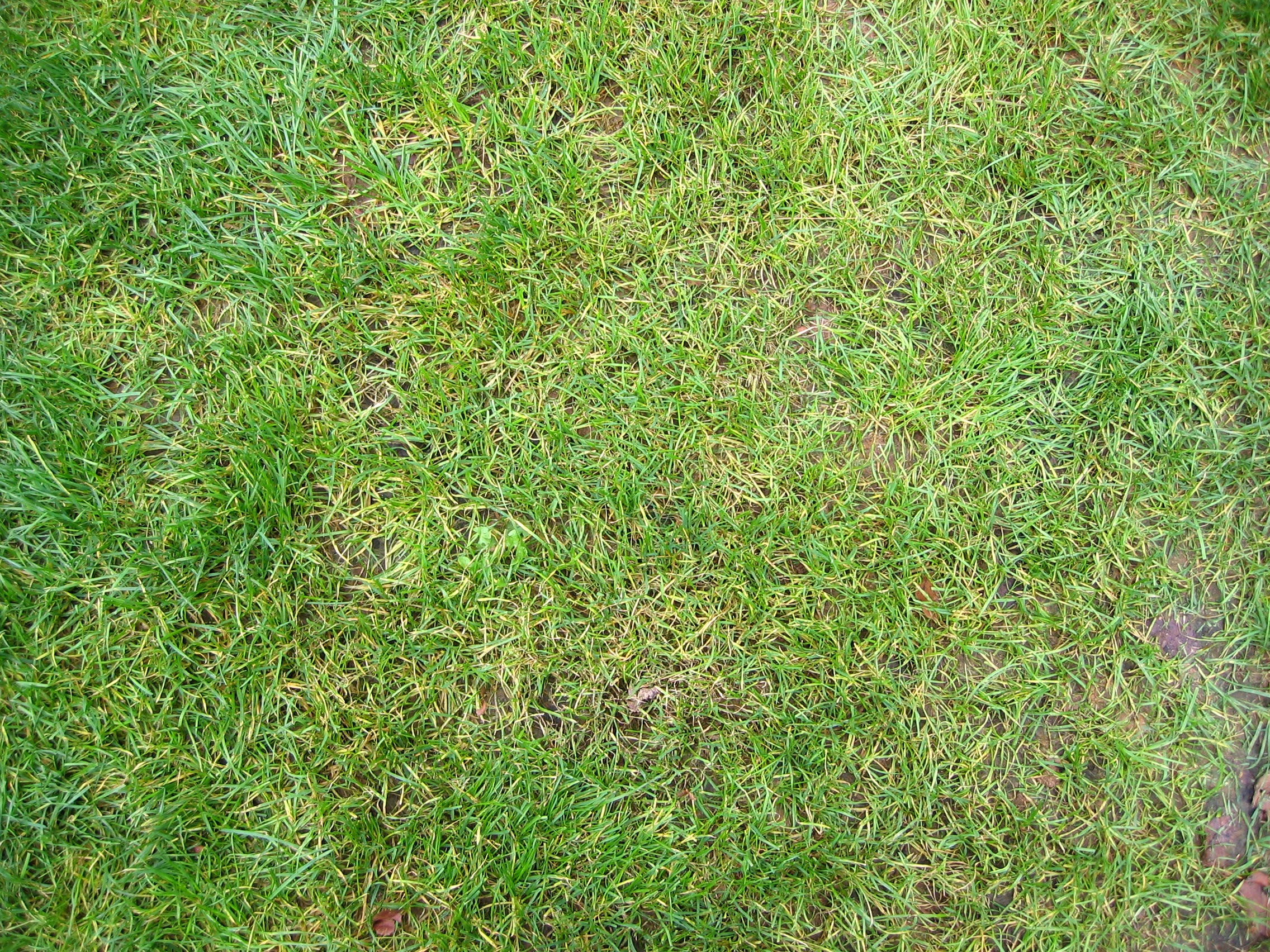
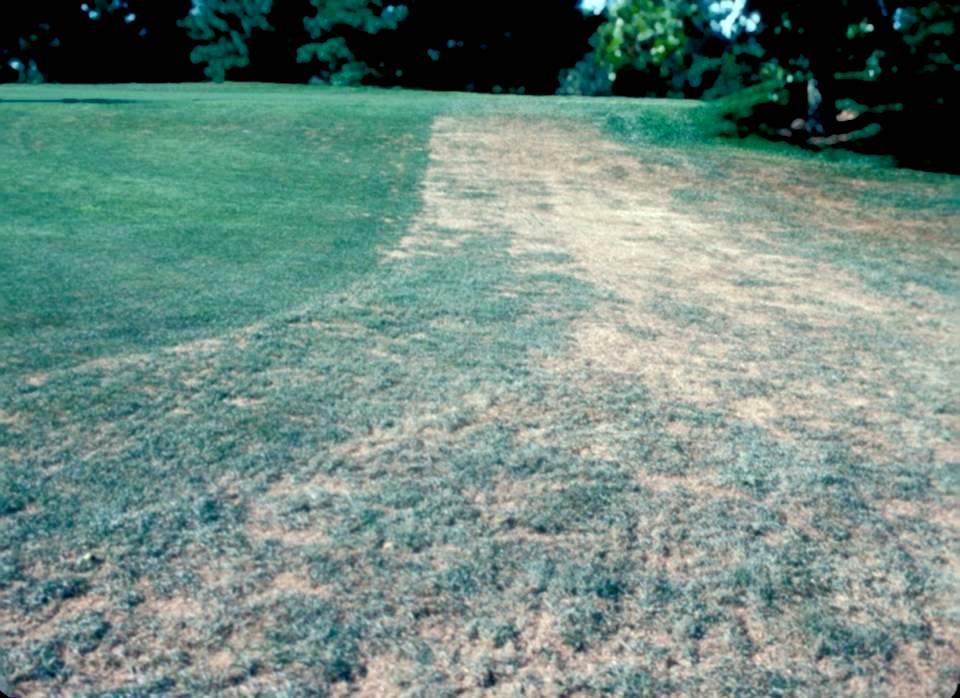
Gray leaf spot epidemics hit rapidly. On golf courses, GLS is mostly destructive in perennial ryegrass areas not routinely receiving fungicides like roughs and tee surrounds. From a standing position, the first observable symptom is the appearance of wilted, gray or tan colored spots 1.0 to 2.0 inches in diameter, which easily could be confused with dollar spot. In hot weather, dead spots enlarge and collapse in 1-3 days. During severe epidemics, infected stands develop a bluish-gray hue, which is typical of drought stress symptoms. Hence, perennial ryegrass that appears wilted in the presence of adequate soil moisture is a good indicator of GLS. The disease is most severe in heat-sink areas, such as south-facing hillsides and knolls and in areas compacted by cart traffic. Under less favorable environmental conditions, the disease usually requires several weeks to develop and become noticeable. In autumn, infected stands may appear chlorotic, thin and unthrifty. Thereafter, turf may lose density gradually or rapidly depending on weather conditions.
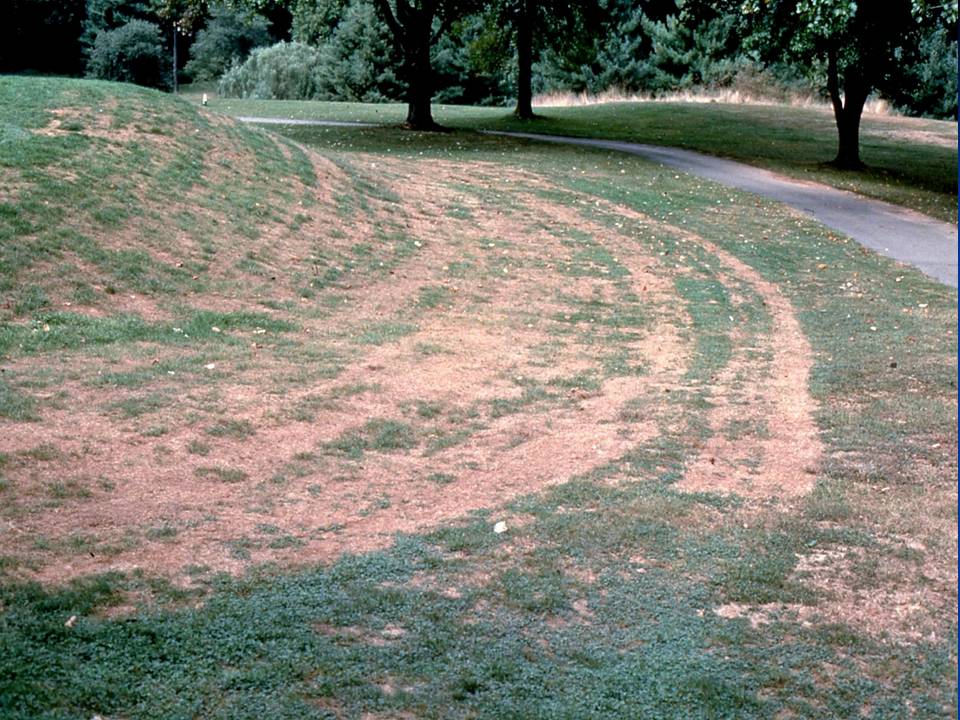
Gray leaf spot initially attacks leaves via spores, and within hours leaf tips may appear water-soaked, gray or yellow. Thereafter, leaf spot lesions and leaf twisting (i.e., fish hook symptom) appear. Spores can be disseminated rapidly by mowing, resulting in a streaking pattern. Leaf lesions generally are circular to oblong, about 0.125 to 0.25” long and grayish-brown. Lesions frequently develop along the margins of leaf blades. A yellow halo sometimes can be observed bordering lesions. Lesions, however, may be the size of a pinhead and very dark-brown. In early morning hours twisted leaf tips or lesions on the margins of leaves may appear felted (by mycelium), and infected tissues may be gray, dark-brown, purple, or yellow
 Vigilant scouting for GLS requires almost daily attention from mid-summer through autumn. Some management practices that may help reduce GLS severity include: avoid mowing when leaves are wet; collect clippings; avoid applying high rates of nitrogen during active disease periods; avoid herbicide and plant growth regulator use when the disease is active; and maintain adequate soil moisture levels.
 Preventive applications of fungicide(s) are the most effective approach to controlling GLS. Once disease develops, higher curative rates and more frequent fungicide applications are required. If the disease is active, it is important to mix a contact fungicide (e.g., Daconil, Fore and Secure) with a QoI / strobilurin fungicide (e.g. Dismiss, Heritage, Insignia, others) for the best possible knock-down and residual protection. Biotypes of the GLS fungus have developed resistance to Heritage; hence, it and related fungicides should not be used continuously in GLS management programs. Because resistance is a threat, it is important to rotate with other fungicide modes of action such as Affirm/Endorse or a DMI/SI (e.g., Banner MAXX, Bayleton, Eagle, Trinity/Triton, Torque, Tourney, others).