
Charles Darwin, the famed 19th century naturalist, is best known for his “theory of evolution.” Darwin, however, was a brilliant overall biologist, and he referred to earthworms as “the intestines of the earth.” Earthworm (aka night crawlers) diets include tiny bits of dead plant organic matter, protozoa, rotifers (mesmerizing, transparent, tiny organisms that spin and rotate hairs [like a fan] to propel tiny bites of organic matter into their mouths), bacteria and fungi. Earthworms do not eat living grass tissues. Earthworms are segmented invertebrates. Young and old look alike and they grow by adding segments. They migrate up and down their burrows in response to fluctuations of soil temperature and moisture. Earthworms tunnel all year long when soils are not frozen. They are most active following periods of rain in spring and autumn. They construct vertical burrows that can extend 8 to 12 feet deep into soil; but in turfs, they probably only go down below the frost line. Their means of locomotion is via muscular contractions, using tiny claw-like hairs called bristles, to cling to soil particles to get leverage. During rainy periods they surface in search of mates. Mating activities result in mucus depositions on surfaces-often seen on greens in the early AM. Eggs are laid in cocoons just below the soil surface. They also surface in search of grass clippings, which they pull down into their tunnels. Hence, casts mostly appear when earthworms surface in search of food and/or to mate. Soil/organic matter is ingested and passes through a crop and gizzard and then onto intestines, where nutrients are absorbed. They pass the excess as castings –only seen on the surface. I vividly remember dissecting earthworms in biology class. I doubt it is a part of today’s high school or college curriculum.
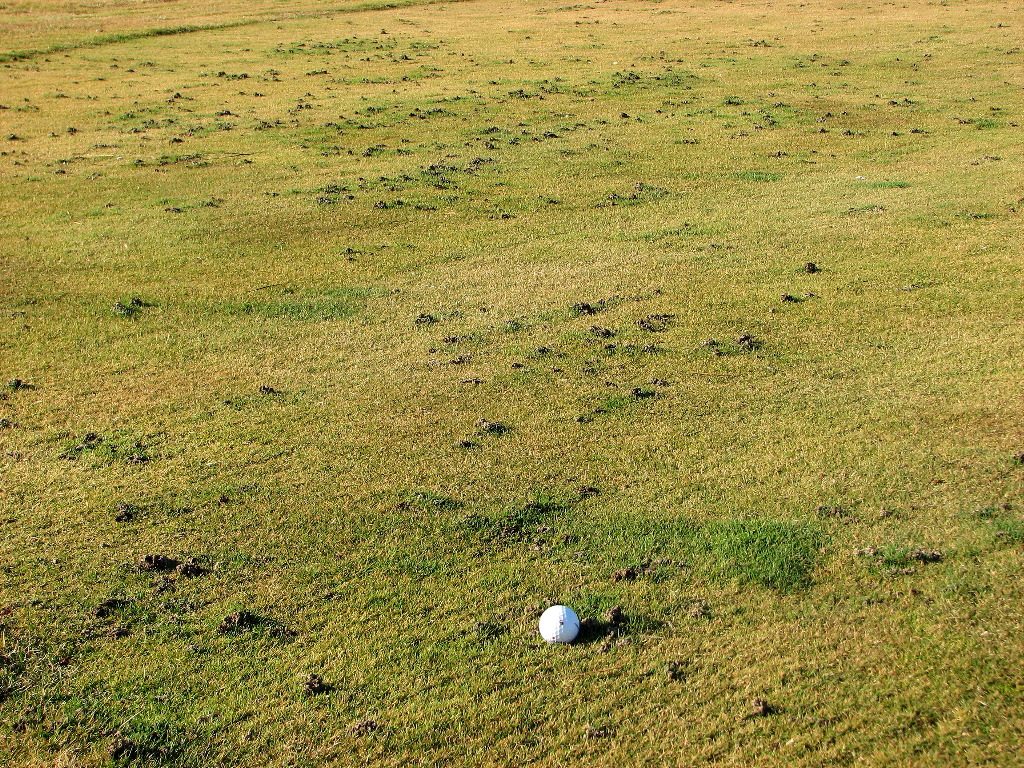
Earthworm castings on a fairway in autumn.
Earthworm activity involves the decomposition of plant remains (usually dead or senescent leaves and stems of grasses), which they are able to ingest, pass and incorporate with soil. Their tunneling not only mixes soil with organic matter, but also improves soil structure, increases the availability of nutrients, and creates channels through soil that promote the ingress of air and water. They are extremely beneficial to the health of soils. Their excrement “or castings’ include deposits of soil mounds mixed with digested organic matter. Earthworms’ casts are most noticeable and abundant on close cut golf course tees and fairways during cool and moist periods.
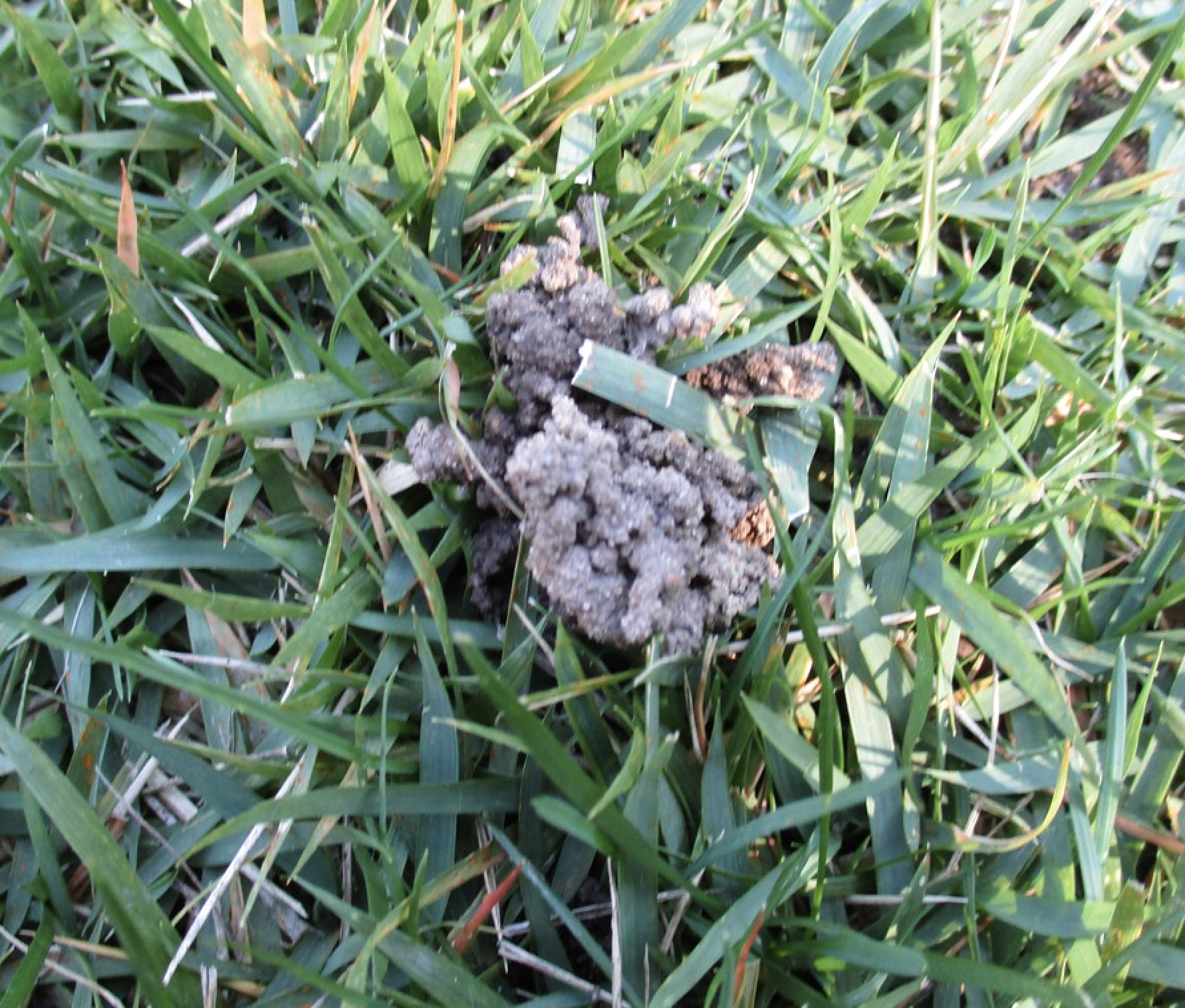
Earthworm castings consist mostly of soil mixed with dead organic matter; tall fescue lawn October, 2021.
Earthworms are somewhat less numerous in sand-based rootzones of golf greens . Their castings and/or their dew- trails (related to mating activities at night) can be seen on wet canopies of greens and tees early AM. . Evidently, angular sand particles irritate earthworms and deter their tunneling activities in sand-based rootzones. It also is probable that the generally drier soil conditions in sand-based rootzones discourage their activity. Castings also are common in lawns, and are a cause for “lumpy lawns”, but generally cause few issues with aesthetics or the potential of castings to damage mower blades.
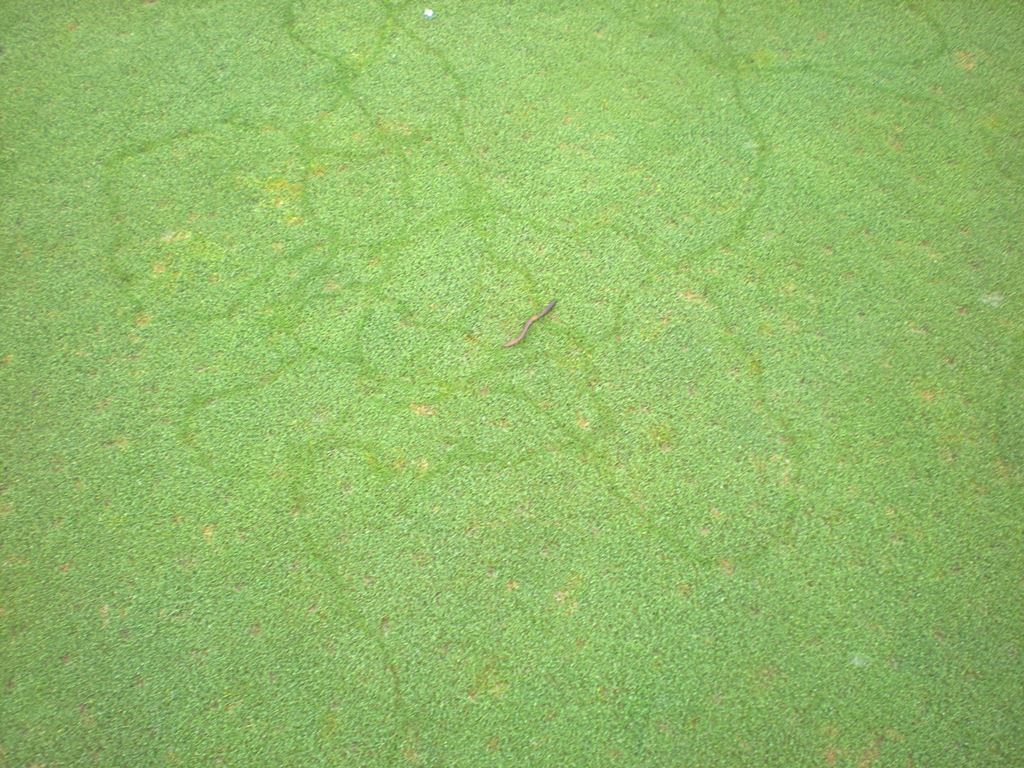
Earthworms surface at night leaving dew trails in search of food and-or mates.
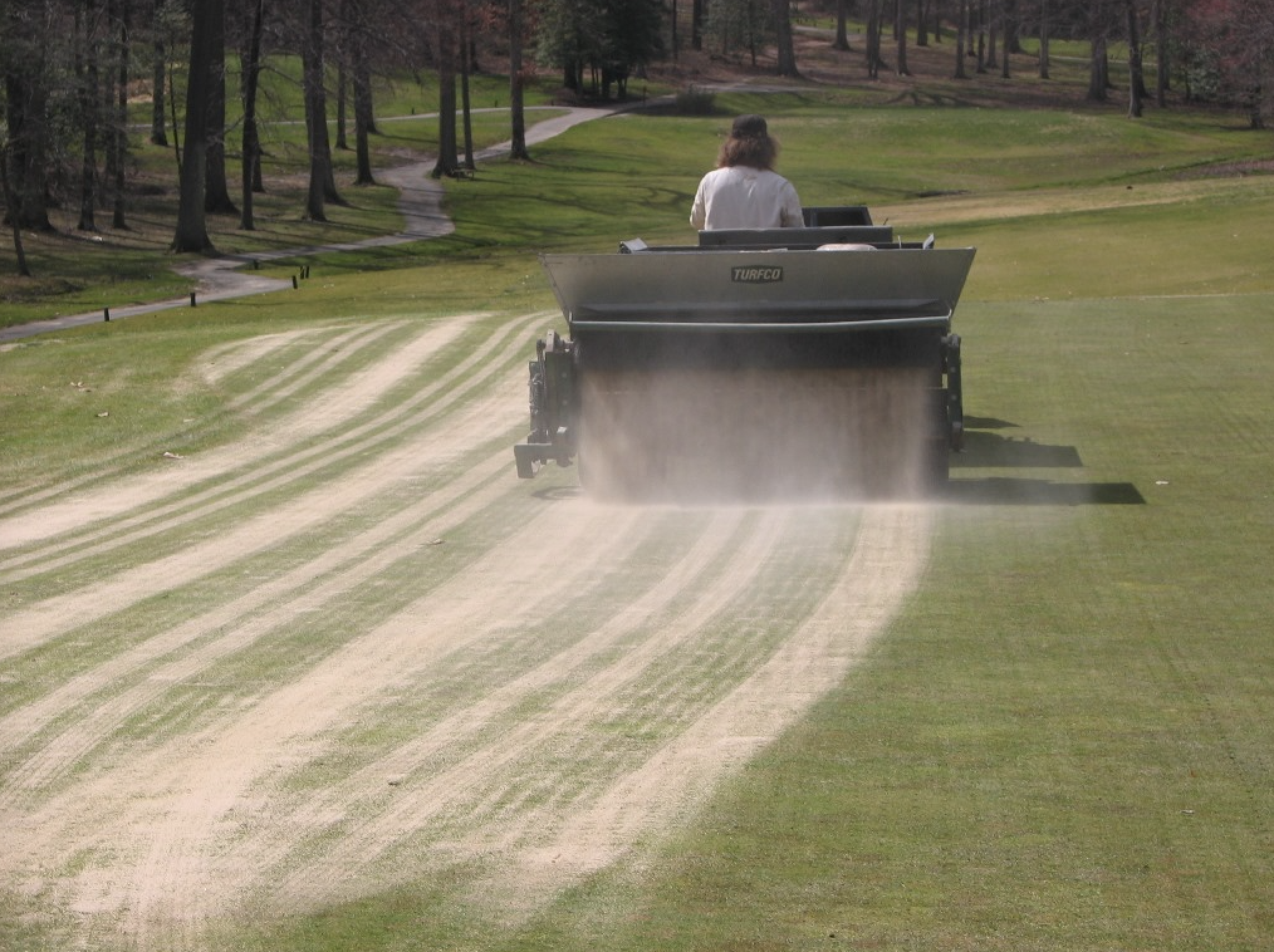
It once was believed topdressing fairways with sand would minimize earthworm problems; not so, but at least castings are sandy and easily dispersed.
Earthworms tend to remain closer to the surface in fairways, where there is regular irrigation and a good food supply in the form of clippings. Castings interfere with mowing, playability and aesthetics, and dull mower blades. The main problem is that rollers on mowers and tires of maintenance equipment flatten, smear and compact castings, causing a muddy mess. Sometimes grass is smothered in spots where mud has compacted turf for long periods, which usually is associated with rainy weather that drives earthworms to the surface. The compacted casts also promote weed invasion since they contain weed seed brought to the surface by earthworms. On greens, superintendents routinely whip or brush putting surfaces to disperse castings prior to mowing.
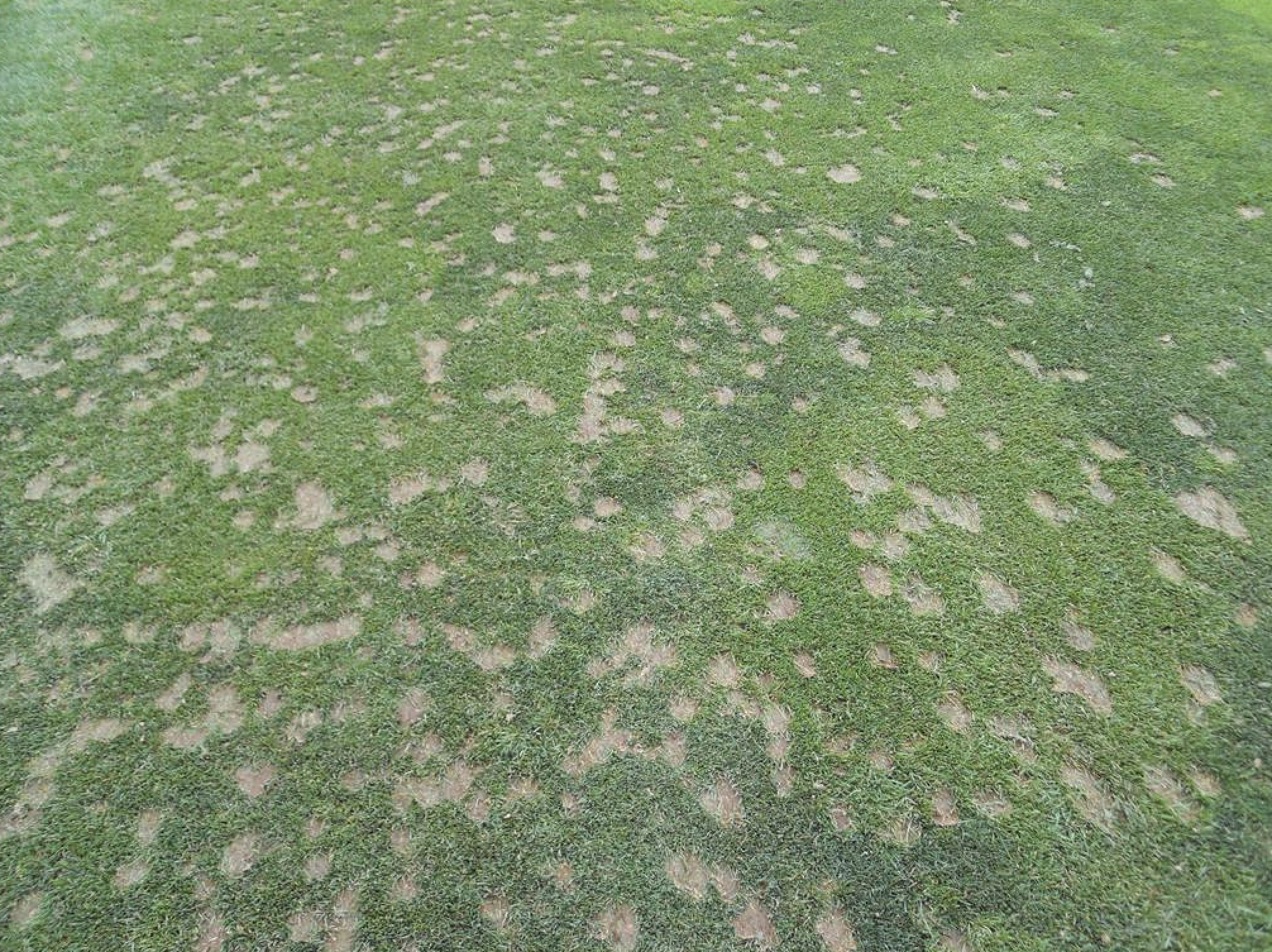
During rainy periods, Earthworm casts are flattened by rollers causing a muddy mess.
The presence of numerous earthworms, can promote the activity of feeding scavengers. Moles are the most common earthworm hunters in turfs, and can cause severe turf damage via their aggressive tunneling activities in spring and autumn. Skunks, wild pigs (in Europe), armadillos, birds, and other critters can tear apart large areas of turf in search for a juicy meal. At this point they become pests.
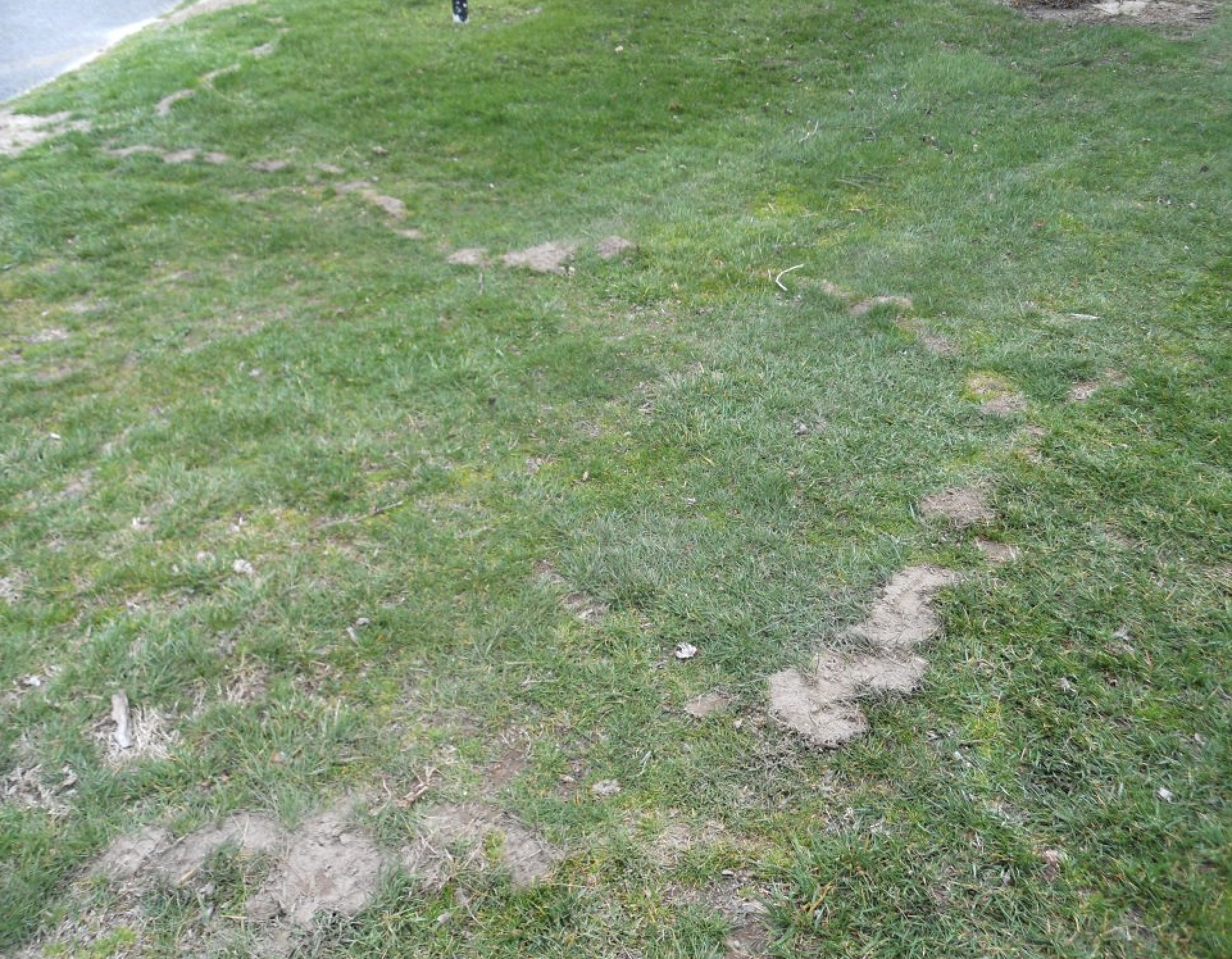
Moles are the most common earthworm hunters in turfs, and can cause severe turf damage via their aggressive tunneling activities in spring and autumn.
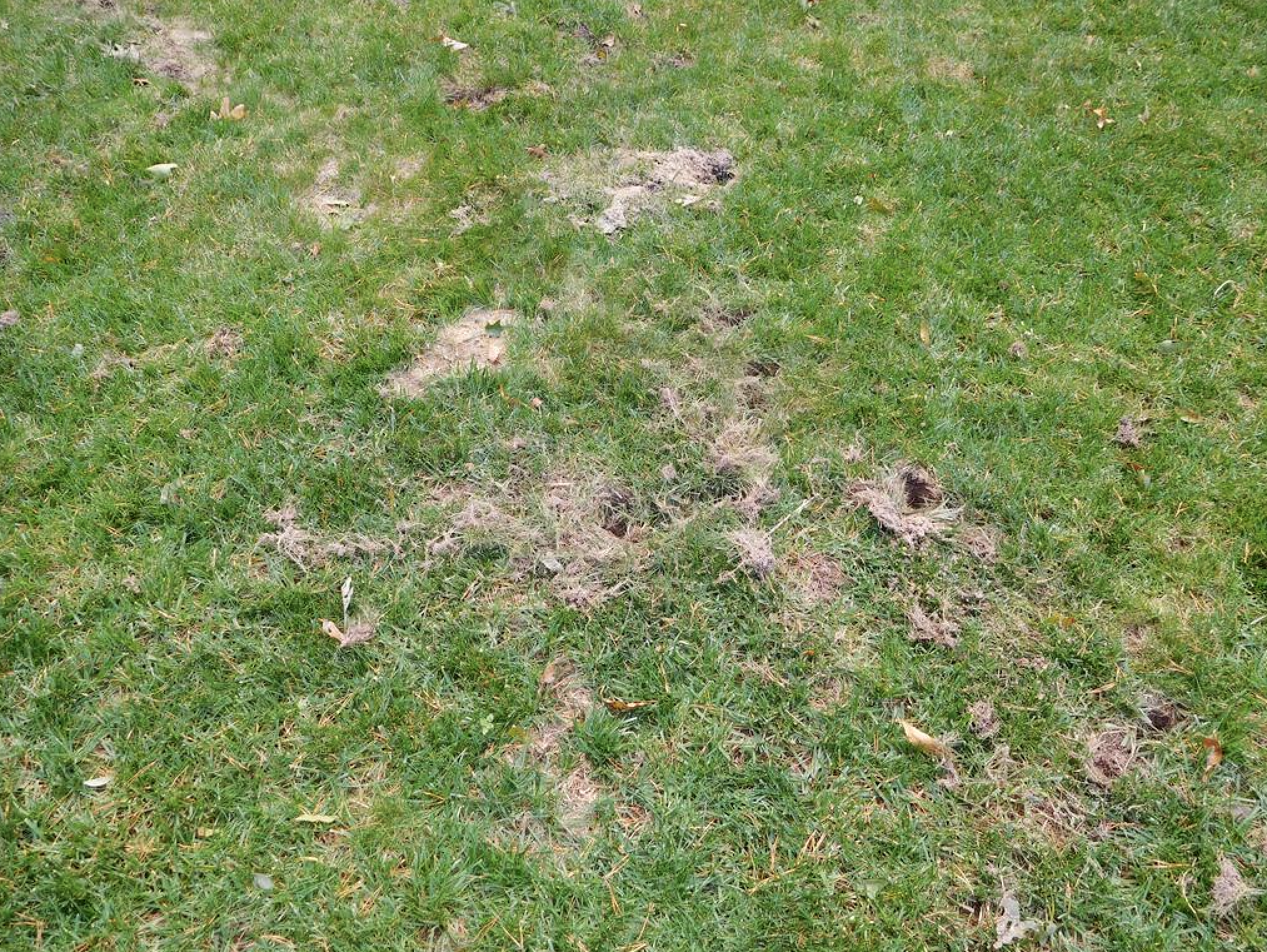
Moles exit holes in a lawn Oct. 15, 2019.
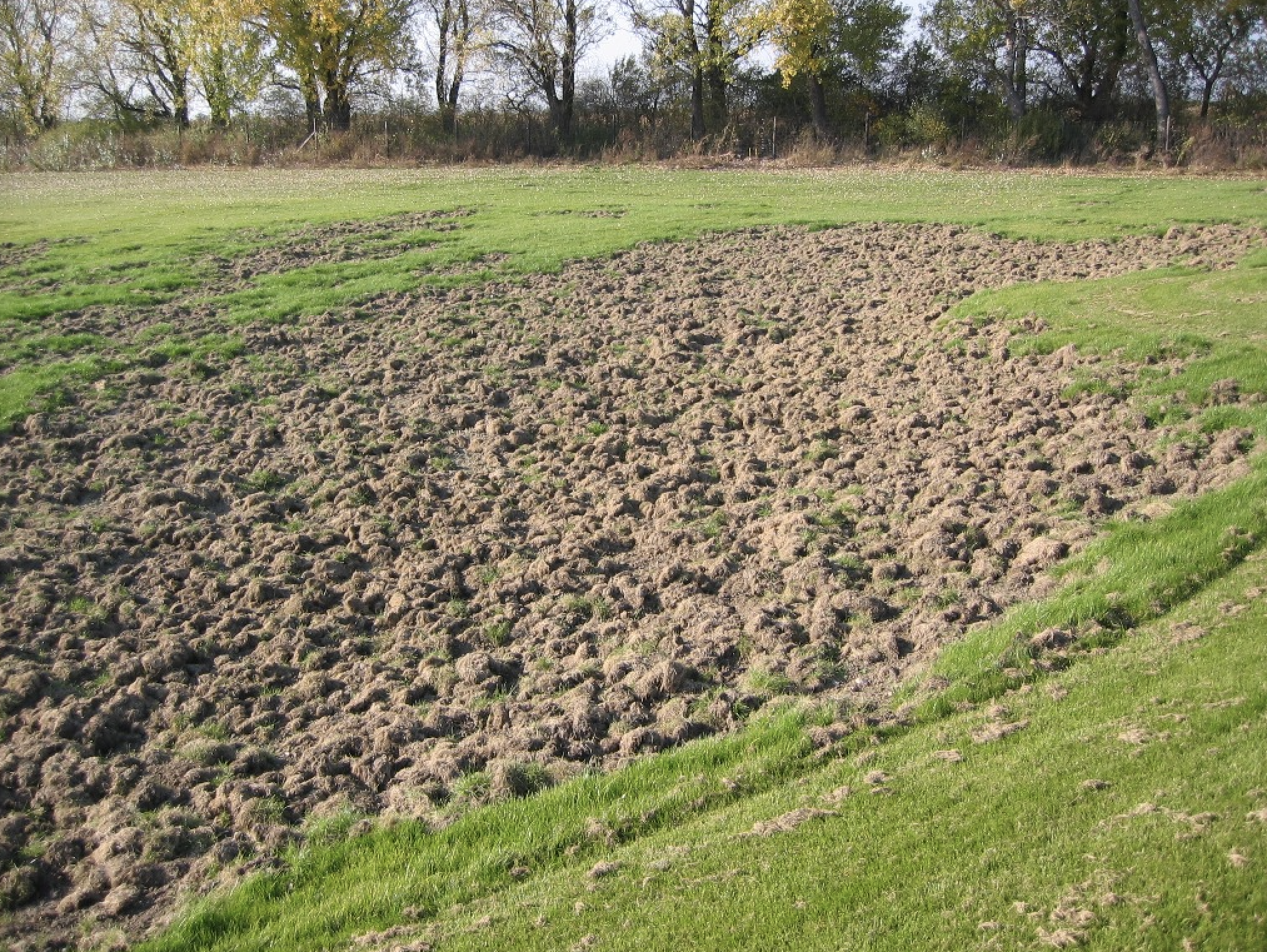
This damage caused by wild pigs foraging earthworms and insects in Poland. My good friend Stan Z. and I visited this course following a conference.
Management: Cultural approaches seldom reduce the problem. The activity of earthworms may be reduced by acidifying soil with ammonium sulfate. Clipping removal reduces their food supply and this causes earthworms to move deeper in soil and thus become less of a problem. While it once was believed that topdressing with abrasive sand would discourage earthworm activity, this has not been the case for superintendents who sand topdress fairways. Following years of topdressing fairways, however, castings become sandier, dry quickly and are more easily dispersed.
Since earthworms are considered beneficial there are no pesticides registered for their control. Carbaryl (e.g., Sevin® introduced in 1958), granular forms of Pyrethroid insecticides, as well as thiophanate-based fungicides (e.g., 3336®) can be toxic to earthworms. In Europe, irritants are used to force earthworms to the surface, where they are raked into piles, shoveled into wheelbarrows, and relocated.
Research has demonstrated that watering-in tea seed meal pellets (i.e., seeds of the Chinese tea oil plant, Camellia spp.) is effective in expelling earthworms from soil. Tea oil contain a soap-like substances (i.e., saponins), which irritate the membranes of earthworms causing them to surface. Early Bird® is a tea seed extract marketed as an organic fertilizer (3-2-0) and has been shown to reduce castings.