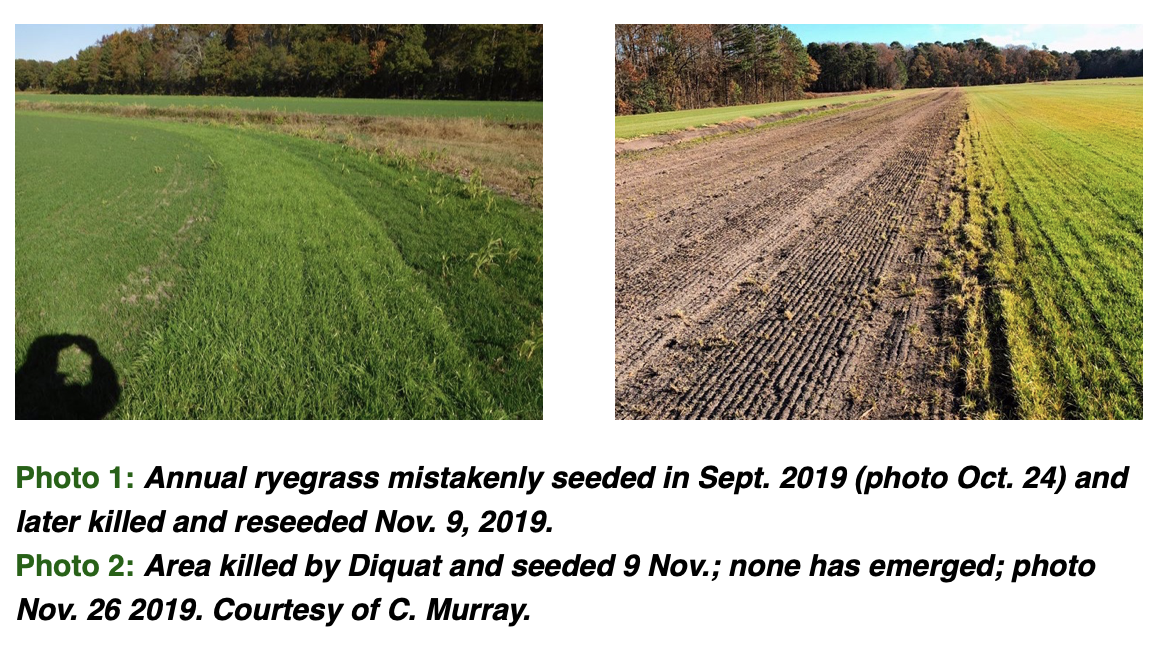
The best time to seed cool-season grasses (i.e., creeping bentgrass, perennial ryegrass, Kentucky bluegrass and fine and tall fescues) in our area of the mid-Atlantic region (i.e., between Philadelphia and Richmond) normally is late August to late October. My “rule of thumb” always has been that it is best to get seed into the ground by mid-October. The mid-October deadline is suggested since colder nights and threats of frosts normally begin to occur in this timing. Colder soils greatly restrict emergence of these grasses.
Frost first developed the first week of November, 2019-at which time our day time temperatures fell in the range of 5 to 10oF below the normal average. Soil temperature and adequate soil moisture are the most important factors in seed germination. In general, most cool-season grasses will germinate in about 7 to 10 days when average daily soil temperatures exceed 68oF. Higher soil temperatures will stimulate more rapid germination as long as soil moisture levels are favorable. Turfgrass seed is not likely to germinate when soil temperatures fall below 60oF, but there may be warm spots (i.e., southwest slopes; adjacent to sidewalks and paths, etc.), where seed will emerge even during chilly days. Temperatures near the soil surface closely mimic air temperature. Keeping in mind that average daily soil temperatures near the surface above 68oF are needed to promote germination, it is notable that during the first three weeks of November 2019, daily average day temperatures generally ranged between 50 to 57oF; but average night low temperatures ranged from 30 to 36oF. Hence, seeding after 1 Nov. was unlikely to be successful this year.
“Indian Summer” refers to a warm or mild period (normally 3-4 consecutive sunny days ≥ 65oF) occurring following a series of autumn frosts. Indian Summer is commonplace in the mid-Atlantic and it is the major reason why seeding’s performed after mid-October often are successful. As of date, however, we have had no warm Indian Summer conditions.
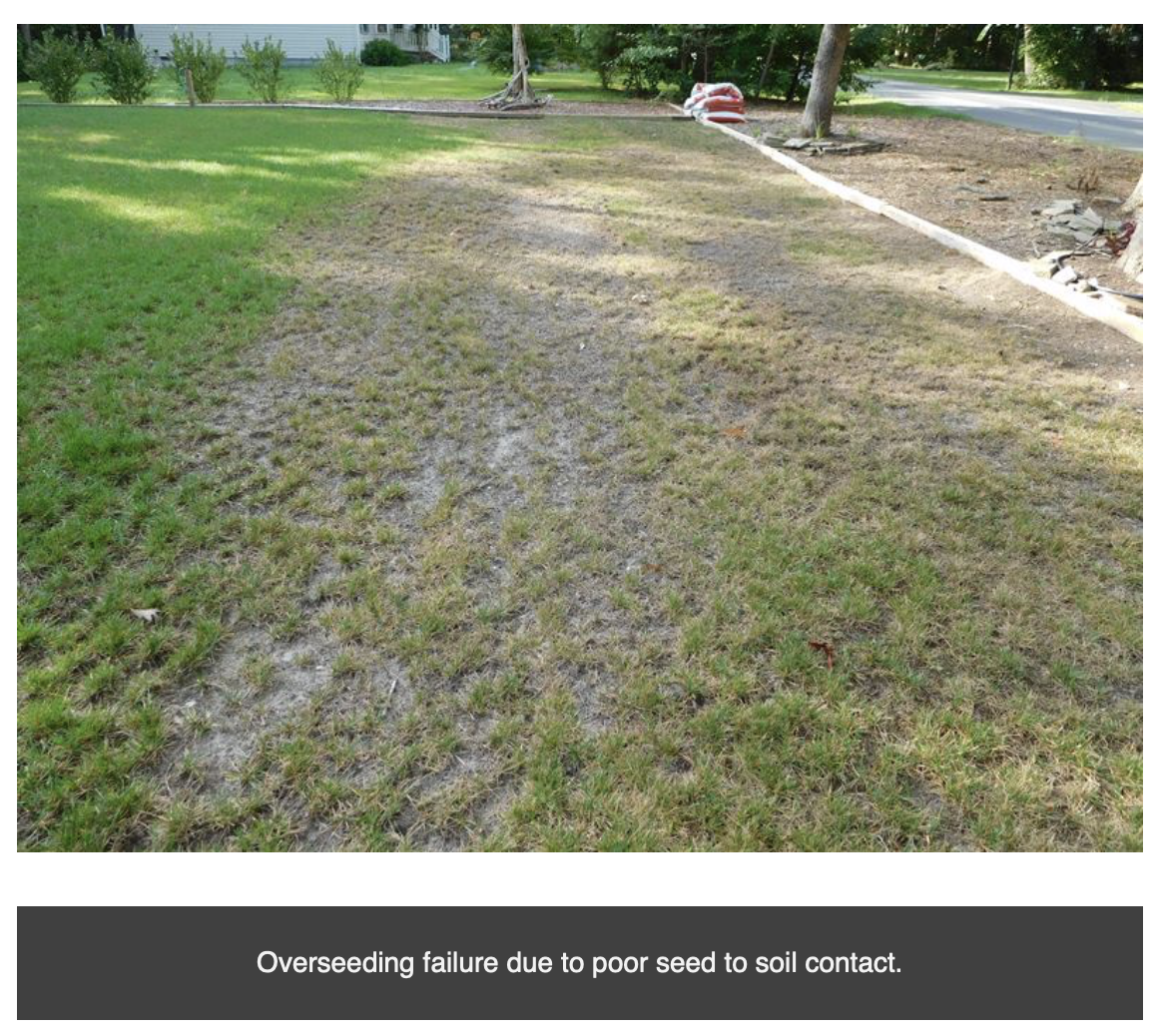
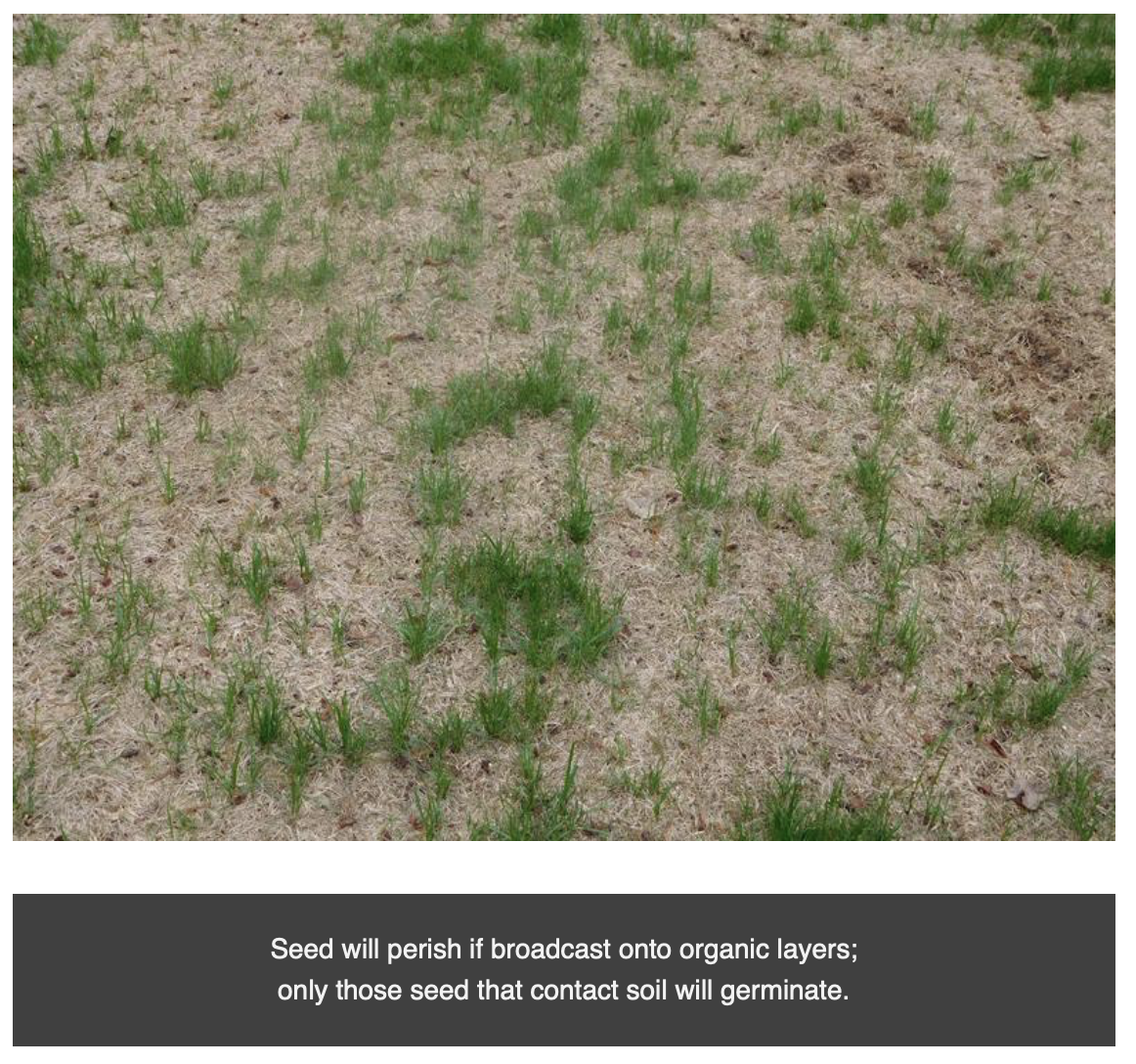
Aside from soil temperature and moisture, there are several other reasons why seeding’s fail. The most notable is failure to ensure that seed makes contact with soil. The ONLY exception is perennial ryegrass, which is mostly used on golf courses. Perennial ryegrass has the remarkable capability of being broadcast onto surfaces, yet somehow a primordial leaf (cotyledon) manages to emerge and root, even on dead mats of organic matter (e.g., thatch). Perennial ryegrass, however, is unsuitable for lawns because of its susceptibility to diseases and other reasons.
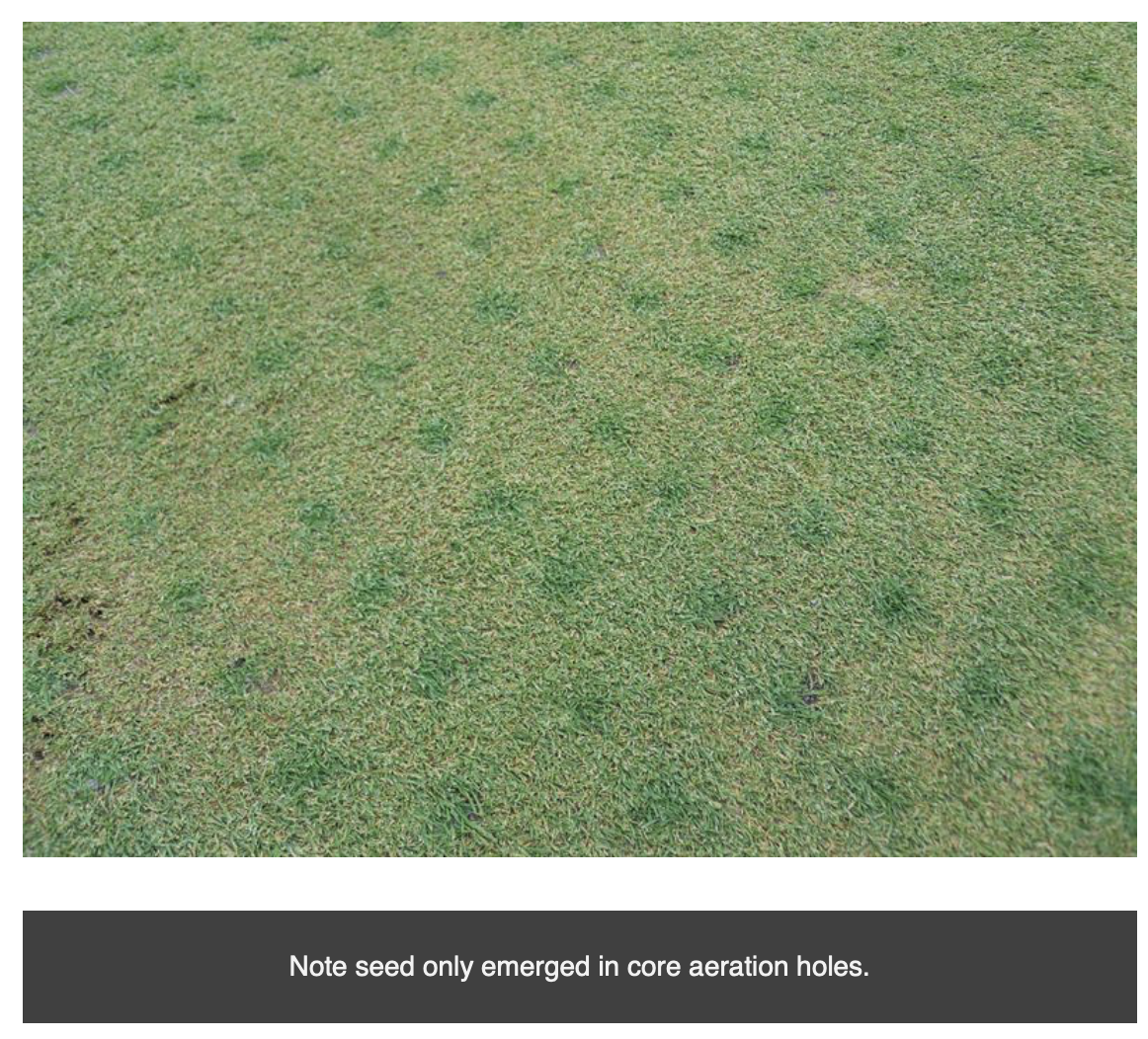
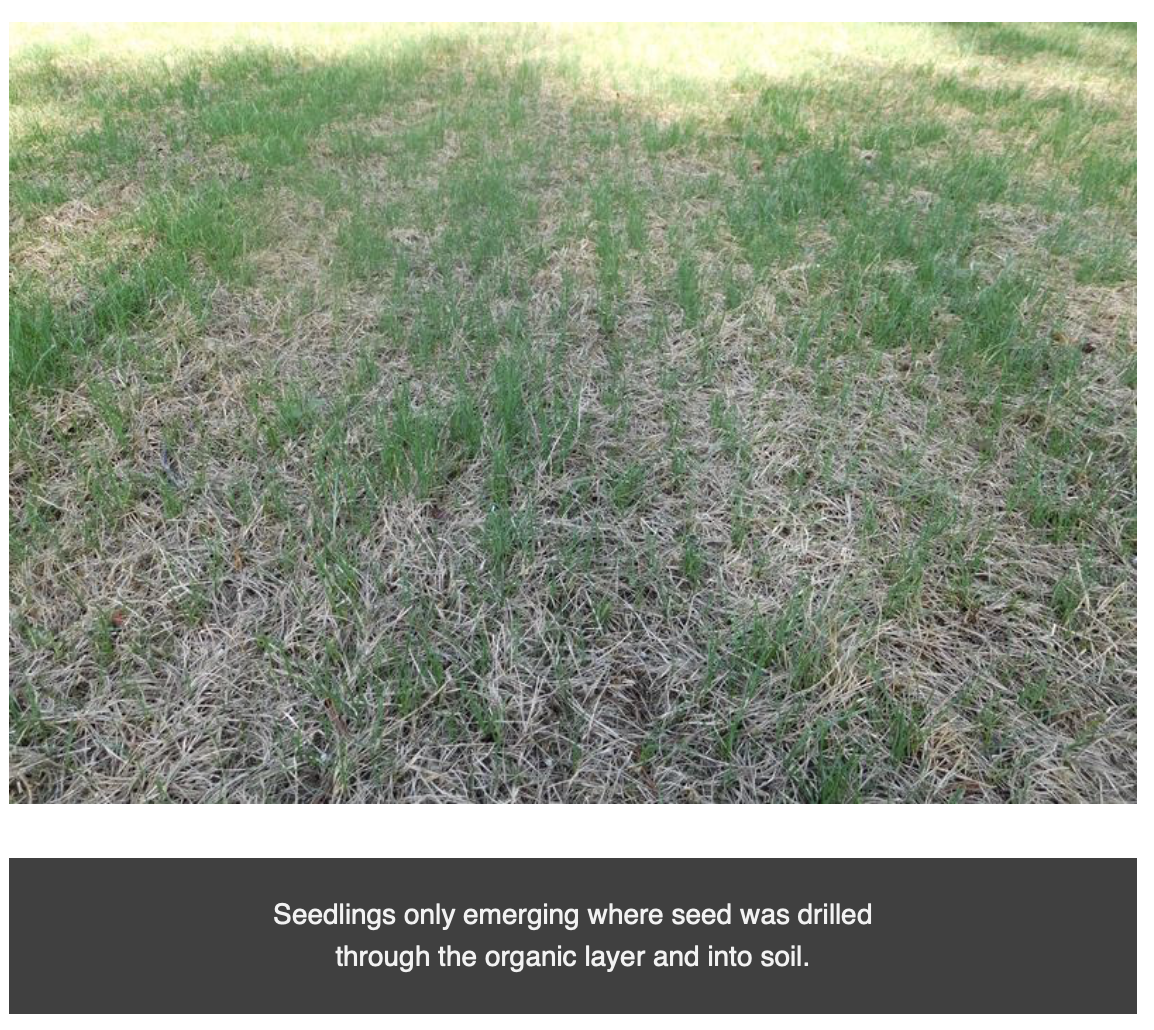
Except for perennial ryegrass, seed of all other cool-season turfgrass species must make firm contact into soil. Broadcasting seed onto surfaces will not work! Seed must be inserted (e.g., drilled) or otherwise physically incorporated by raking or dragging. In the trade, it is called “seed to soil contact.” Broadcast seeding followed by spiking is doomed to failure since only insignificant numbers of seeds can be physically inserted (i.e., contacted). Coring and over-seeding at best results in some seed germinating in holes. All of the other seed placed on surfaces that are out-of-contact with soil will perish.
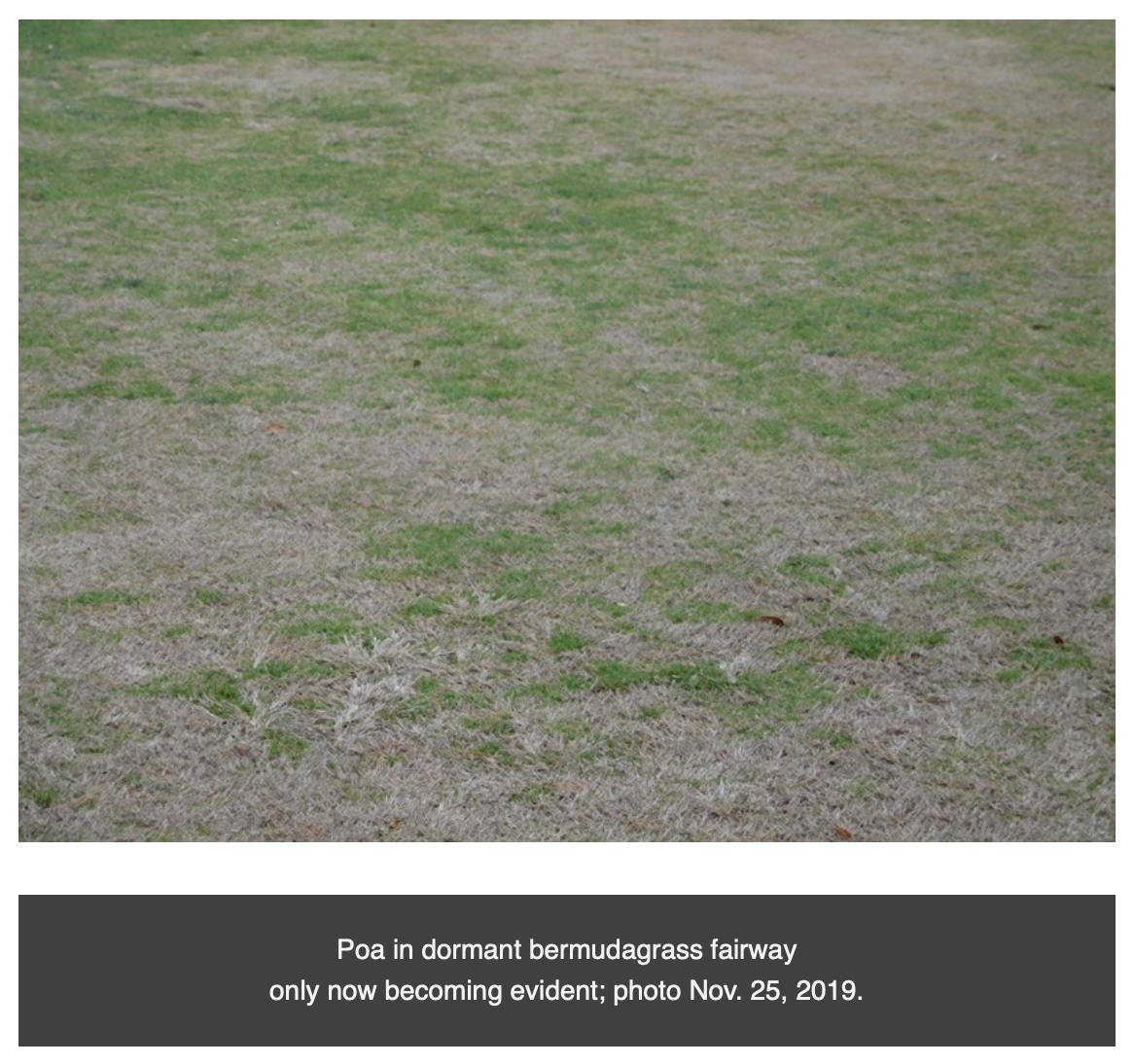
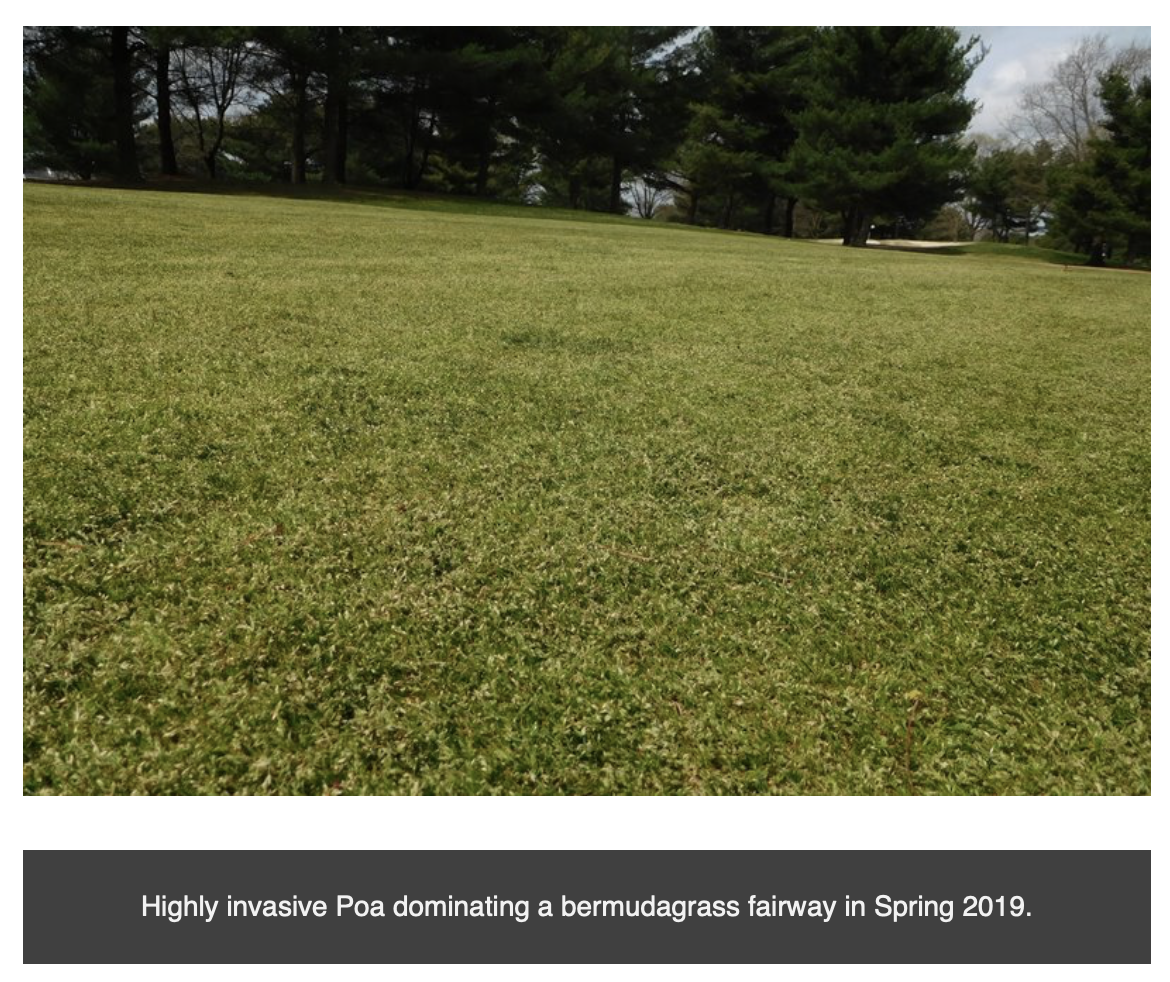
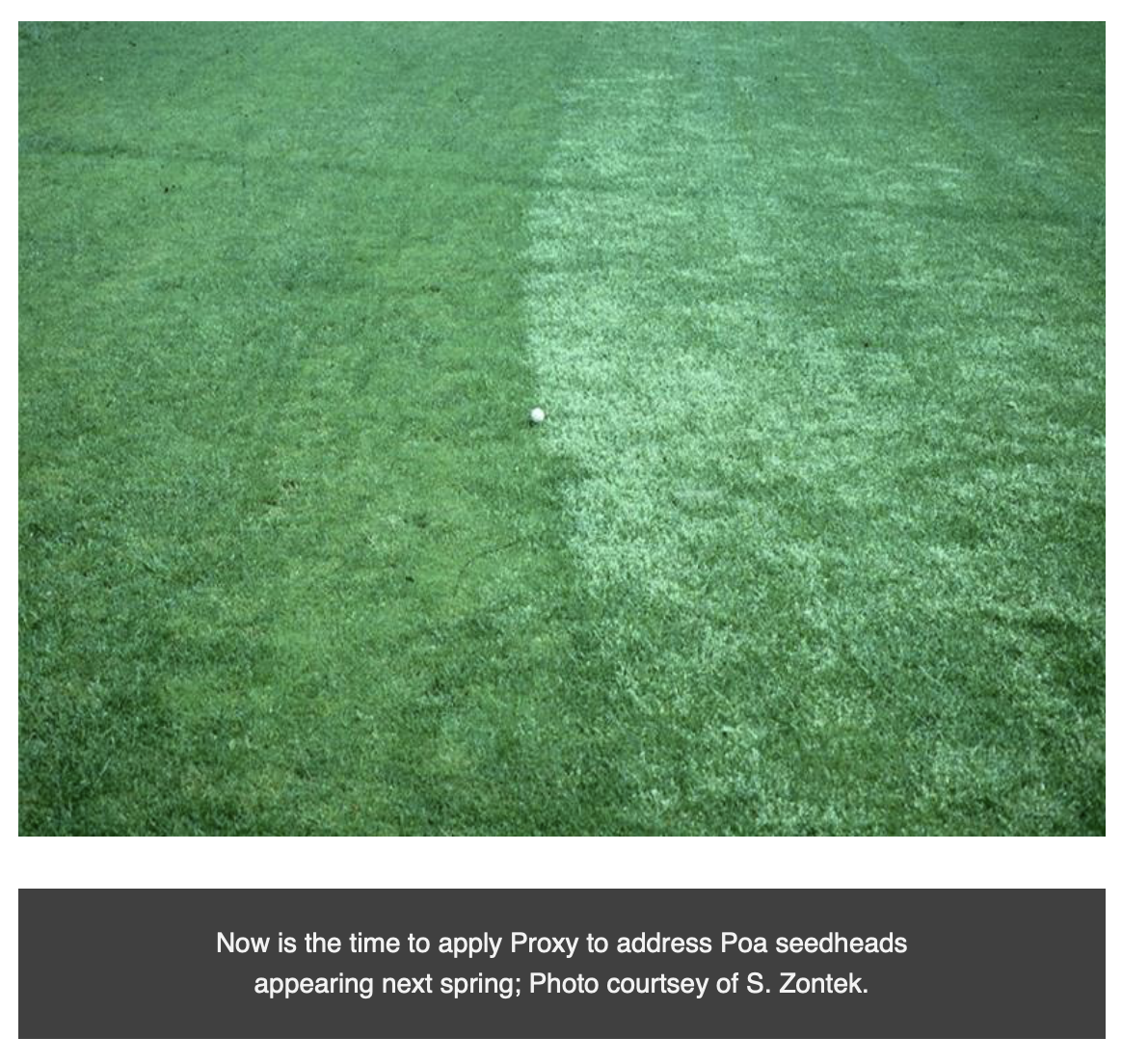
Annual bluegrass (i.e., Poa anua; Poa) is by far the most enigmatic and difficult to manage weed in cool-season turf. Poa typically begins germinating in low numbers following the first major rainstorm after Labor Day. In most years, Poa blows out of the ground between early October and early December, and most seed that will germinate have done so prior to Christmas. Small numbers of Poa seed, however, will emerge during mild winter periods. We experienced a long period of drought from early September through mid-October, which greatly slowed Poa emergence. Indeed, Poa did not become visually noticeable until mid-to-late November. As far as Poa control is concerned the “window is shut down-tight” at this point. However, now is the time to think about Poa seedhead control on greens next spring. Research conducted by Steven McDonald, MSc. (Turfgrass Disease Solutions), and others, has shown that an application of Proxy during a mild period between Thanksgiving and Christmas helps to better time spring applications. Subsequent, spring applications of Proxy should be tank-mixed with Primo MAXX. A Proxy + Primo MAXX application again should be made during a mild period between late February and early March. This second application timing helps slow or prevent swift seedhead elongation in response to a quick warm-up later. Steve notes that growing degree day models employed in spring can be very helpful in a subsequent (i.e., a third ) application . Usually, a third application of Proxy +Primo MAXX is needed about 3 to 4 weeks following the early spring timing.