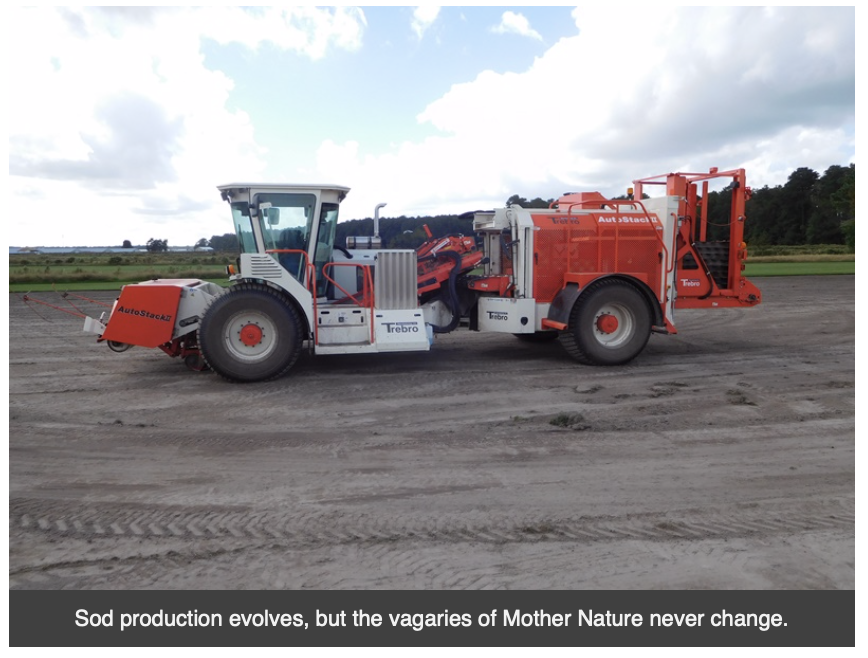
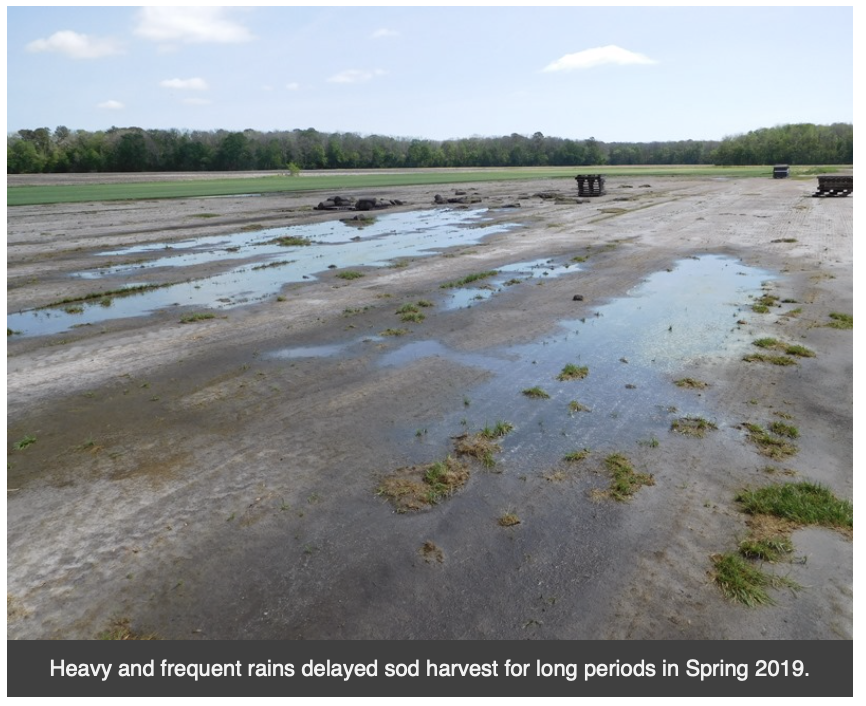
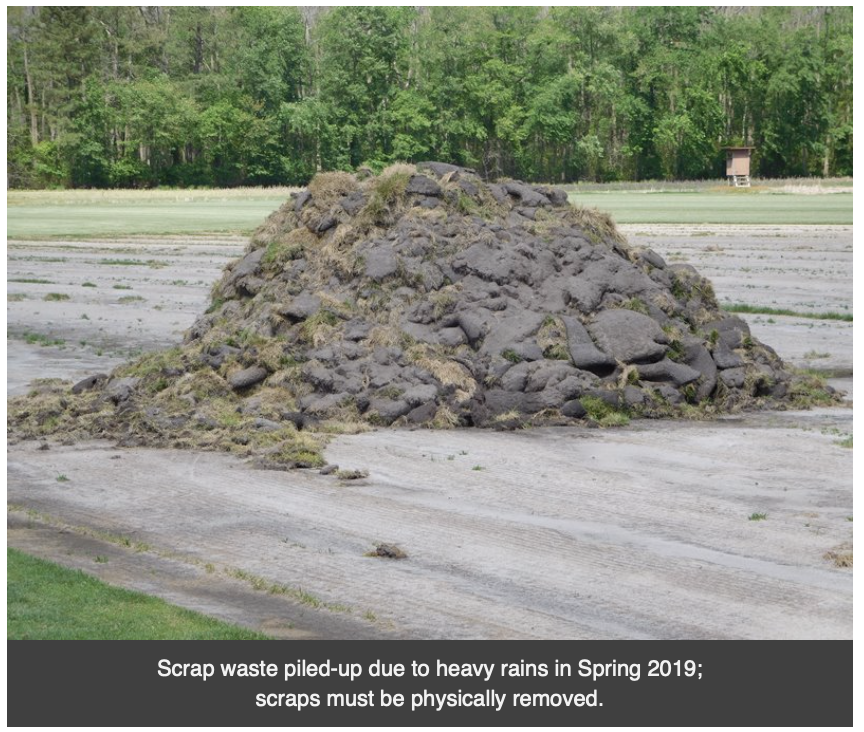
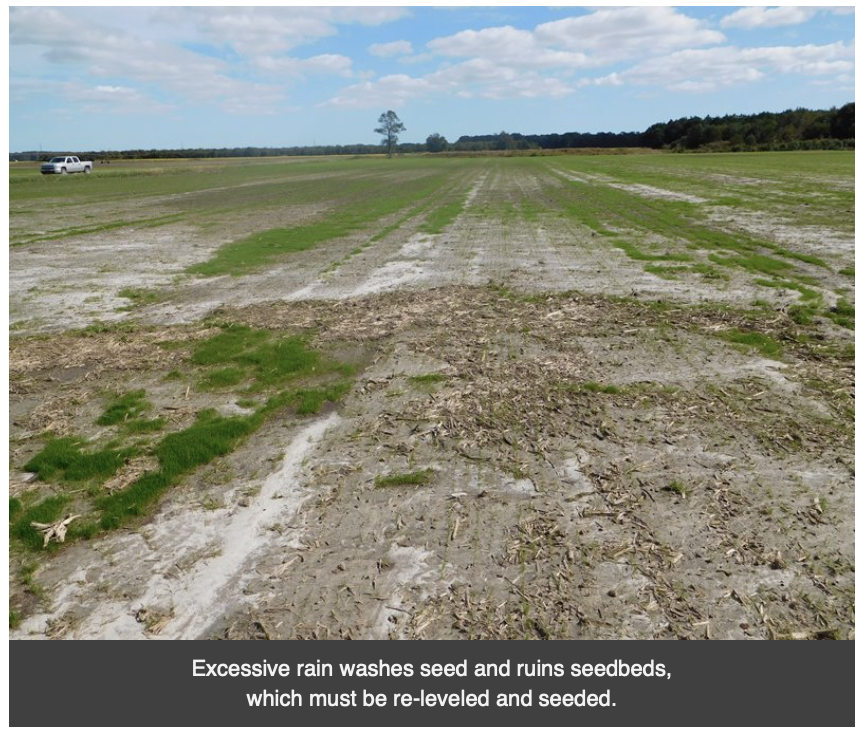
There was a time not too long ago when sod growers produced crops without irrigation. Success was a real “crap-shoot” because they had to rely on Mother Nature to provide timely rains at seeding and to sustain crops until maturity. Summers following fall seeding often turn hot and dry, sending non-irrigated crops into drought induced dormancy. A good crop was one that could be harvested within 12 months, but sometimes due the vagaries of Mother Nature, numerous acres could not be harvested for two or more years. Sometimes the best recourse was to cut losses, plow and start all over. Irrigation was the “game changer” and today it is not uncommon for sod producers to turn around 2 crops in less than 18 months. Perhaps the greatest challenge today in sod production is excessive rainfall at planting, which washes seed, ruins carefully prepared seedbeds; thus necessitating re-grading and seeding. Too much rain also can make it impossible to harvest mature sod for long periods. Heavy rains also hamper mowing operations, causing big problems with scalping and clipping deposits. The cold, dreary and very wet winter and spring presented sod farmers with all of these problems in 2019.
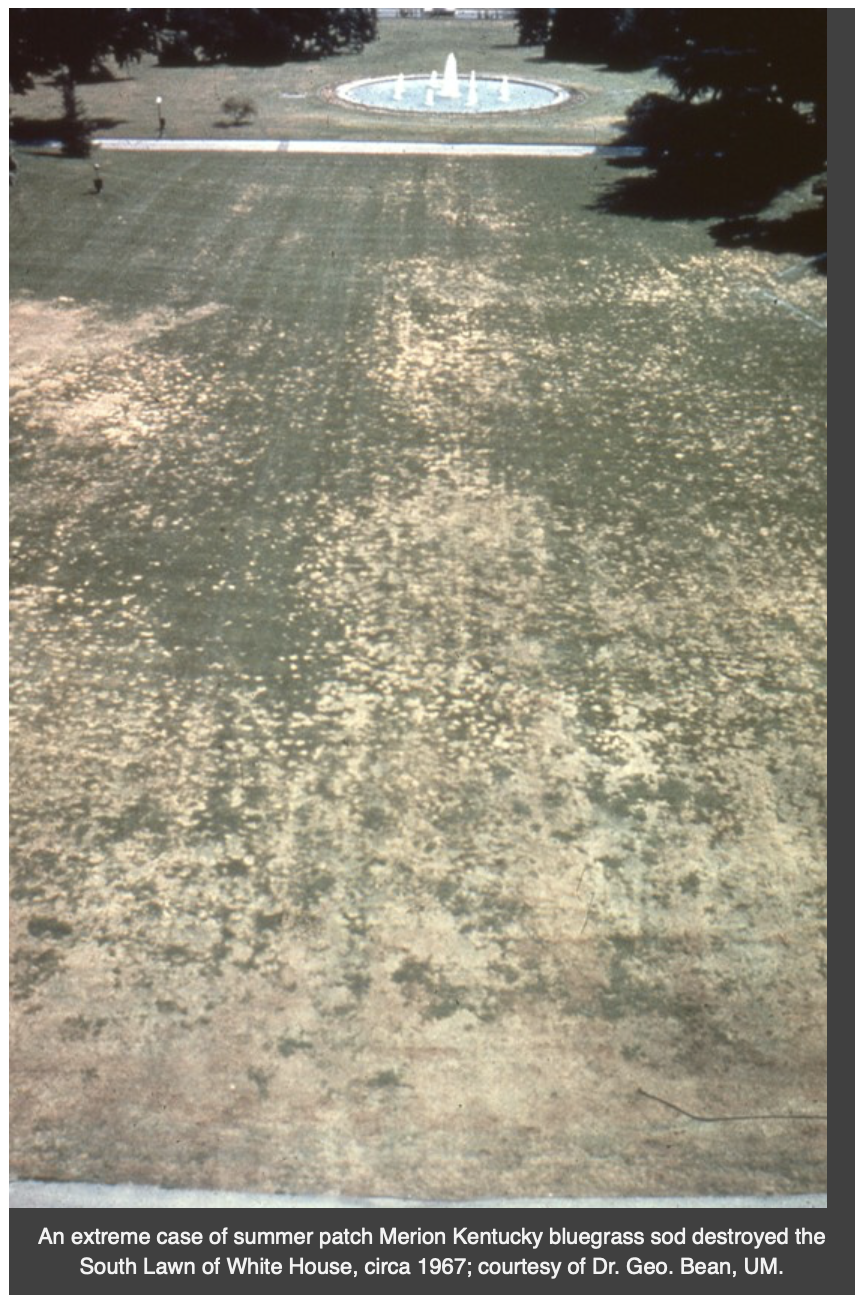
In the 1960’ to late 1980’s, Kentucky bluegrass-creeping red fescue mixes were the mainstay crop. The problems with this mix were numerous. Both Kentucky bluegrass-red fescue produce thick –choking thatch layers, which contributed to death of large areas in response to drought stress and other environmental stresses, especially in summer. Bluegrass and red fescue mixes also were plagued with numerous insect pest problems, like chinch bugs, bill bugs, cutworms, webworms, others and diseases like leaf spot and summer patch. You seldom hear about the aforementioned pests today. Tall fescue eventually became the industry standard in the mid-Atlantic because it did not produce thatch, it had better heat and drought tolerant, and has fewer destructive insect pest and disease problems. Early on, tall fescue had only one significant disease problem (i.e., brown patch) and only one insect problem (i.e., white grubs). As newer, more dense and fine textured of tall fescue were developed, Pythium blight and gray leaf spot emerged as economically important diseases of tall fescue in sod production. .
When sod producers began to switch over to tall fescue, they found it difficult to handle and to harvest in a timely manner and turned to plastic netting to hold sod together. I vividly remember sod farmers stretching acres of green plastic netting in fields. The nets were unwieldy and difficult to handle, and blew and tossed around creating an incredibly expensive mess to clean-up. Everyone hated netting. The nets entangled mowers and harvest equipment. Sports turf mangers, in particular hated netting, since it would tangle footwear and cause injuries. The solution was inclusion of Kentucky bluegrass into a mix because of its rhizomes (underground stems) would hold sod together. Today, most tall fescue sod consists of 5-10% Kentucky bluegrass and 90-95% tall fescue.
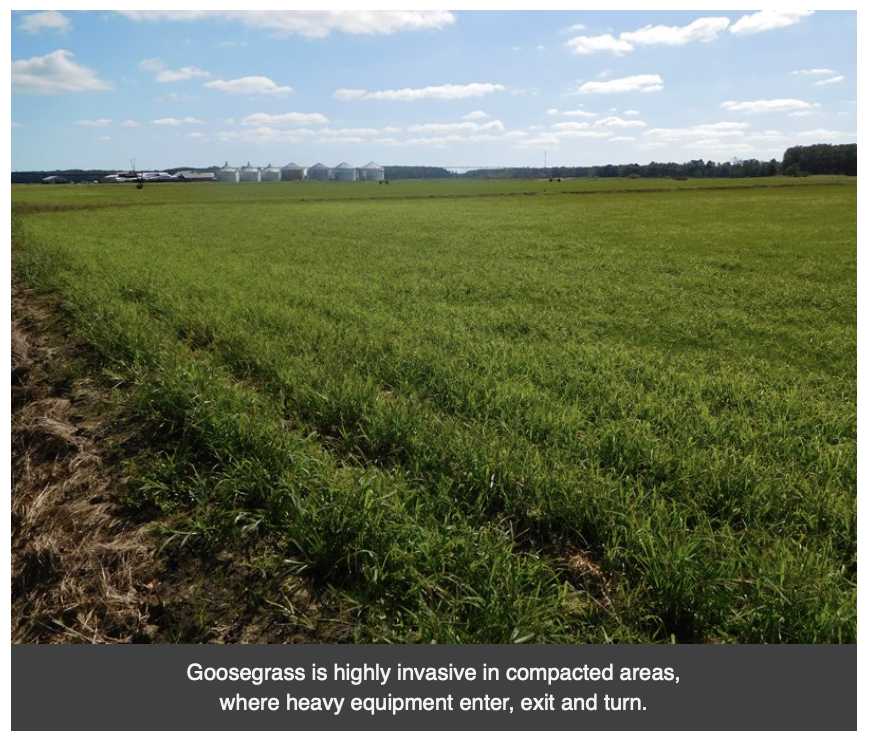
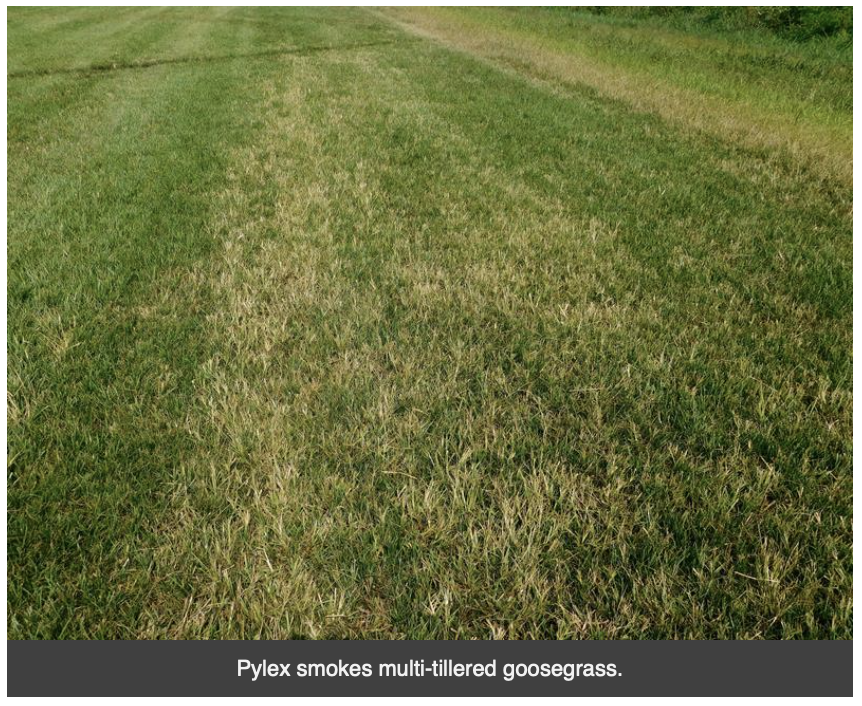
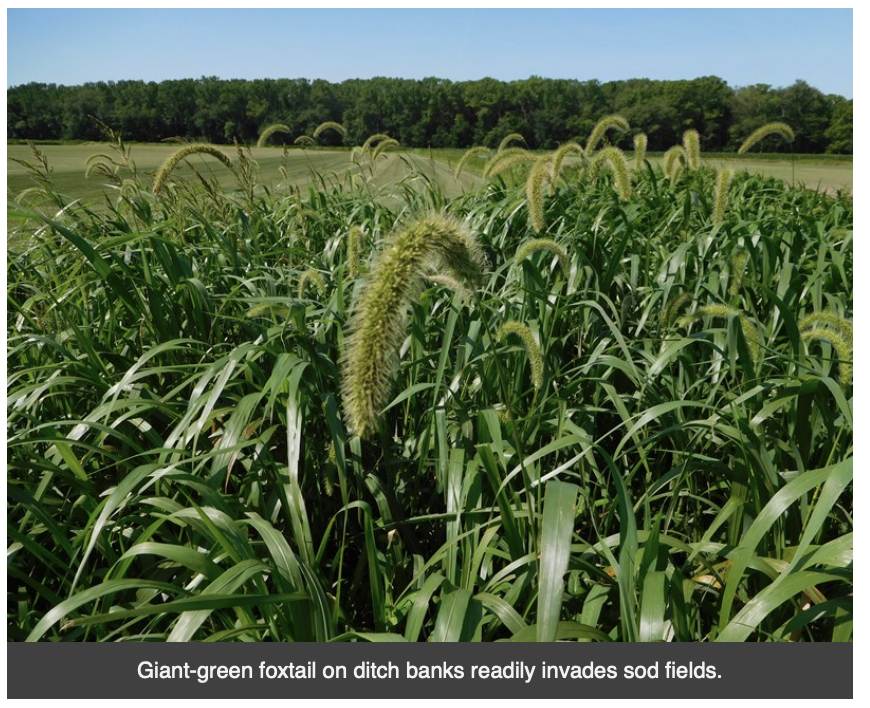
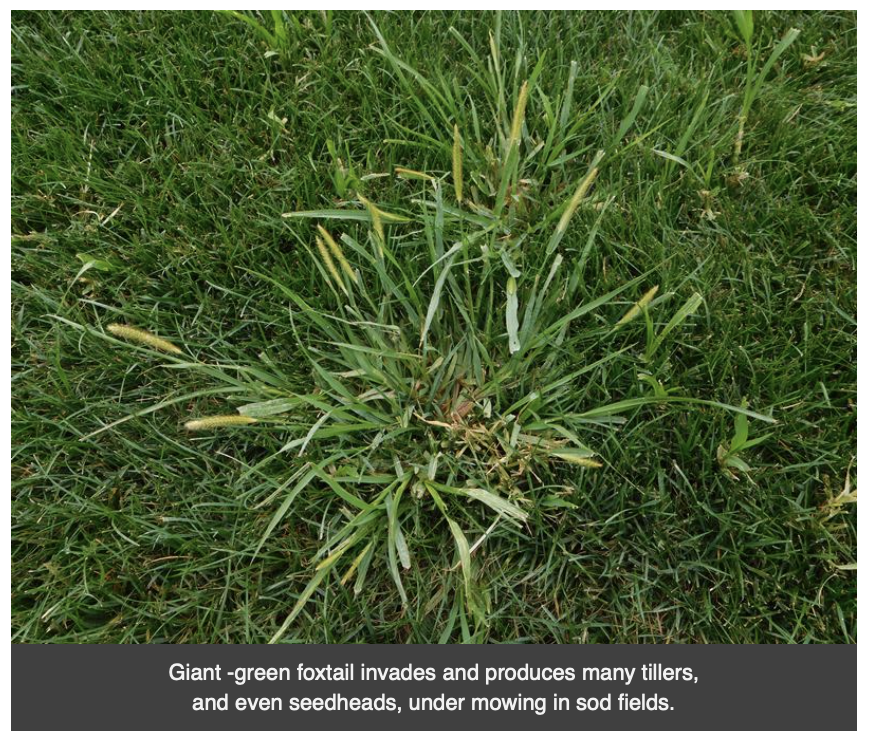
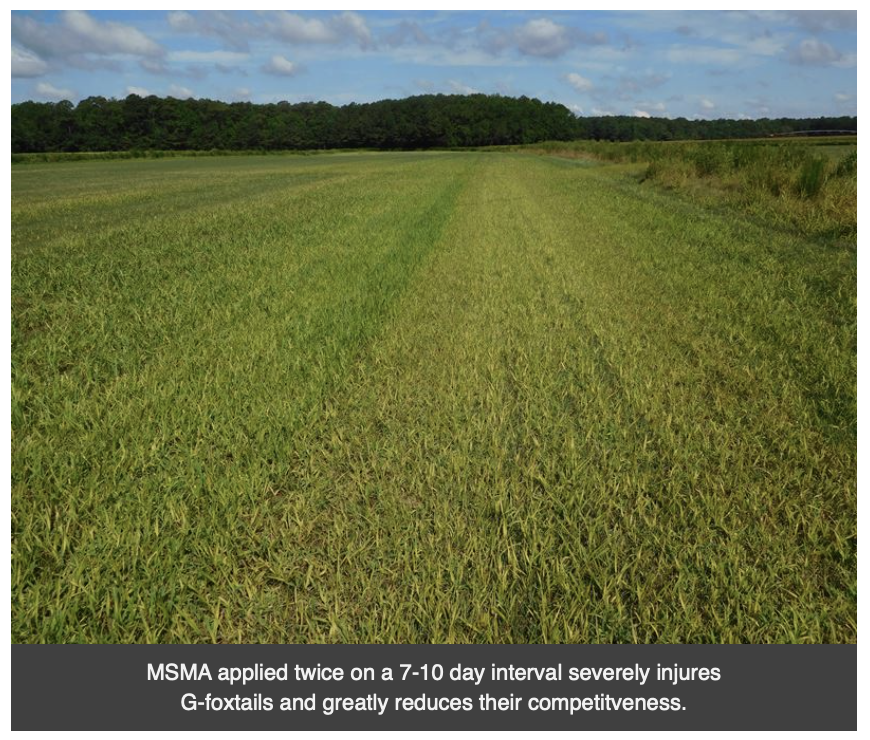
Sod produces routinely apply grub-targeted insecticides as well as premergence herbicides that target crabgrass. A huge development in weed control in seedbeds was the introduction of Tenacity (mesotrione) to the turf market. Tenacity provides enormous benefits in terms of weed control, especially winter annuals and many perennials in fall seeding’s and weeds like crabgrass and yellow nutsedge in spring seeding’s. Drainage ditch banks provide breeding grounds for a multitude of unusual turf weeds, but among the most noxious are giant and green foxtail (hereafter G-foxtails). Goosegrass is very common in field entrances where soil is compacted by heavy equipment. Both G-foxtails and goosegrass rapidly are dispersed into crops. Tenacity, and most conventional spring-applied premergence herbicides, have little or no effect on either of these weeds. For many reasons, G-foxtails and goosegrass are not addressed by growers until their massive tillers create a noxious and invasive threat in late summer. Pylex (topramezone) is the “Cadillac” for control of multi-tillered goosegrass. It is highly effective and safe at low rates in immature tall fescue. G-foxtails, however, are not impacted significantly by Pylex. However, an “old timer” MSMA can be used fairly safely and somewhat effectively in late summer on G-foxtails. MSMA is notorious for causing yellowing and it won’t control multi-tillered foxtails (or anything else) in a single application. It can be used fairly safely at a low label rate applied twice on about a 7-10 day interval. The low rate does not out-right kill G-foxtail, but it greatly diminishes it competitiveness , and after a frost, MSMA-damaged plants shrivel fast and harvest is not impeded. NOTE: MSMA can be dangerous to turf. Read label carefully; re-check calibration; use at least 40 gal. water/acre; do not apply on hot days and/or if turf is stressed.
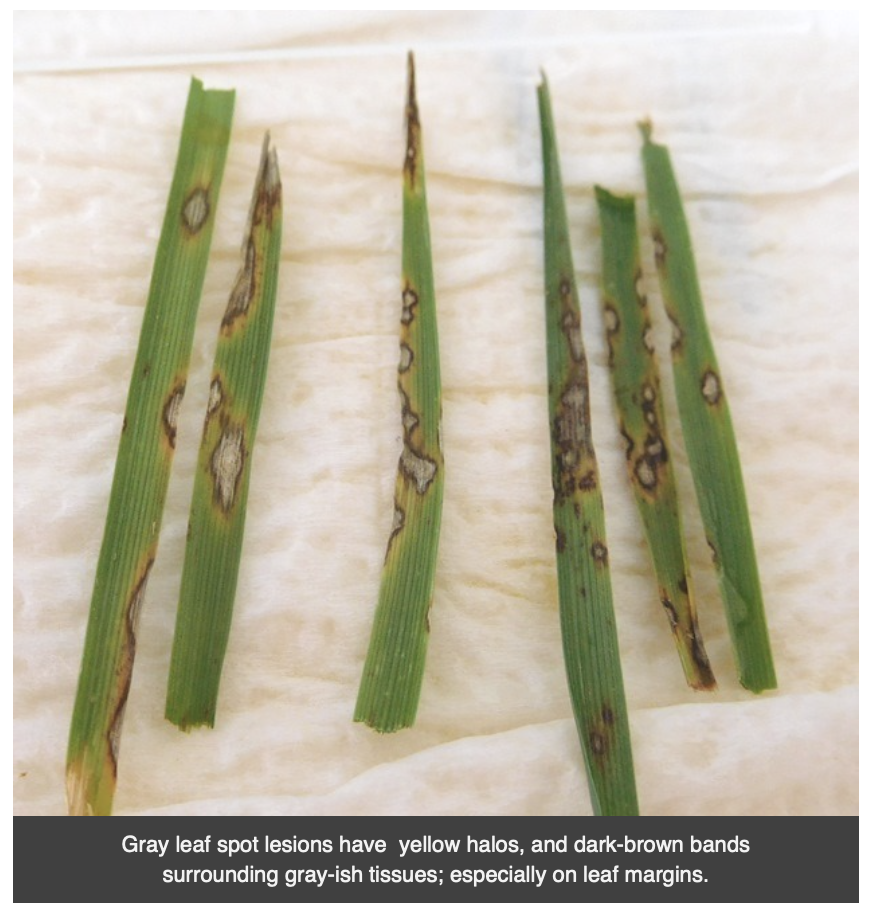
Gray leaf spot recently has emerged as a problem in tall fescue (TF) sod production. It mostly attacks immature TF less than one year old. It causes severe thinning, and without proper fungicide action and some overseeding, it effects can delay harvest for nearly a year.In TF, the disease moves slowly and symptoms initially are indistinct. The disease often develops in TF in a spotty patternof light-brown, blighted leaves that appear fine-textured (like drought stressed fine fescue) due to shriveling. One of the best indicators from a standing position is a generalized appearance of drought stress (i.e., a dark-gray or purple-gray appearance) despite the presence of good soil moisture. Initial lesions are round, water-soaked-gray and may have a yellow halo. Lesions forming on leaf margins are grayish, irregularly-shaped and have dark-reddish-brown borders. If in doubt, send samples to a diagnostic lab.
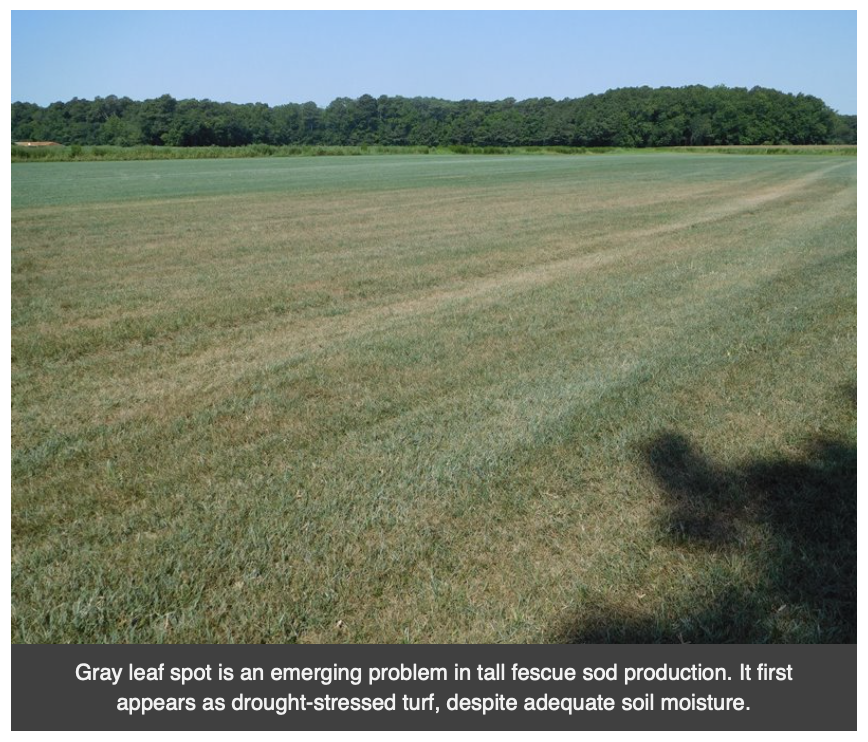
Preventive application of fungicide(s) always is the most effective approach to disease control. Growers, however, may have a 100 or more acres of immature tall fescue and blanket fungicide coverage is unrealistic. Hence, it makes more economic sense to wait and see, and spray only those acres/sites showing gray leaf spot drought-like-thinning symptoms. Growers normally use a combination of a strobilurin fungicide (i.e., Disarm, Fame, Heritage, Insignia, others) in combination with either a contact fungicide (e.g., Daconil, Mancozeb, others) or a DMI/SI fungicide (i.e., Banner, Bayleton, Eagle, Tourney, Torque, others). For curative control, it is best tank-mix one of the aforementioned (preferably a strobilurin) with a contact. Under severe and prolonged disease conditions, fungicide mixes may only provide 12-18 days of gray leaf spot control and disease conditions could mandate 2 or 3 additional applications
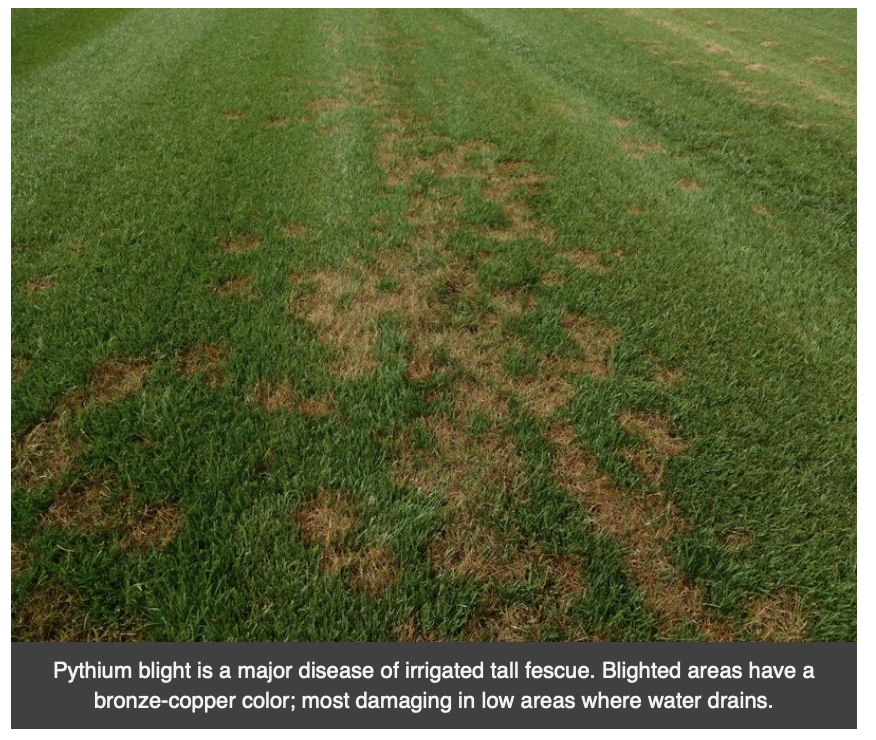
Pythium blighthas become a common disease in both immature and mature tall fescue grown under irrigation and/or wet shade. The disease requires very high night temperatures and humidity. Nighttime thunderstorms provide ideal conditionsfor Pythium blight. Pythium blight first appears as orange or bronzed-colored spots, which mimic the kind of damage that comes with gasoline spills. Spots increase to about 6” in diam. and coalesce quickly. During morning hours you may see mycelium, which appears grayish-white, and “frothy or cottony” within the canopy. Entire leaves turn brown, shrivel, and die by late morning. There are no distinctive leaf lesions, but recently collapsed leaves may have a soapy feel. Pythium blight is especially common in surface water drainage patterns and where air movement is restricted by trees. Left unattended, the pathogen will kill affected areas in as a little as 2 to 3 days. Growers who experience Pythium blight are cautioned to use phosphitematerials, which have very good preventive activity (but not curative), whenever spraying fields for any purpose in hot and humid weather. Most growers, however, respond curatively. Pythium-targeted fungicides (e.g., Banol, Segway, Signature, Subdue MAXX, others) are very expensive and thus are applied in spot, curative applications by farmers. It has been my experience that no matter what fungicide is applied, affected tall fescue maintains a bronze-copper color for many days and recovery is seldom 100%.