

Describe how employees under your guidance were utilized based on their strengths in certain areas of Turf Management
Wow! Changing the holes every day just came to my mind with this prompt!
There was never a class in school about changing the holes, you just learned it and did it somewhere during your career in golf management and no one liked doing it! Most people have no clue how this is done or that it is done every day!
This is from the USGA – (Click Here)
I was taught to change holes in 1973 at Piney Branch Golf Club in Hampstead Maryland. It was a semi-private course at that time. I had one of the first hydraulic Jacobsen Triplex Greens Mowers with solid tires and a makeshift basket in the back to carry my “Standard Cup Cutter”. We started at 5-5:30am every morning with a sealed beam that was rigged on the front of the mower, and I would mow the greens and then park the mower where the light could shine on the green after mowing, and I would change the hole.
It was dark, wet, scary, and you were always in a hurry. There were clay base greens then, and cutting the hole would be difficult if super-dry or wet.
Dirt would fall out or dirt wouldn’t come out. Getting the plug of grass and roots back in the old hole was somewhat important but you could always pack it down by stomping on it. Doing that would kill the grass but not of importance in 1973. Sometimes the plug would be low but that would be the golfer’s problem to putt over it.
Heaven help you if your cup cutter blade was dull or a screw fell off in the dark. Sometimes the blade screws would fall off or the whole thing would come apart.
We eventually got sent back with buckets of dirt and plugs from the nursery green to fix these areas, but you didn’t have to be a Cup Cutting expert.
Then the 1980’s hit and golf started to boom, private clubs popped up everywhere. These people were paying lots of money with high expectations about putting surfaces, so getting the plugs right and the pin placements in the “Legal” places meant a great deal. I can’t tell you how many times in my career I was confronted by a member about an “illegal” pin placement or a low/high plug that they had to putt over.
That is when “Changing the Holes” took a big swing of importance. New high tech cup cutters were being devised, and clay base greens were being replaced with a sand and peat moss mix. We soon learned that your Assistant Superintendents were the ones needed to change the holes, or at least your top workers who were taught how important this role was for the care and playability of the course. Funny though, the USGA has never really written “RULES for changing holes and hole locations.”
Here is what they say:
“The USGA hasn't changed the Rules of Golf regarding hole location fundamentally, but rather emphasizes guidelines for course setup – (fairness, difficulty, avoiding edges/puddles) and clarifies penalties for playing from the wrong place, not the hole's placement itself.”
Well, that is pretty-clear to me at 5:00am in the dark after being out all night with my friends and having quite a few adult beverages. Also, don’t expect the flags to be straight or not on top of a hill. I may even place it one foot off the edge of a green.
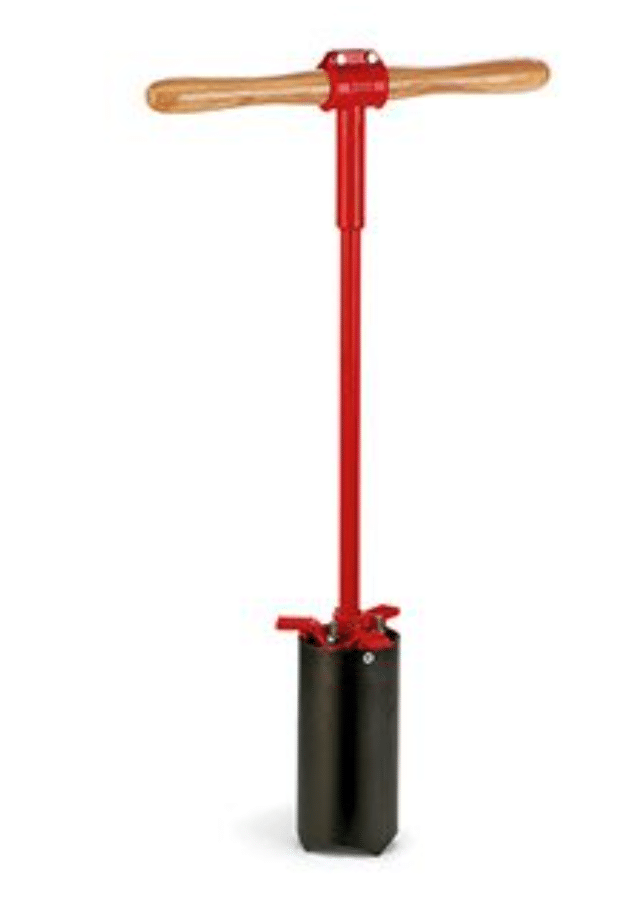
The modern-day grounds crew takes great pride in hole placement and hole changing. It is very rare to see high or low plugs and what some may refer to as “illegal” pin placements.
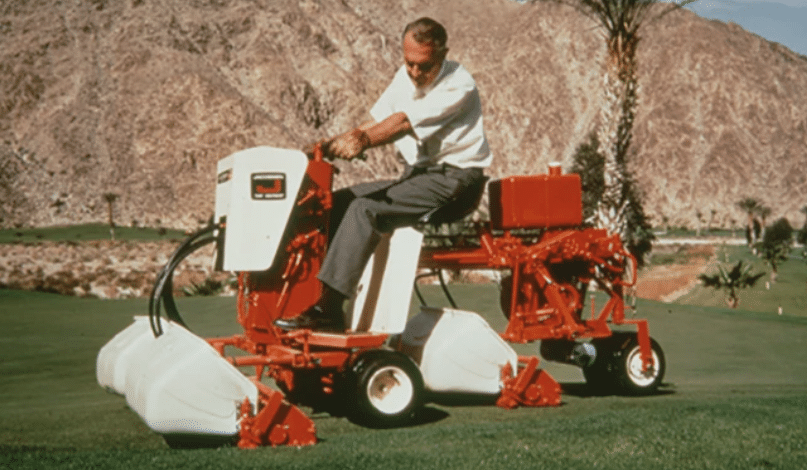
Here are some things that I have found that are used in teaching grounds crews about this important process. Have you ever seen this done? If you are a golfer, ask if you could go along one morning and watch the process. I gave a speech and demonstration on this process in my communications class at the University of Maryland. The class was amazed at how this was accomplished and with equipment used they had never seen before.
(Facebook) (YouTube) (TikTok) (USGA)
Some modern equipment for changing the holes:
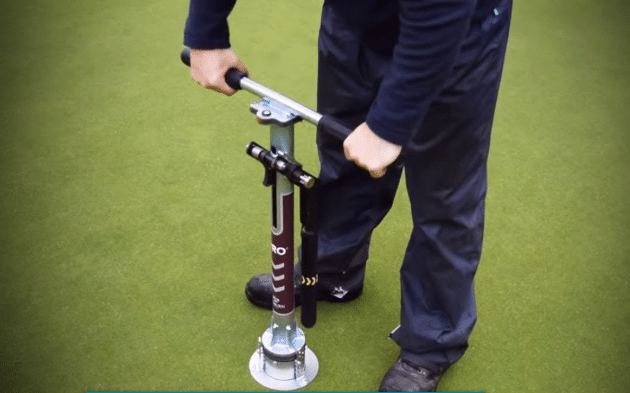

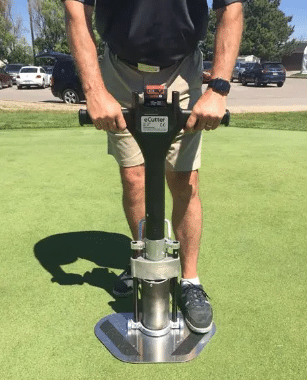
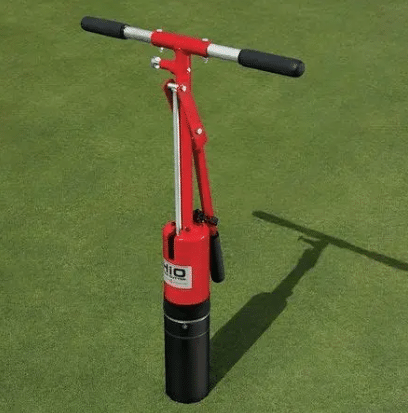
-Mark S. Merrick, CGCS Retired

Introducing ‘Merrick Mondays’, a segment where we hear from Mark Merrick, our resident brand Ambassador, Chief ‘Cool” Officer, and general source of wisdom and secrets of the universe, to spotlight a dose of interview-style content, weekly.