

Describe what it takes to have a successful Winter offseason on a Golf Course, to maintain conditions come Spring
For Golf Maintenance different climates have different winter offseason work, but I will answer from the Mid-Atlantic area perspective. Remember though, conditions still had to be great for golfers, particularly if there was no snow or was an unusually warm winter.
During my career, I have mowed greens at some point in December, January, and February.
Winter in our area is always much better if the course is closed because you need to bring everything inside at some point to be reconditioned, including tee markers, ball washers, and equipment. It is also better for frozen soil and grass if the course is closed.
Believe it or not once all this reconditioning is accomplished, it is pretty much right on time for spring. There is a TREMENDOUS amount of equipment work of reconditioning, oil changes, filter changes, painting, and sharpening. Add that to plowing, shoveling, and salting if there is snow and ice, including outdoor paddle courts if you had them. Some folks must set up and take care of ice rinks. Most crews are at a minimum because the seasonal, part time, and summer help is gone until late spring. Most golfers don’t know what goes on in the winter months.
I had a member once ask if all we did was watch TV and read the newspaper during the winter.
In the 1970’s, grinding and painting took place all in one area by antiquated means – Meaning not good for your health. Every reel had to be taken completely apart. All nuts, bolts, springs, keys, gears, bearings etc. – had to be checked and replaced if necessary. Hand grinding and sanding – primer and paint applications started on all main parts of the mowers and gang units while each individual reel blade and bed knife were ground separately, one blade at a time.
Oil and filters were changed on everything, and all the grease and grease fittings were checked. All tee markers, ball washers, trash cans, and water cooler stations were sanded and painted. In the 1970’s and 1980’s, most of this was accomplished in one big room. Imagine the metal shavings, metal dust, paint, oil, cigarette smoke, and cigar fumes.
If that wasn’t bad enough, workers like me were chosen to grind reels and bed knives. There were usually 30 to 50 reel and bed knife combinations to grind. Reels could contain four to 11 individual blades, and each one had to be ground separately, one at a time. Machinery for grinding was antiquated, and you did so wearing a face mask shield, and ear plugs made of tissue paper. This didn’t stop about a third of the metal shavings getting into your lungs during an eight-hour day for three months and the ringing that is still in my ears. That, coupled with the paint and smoke fumes.
I used to come home and tell my wife that one day I would be able to put a small magnet against my chest, let go of it and it would stay there.
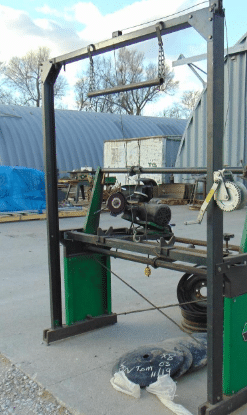

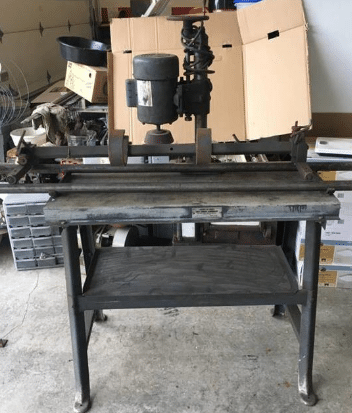

Fortunately, as we went into the 1990’s and beyond – grinding equipment and machinery got much better and better for your health. You didn’t have to take every part, nut, and bolt apart or grind each blade separately. Grinding machines became computerized and totally enclosed. Paint rooms were added to maintenance shops and smoking was only done in outdoor designated areas. Chemical rooms were added and chemicals like DDT, Mercury, and Lead Arsenate were then gone.
Education and communication have become very important. Folks my age and older who went through these conditions always laugh and joke about how we are still here to tell the stories, many are not. As I have said many times in these blogs, this is a tough role to take in life and people just don’t know it. Try to remember your turf crew and what they go through each winter and all year for your enjoyment. Whether your lawn, golf course, landscape, greenhouse, sod growers, or farmers – these jobs are tough, usually 24-7, and take a toll on many a body and mind.
-Mark S. Merrick, CGCS Retired

Introducing ‘Merrick Mondays’, a segment where we hear from Mark Merrick, our resident brand Ambassador, Chief ‘Cool” Officer, and general source of wisdom and secrets of the universe, to spotlight a dose of interview-style content, weekly.