
Preface: This article first appeared in June 2020. As the planet revolves around the sun, scientific information evolves almost as quickly. Note the advances in COVID Relief Technologies –amazing stuff! As the world turns, there is an inevitable changeover of older professionals yielding to younger. Amidst the shuffle, there often are numerous people moving in new or otherwise different directions. This revision was inspired by interest in the subject of fungicide resistance among new members of the turf profession. The major pesticide cost for most professionally managed turfgrasses is that for fungicides, albeit golf courses, or professionally managed lawns and sports turf. Fungicides are remarkable chemicals, with mysterious modes of action. As a retiree, I often seek assistance in providing the most up to date information for Genesis readers. In this revised effort, I received invaluable assistance and insights from Michael Agnew, Ph.D. Senior Research Scientist for Syngenta Crop Protection as well as Steven McDonald, MSc., President of Turfgrass Disease Solutions. There is nothing better than “eyes on the ground.” Even if you are “an old timer” I hope you find this revised article informative.
The development of turfgrass pathogens that are resistant to fungicides is well documented. High risk turfgrass diseases for resistance include dollar spot (several fungicides); gray leaf spot (a few), anthracnose (a few) and Pythium blight (one notable fungicide that has been on the market since the 1980’s ). The main problem revolves around managers continuously using fungicides of same modes of action to target the same disease. The simple solution to avoid resistance is to rotate fungicides having different modes of action (MOA) and/or tank-mixing unrelated compounds. All documented cases of fungicide resistance in turf have been confined to golf courses and a few University research facilities (e.g., Rutgers in New Jersey). I am unaware of any formal reports of fungicide resistance issues in lawns, sports turf or in sod production.
To understand the complexities of fungicide resistance management, I need to preface this discussion by describing the different grouping of fungicides based on modes of action, chemical groupings, and FRAC codes. The Fungicide Resistance Action Committee (FRAC) is an international industry-based organization. A code system was developed by FRAC to assist end users in choosing compounds having different chemical modes of action. Each fungicide is assigned a number and the user simply chooses fungicides that have different FRAC codes when using pre-package mixtures or when tank-mixing or rotating fungicides.
Chemical groupings are based on mode of action (i.e., biochemical sites of action that prohibit growth of targeted fungal pathogens) and each is assigned a FRAC Code number. It is important to note that todays’ fungicides don’t kill pathogens, but instead they operate by preventing their growth and/or reproduction. High risk for resistance fungicides usually target one specific biochemical function, such as respiration, mitosis, enzyme or sterol production, and other chemical and physiological processes. A smaller number of fungicides (usually contact materials) are multi-site –that is they may target two or more different biological functions affecting some aspect of fungal pathogen growth or reproduction. Multi-site fungicides seldom develop resistance problems. Genetic mutations also can account for resistance –problems.
CONFUSION CLARIFIED USING FRAC GROUPS: If you are confused by fungicide modes of action, common chemical and formula names –you are not alone. If you are flummoxed and totally confused by the ingredients of pre-packaged mixtures -you are NORMAL! It’s not really that tough – FRAC Codes are prominently shown on all labels and will guide you through the woods. The below chart assembled by Genesis (adapted from North Carolina State University, Rutgers University and the University of Kentucky extension publications) provides a clear and easy to read summary of FRAC groupings and target diseases, which you should print and keep handy. Fungicide efficacy, based on target disease, also is rated for each disease and fungicide on a 0 to 4 scale where 0= no control and 4= good to excellent level of control. There are few new products not included in the chart, but it still provides and easy guide.

Fig. 1. Labels prominently show FRAC Codes. In this example you can easily see that Briskway is a pre-pack mix of Heritage (FRAC 11) and a DMI (FRAC 3).


Fig. 2. Summary of fungicide MOA groupings, FRAC Codes and efficacy ratings
The MAJOR grouping are based on mode of action include: 3336 (other thiophanate generics, FRAC 1); Chipco 26019 (iprodione ;FRAC 2) ; DMI (demethylation inhibitors; FRAC 3; (e.g., Banner, Bayleton, Eagle; Tourney, Trinity, Torque/Mirage and others); SDHI (succinate dehydrogenase inhibitors; FRAC 7; e.g., Emerald, Ascernity (pre-mix of FRAC Groups 3 and 7), Kabuto, ProStar, Posterity, Velista, and Xzemplar); and the strobilurin’s/QoI’s FRAC11; e.g., Heritage, Insignia, Fame, Pinpoint, others). Then there are those fungicides that only target Pythium-diseases including Banol (propamocarb, FRAC 28); Segway (cyazofamid, FRAC 21); Signature ( fosetyl-Al); Appear II and other potassium phosphites [some labeled as fertilizers], FRAC 33); and Subdue (mefenoxam/metalaxyl, FRAC 4).
Other notable broad-spectrum fungicides that are unrelated include Daconil (many chlorothalonil generics, FRAC M5); Secure (fluazinam, FRAC 29); ; and Fore (mancozeb, FRAC M3). Outliers include Affirm/Endorse (polyoxin D, FRAC 19) and Medallion (fludioxonil, FRAC 12). Both Affirm/Endorse and Medallion target Rhizoctonia (i.e., brown patch diseases) and anthracnose. Affirm/Endorse are antibiotics that target cell wall formation and have a medium risk for resistance. Medallion is a contact, but is different in that it is single site specific. Medallion targets respiration and has a low to medium risk for resistance.
Resistance occurs when a fungicide totally fails to control the target pathogen, but reduced efficacy is a prelude to resistance for some fungicides, especially the DMI’s. There are two types of resistance: cross resistance and multi-resistance. “Cross resistance “occurs when a pathogen is not controlled by fungicides having the same mode of action. For example, dollar spot biotypes resistant to one DMI fungicide theoretically will be resistant to all other DMI fungicides. “Multiple resistance” is a phenomenon that occurs when a pathogen develops resistance to fungicides with different modes of action. For example, dollar spot biotypes have been shown to be resistant to Chipco 26GT ( iprodione) , Banner MAXX (propiconazole), Emerald (boscalid = SDHI) and 3336 (thiophanate). In the case of DMI fungicides, development of resistance is gradual and may take ten or more years to occur. Conversely, as few as 4 to 5 consecutive applications of 3336 (with no rotations) can result in dollar spot resistance.
The major source of resistance comes from a tiny sub-set of biotypes, that are “naturally” resistant (i.e., insensitive) to any particular fungicide. The consistent use of fungicides having the same mode of action overtime eliminates sensitive biotypes (on say a green), resulting in dominance of the once obscure insensitive biotypes. The dollar spot fungus is most likely to develop fungicide resistance. This is “genetically” amazing since the pathogen does not produce spores (i.e., there is no sexual or asexual reproduction via spores) and must rely on DNA exchanges by mycelial (tube like body of fungi) via contact and fusion (anastomose) in soil, thatch or foliage. Fusion allows for exchange of DNA and thus providing an exchange of genes or mutations, which are responsible for resistance to develop.
Resistant biotypes of the dollar spot fungus first appeared in the late 1960’s and early 1970’s as a result of repeated usage of cadmium (e.g., Caddy and Kromad), mercury-based fungicides (e.g., Tersan OM and PMAS), and benzimidazoles (e.g., 3336 , Fungo and Tersan 1991). Biotypes of the dollar spot fungus resistant to Chipco 26 (iprodione; FRAC 2) and DMI fungicides (FRAC 3) were first reported in the 1980’s and 1990’s. In 2018, researcher’s at the University of Massachusetts reported on Emerald (boscalid; FRAC 7) resistance toward dollar spot in New England and Japan. Other documented resistant problems in turfgrasses have been associated with anthracnose (Heritage =FRAC 11;[theoretical cross resistance to all strobilurin’s] and 3336 [a benzimidazole]=FRAC 1); gray leaf spot (Heritage and theoretical cross resistance to all QoI/strobilurin’s , and possibly 3336 [thiophanate]); and Pythium blight targeted by Subdue (metalaxyl and mefenoxam).
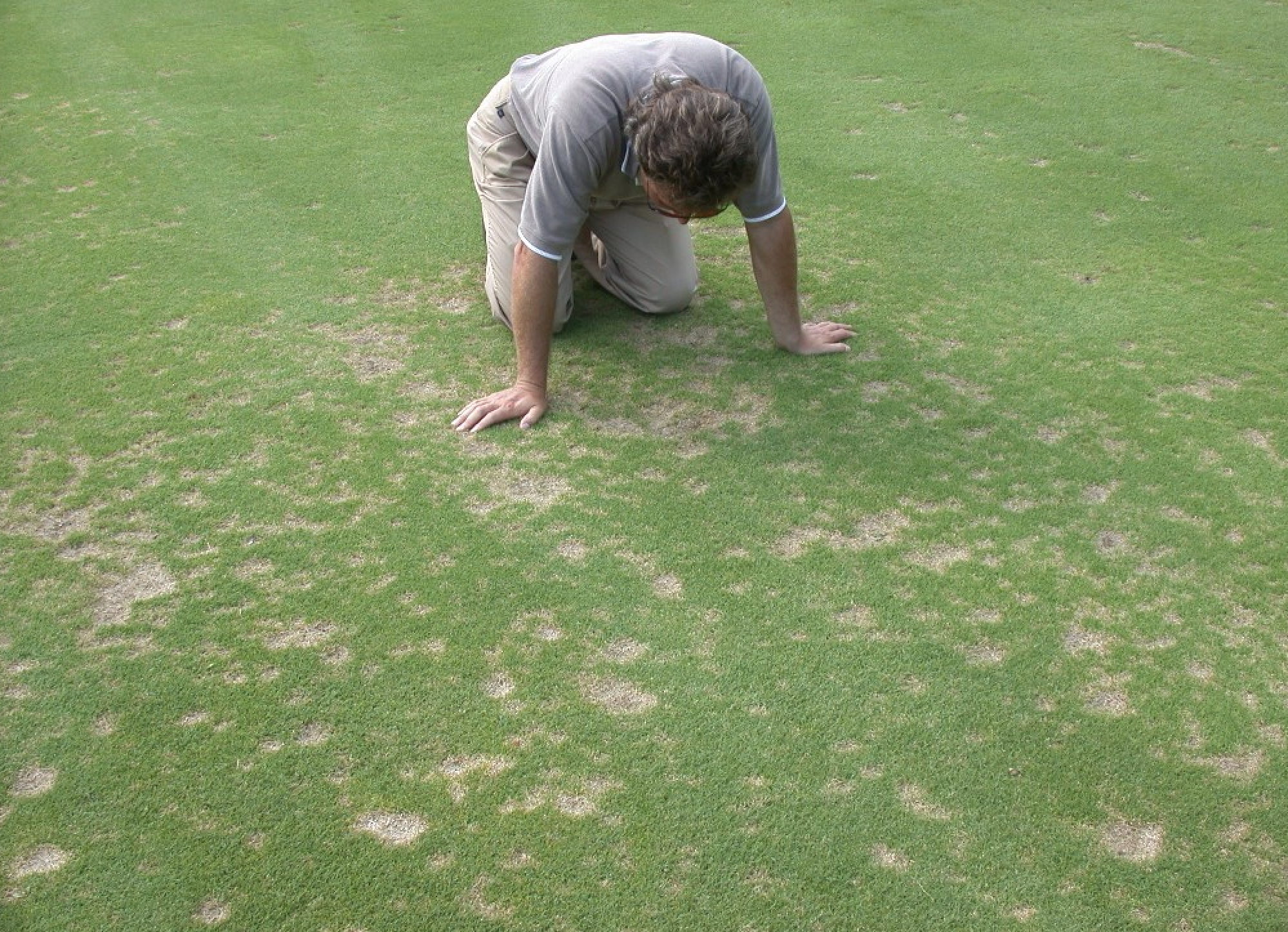
Dollar spot is the most common disease of turf worldwide and is most likely to develop a fungicide resistance problem. Resistance appearred in the 1960's with thiophane and others.
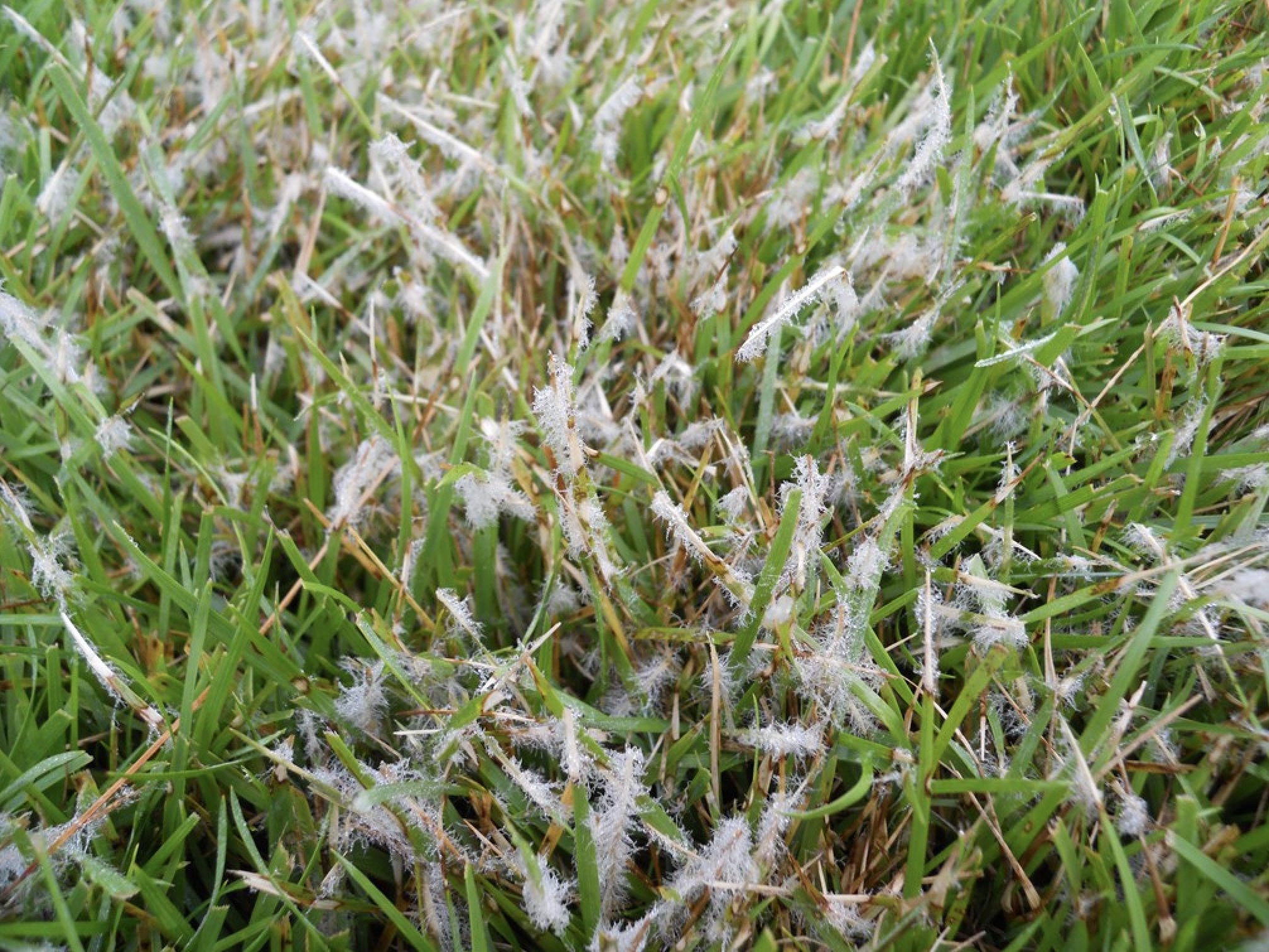
The dollar spot fungus can produce copious amounts of folair mycelium in most turfs, but it does not produce spores.
SDHI resistance in dollar spot populations has become a concern in our region, given anecdotal and now confirmed reports of Emerald failures. It should be noted that most resistance problems, when targeting dollar spot, have occurred in New England and the Upper Mid-west. Resistance in dollar spot populations are less common in the Mid-Atlantic; conversely, resistance to Pythium blight (via metalaxyl) and gray leaf spot (via azoxystrobin) are more common in the Mid-Atlantic.
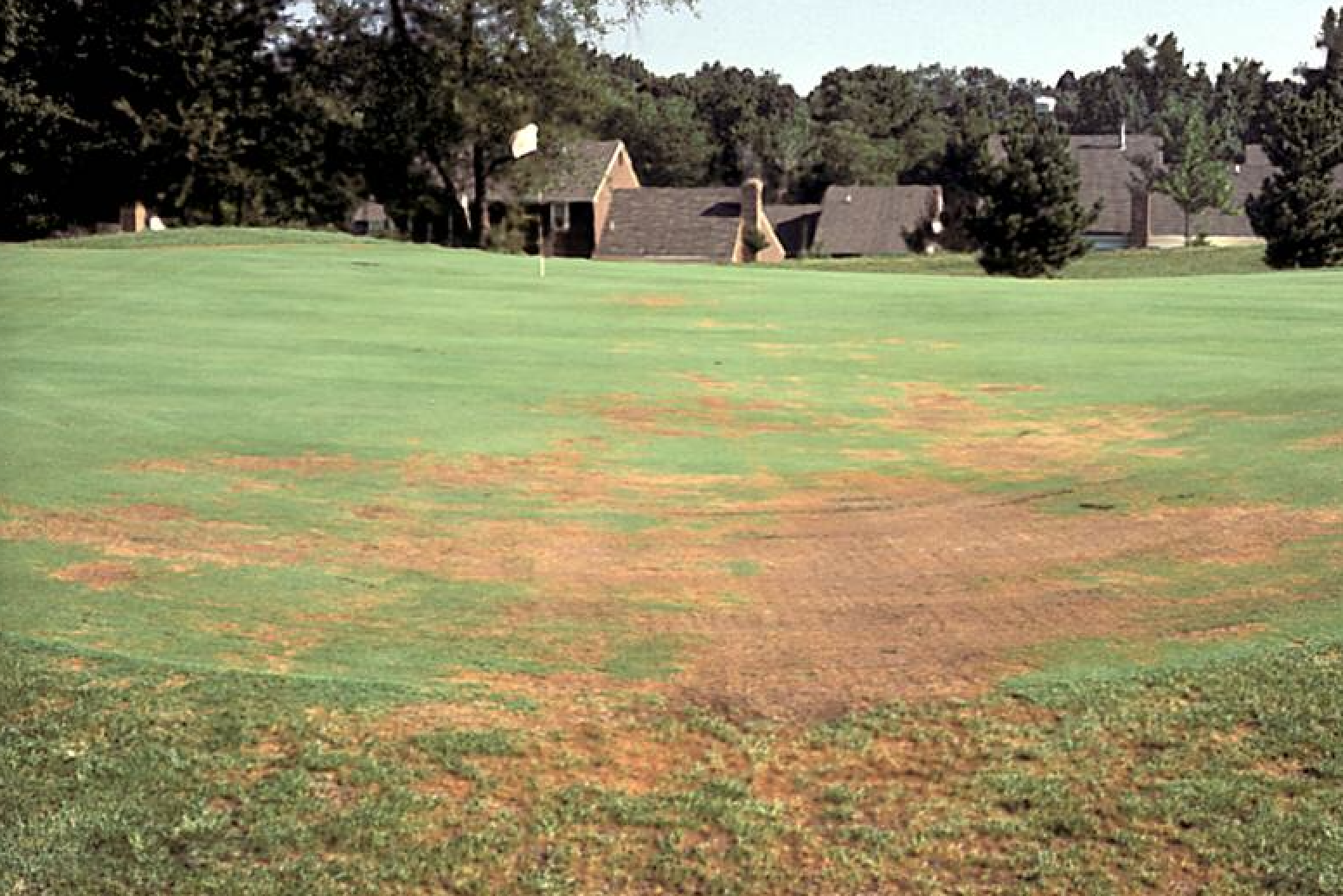
Pythium blight can ruin your day. Subdue (metalxy) was the first fungicide that developed resistace to this disease in the 1980's.
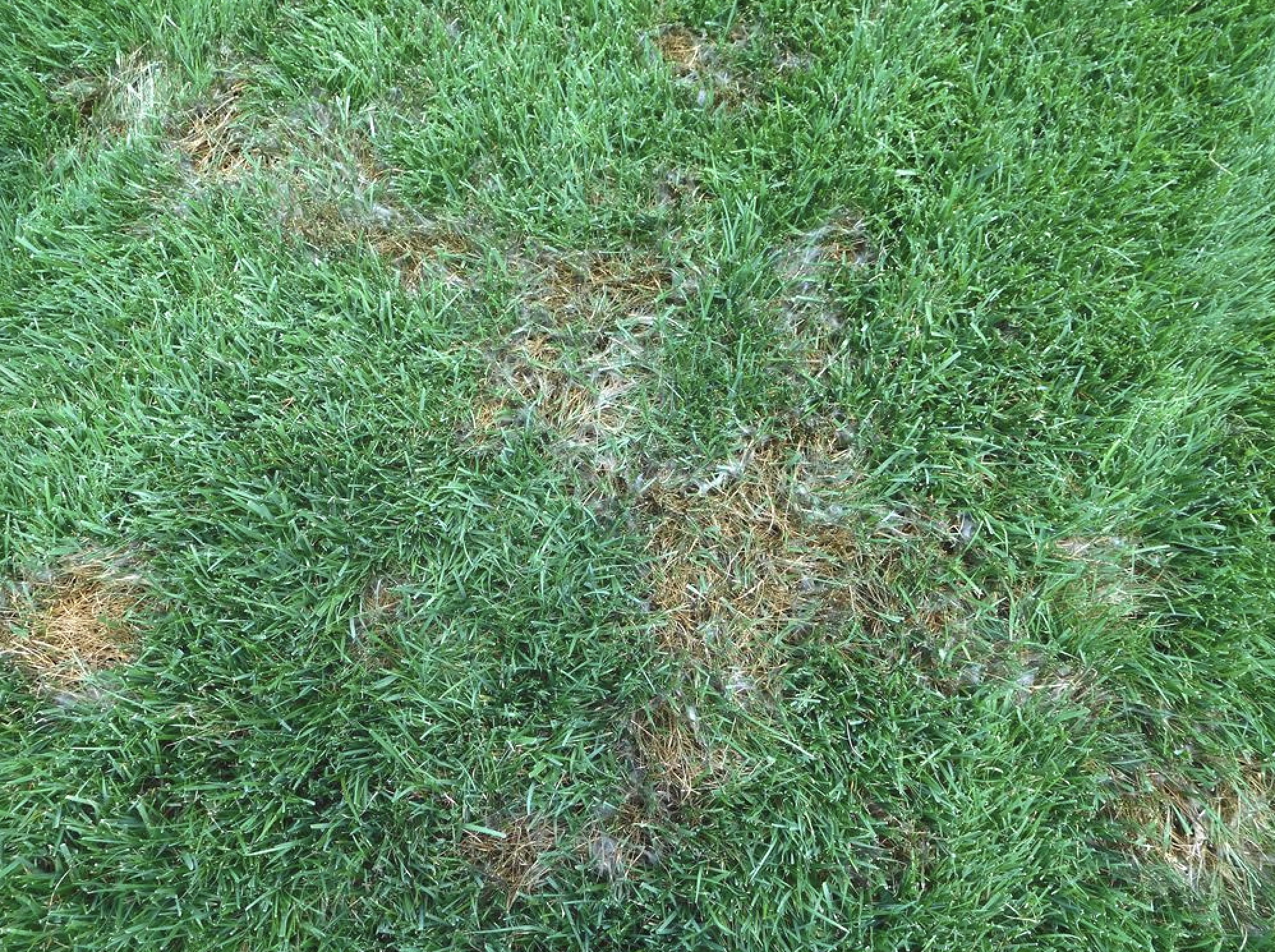
Pythium blight is becoming more common in tall fecue lawns; informed fungicide selection here is very important for LCO's.
Resistance should not be confused with fungicides that do not provide disease control. One early noted observation includes granular formulations of Heritage (a QoI), had no impact on controlling Pythium blight in tall fescue lawns in Kansas and Maryland. Many fungicides containing an SDHI fungicide are labeled for control of anthracnose. For example, Lexicon is a pre-pack mix containing an SDHI i.e., Xzemplar=FRAC 7 plus QoI Insignia FRAC 11. The SDHI active ingredient in the aforementioned mix is not labelled for anthracnose. Additionally, there are widespread cases of anthracnose resistance to all QoI fungicides; thus leaving this fungicide (i.e., Lexicon) unable to effectively control anthracnose. Interestingly, Velista (penthiopyrad=FRAC 7) and Ascernity (bendovindiflupr=FRAC 7 + diffenoconazole =FRAC 3) have been shown to provide excellent levels of anthracnose as of this writing.

Gray leaf spot is a devestating disease of perennial ryegrass -especially in untreated roughs. Azoxystobin was first to show resistance in the mid-2000's in rye fairways in MD.
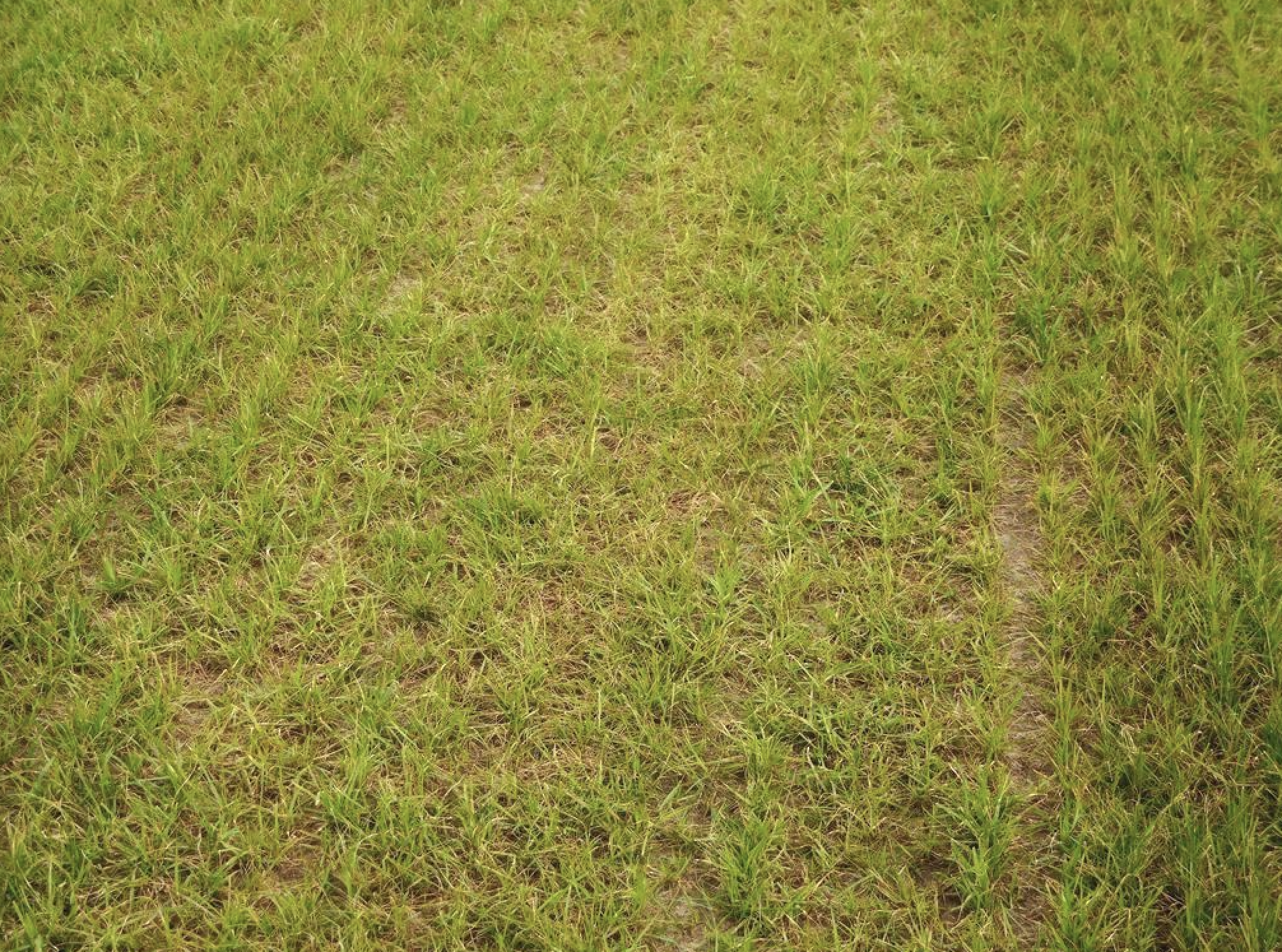
Gray leaf spot has emerged as a major disease of spring seeded tall fescue in sod production.
Emerald was the first SDHI fungicide marketed, has a very narrow spectrum (i.e., mainly targets dollar spot and dead spot), and has historically been highly effective. Technically, if there is resistance to one SDHI (e.g., Emerald) there “theoretically should” be cross resistance to other SDHI’s like Kabuto, Velista, and Xzemplar (note ProStar has no activity on dollar spot and is used mainly to target brown patch and fairy ring). The unusual aspect of newer SDHI’s is that they have different chemical structures and most (other than Emerald and ProStar) target several different diseases. Despite potential dollar spot resistance problems with Emerald, currently I am not aware of field reports of cross resistance to Kabuto, Velista or Xzemplar. Laboratory studies, however, have demonstrated that cross resistance among SDHI’s can occur. Hence, superintendents should take the potential threat for dollar spot-resistance among SDHI’s seriously, and implement sound resistance management strategies.
Resistance Management: The key to resistant management programs is to minimize the use of high risk compounds, and rotate and/or tank-mix fungicides of varying modes of action. Hence, a simple rule is to minimize the use of, or in the case of confirmed resistance, to avoid high risk fungicides and their mode of action relatives, especially at times when high risk diseases are active. Imposing a combination of resistant strategies uniformly is necessary to achieve their full biological effect including : 1) tank-mix and/or rotate fungicides or apply pre-pack mixtures with diverse modes of action; 2) restrict the number of applications of a high risk fungicides per season; 3) use manufacturers’ recommended dose; 4) employ integrated pest management techniques; and 5) intermittently apply low risk and appropriately labelled fungicides like Daconil (chlorothalonil), Secure (fluazinam), and Fore (mancozeb). Fore may be a “weak sister”, but it has its place in resistance management programs targeting dollar spot, gray leaf spot and Pythium blight. Simply stated: change the batting order often.
Summary of Key Points:
Fungicide resistance problems are mostly restricted to golf courses where fungicides are used routinely. There are no formal reports of fungicide resistance in lawns, sports turf or sod production.
Disease pathogens most likely to develop a resistance problem include dollar spot (most common), anthracnose, gray leaf spot and Pythium blight.
Fungicides most likely to develop resistance include 3336 (and other thiophanate generics); DMI’s; strobilurins/QoI’s; Subdue (mefenoxam/metalaxyl); and SDHI’s.
Preventive applications of fungicides using different FRAC groups (i.e., modes of action) are most effective in dealing with high risk diseases such as dollar spot, gray leaf spot and anthracnose.
Tank-mixings, rotating and use of pre-pack mixtures having varying modes of action (using FRAC Codes) vastly reduces the potential for resistance. Frequent, rotation or tank-mixing low risk fungicides like Daconil, Fore and Secure further minimizes resistance.
Avoid high risk fungicides when dollar spot, gray leaf spot or anthracnose are active.
Use of high risk fungicides curatively can accelerate development of resistance.
Curative sprays should include two different modes of action (see FRAC Codes); preferably in combination with a low risk (i.e., multi-site activity) fungicides [depending on product and disease each may be a weak sister when applied alone, but are invaluable in resistance management tank-mixes programs] like Daconil, Secure and Fore/Dithane.
COMING SOON: LOOKING BACK ON ATHRACNOSE: THE BANE OF POA GREENS IN THE 1980’s