
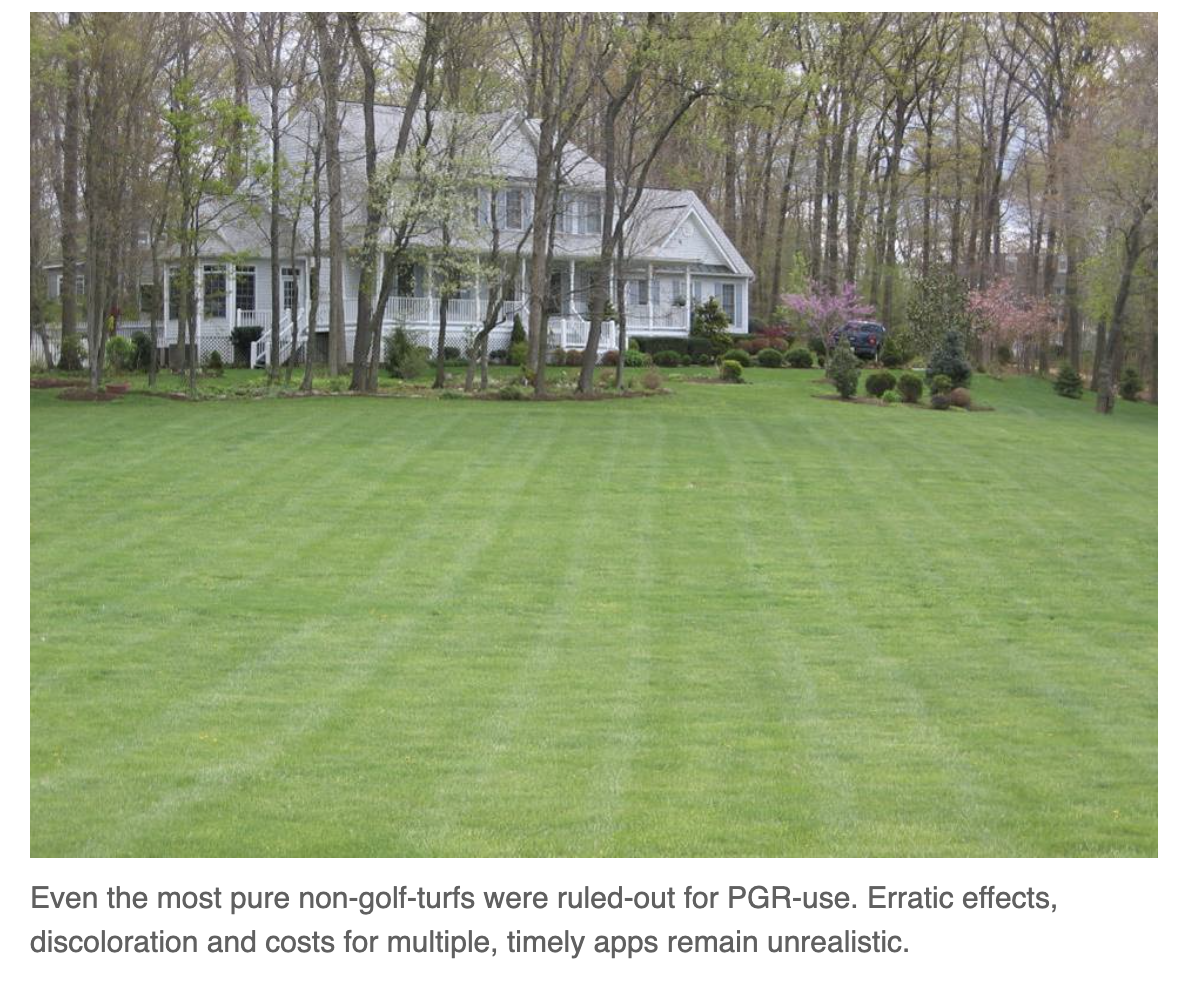
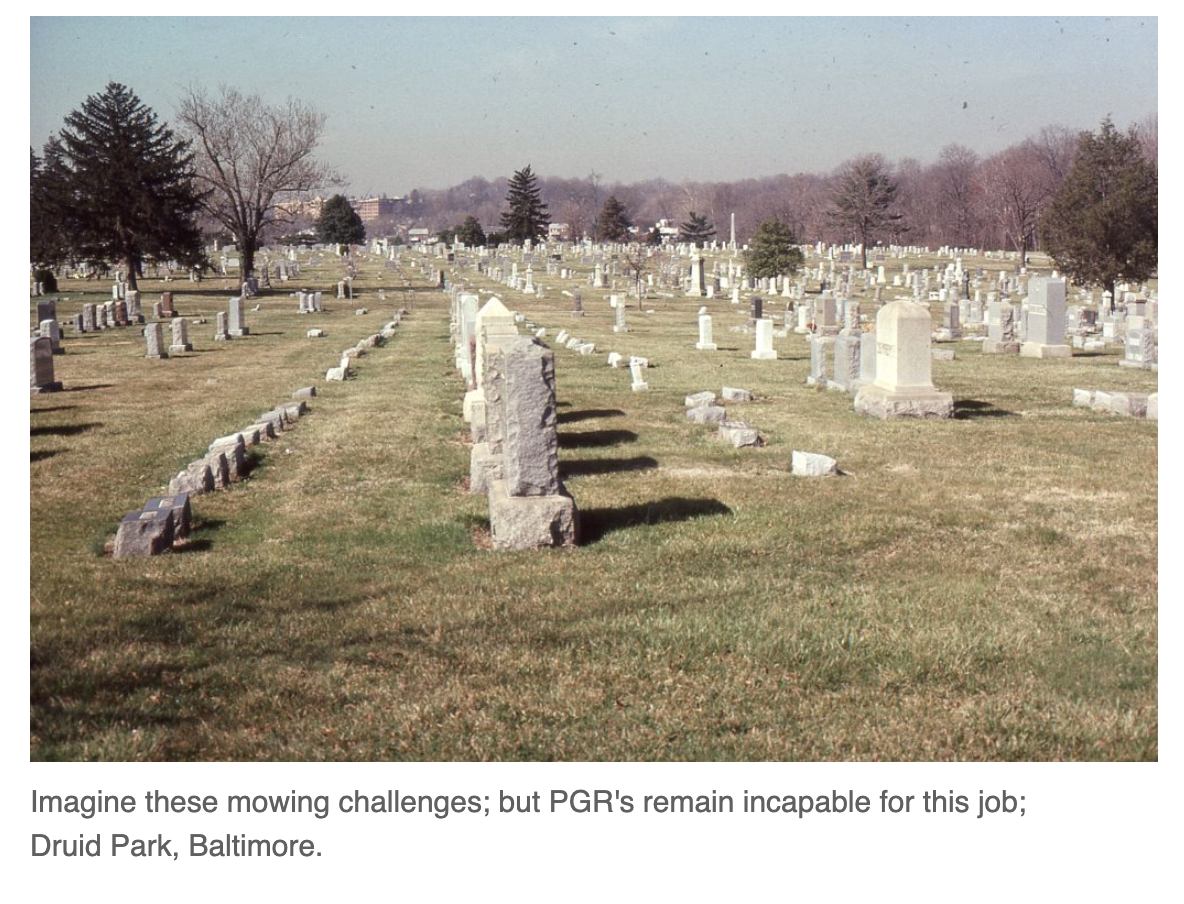
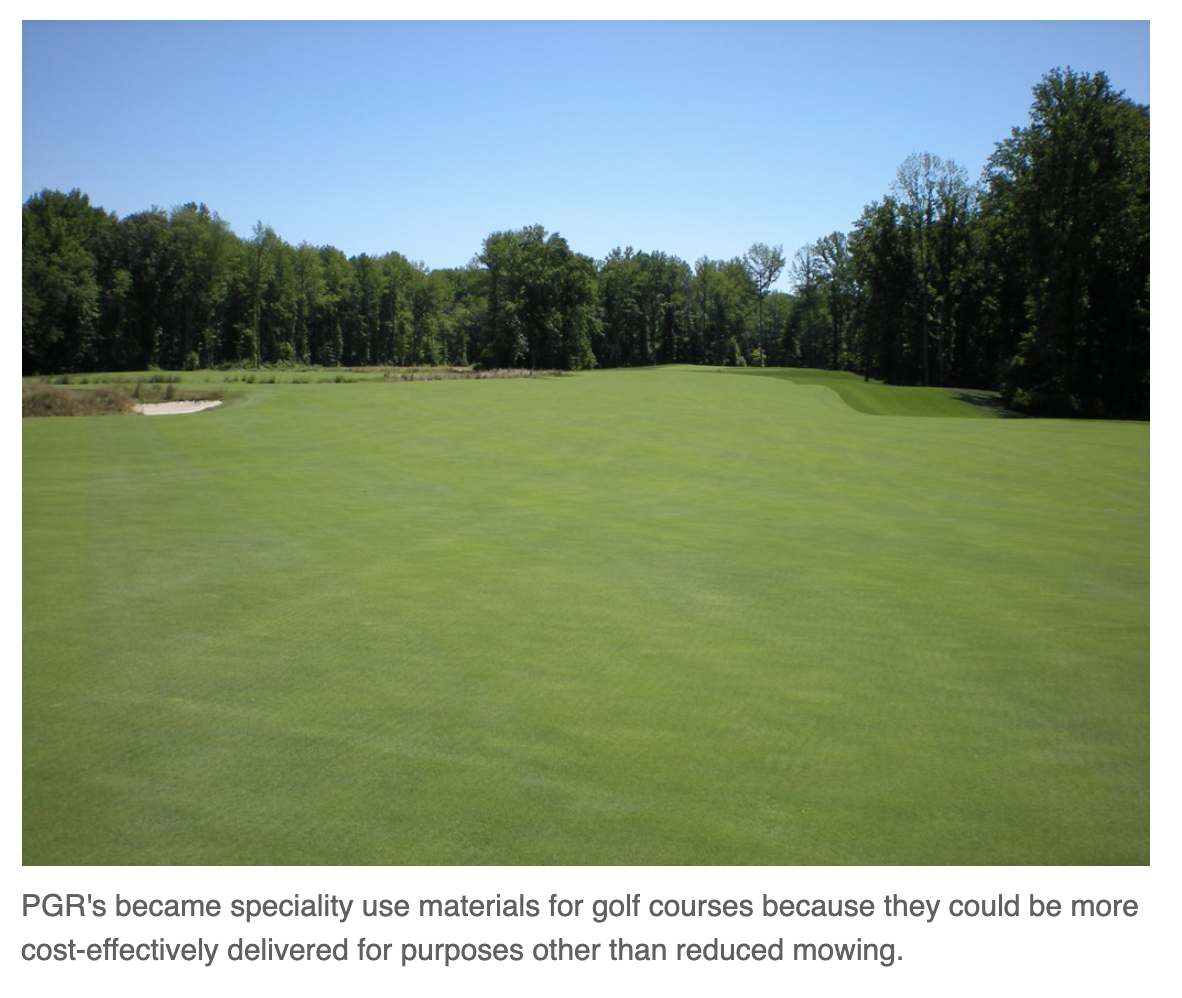
Winter is upon us. Lower temperatures naturally suppress plant growth and attention turns to off-season clean-up and other projects. During the growing season, the most time consuming, labor intensive cultural practices include mowing and clipping removal. Plant growth regulators (PGR’s) suppress vertical/top shoot growth of turfgrasses, and the initial research efforts focused on how best to use these materials to reduce mowing costs (e.g., fuel, labor, and equipment costs). State roadside DOT’s were among the first to grasp the potential of large mowing cost savings and were the first to employ PGR’s. Others hoped to reduce mowing costs on vast military bases (parade grounds, bunker storage areas, etc.); large, mostly unused acreages of erosion-control grasses grown in parks and municipalities; lawns and even cemeteries. In reality, PGR’s have largely become specialty chemicals used exclusively on golf courses. Only golf course personnel have the expertise to cost-effectively apply PGR’s on a timely basis. On golf turfs, PGR’s reduce clippings; improve turf color, density, playability of golf greens; and reduce annual bluegrass seedhead production and invasiveness; and other beneficial effects.

Cutless (flurprimidol), Trimmit (paclobutrazol), Proxy (ethephon), Primo MAXX (trinexapac-ethyl), and Anuew (prohexadione calcium) are the primary PGR’s used on fine turfs today. Among the earliest PGR’s, included Embark T&O (mefluidide), MH-30 /Royal-Slo-Gro (maleic hydrazide), Maintain CF 125 (chlorflurenol) and Proxy (ethephon; Ethrel). Among the aforementioned early PGR’s, only Proxy remains in use today on turfs.
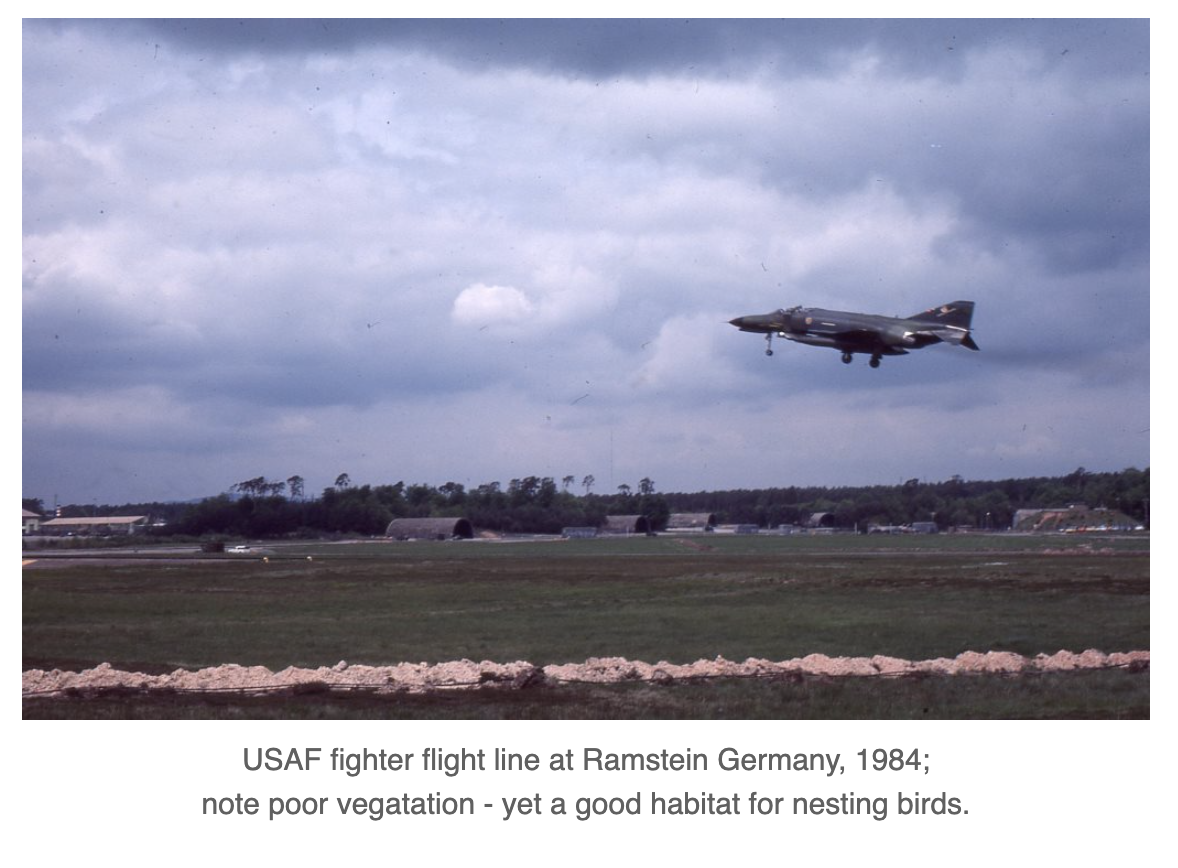
History of PGR Use on Turf: Back in the 1980’s, turf specialists spent years trying to adapt use of PGR’s for use on roadsides, lawns, under fence-lines, cemeteries and airports. I was especially involved in learning how to use PGR’s on flight lines and grassy infields on military airports. The problem for airports was and remains bird nesting and engine strikes. Nesting birds on flight lines invariably take to flight by the sound and motion of jet and prop engines. Too often, birds hit or are sucked into props and jet engines. Everyone remembers the Miracle on the Hudson, where a pilot landed a commercial airline on the New York water front after having encountered a flock of Canada geese. Geese were sucked into the jet engines causing stall and eventual a dead-stick landing in the river.
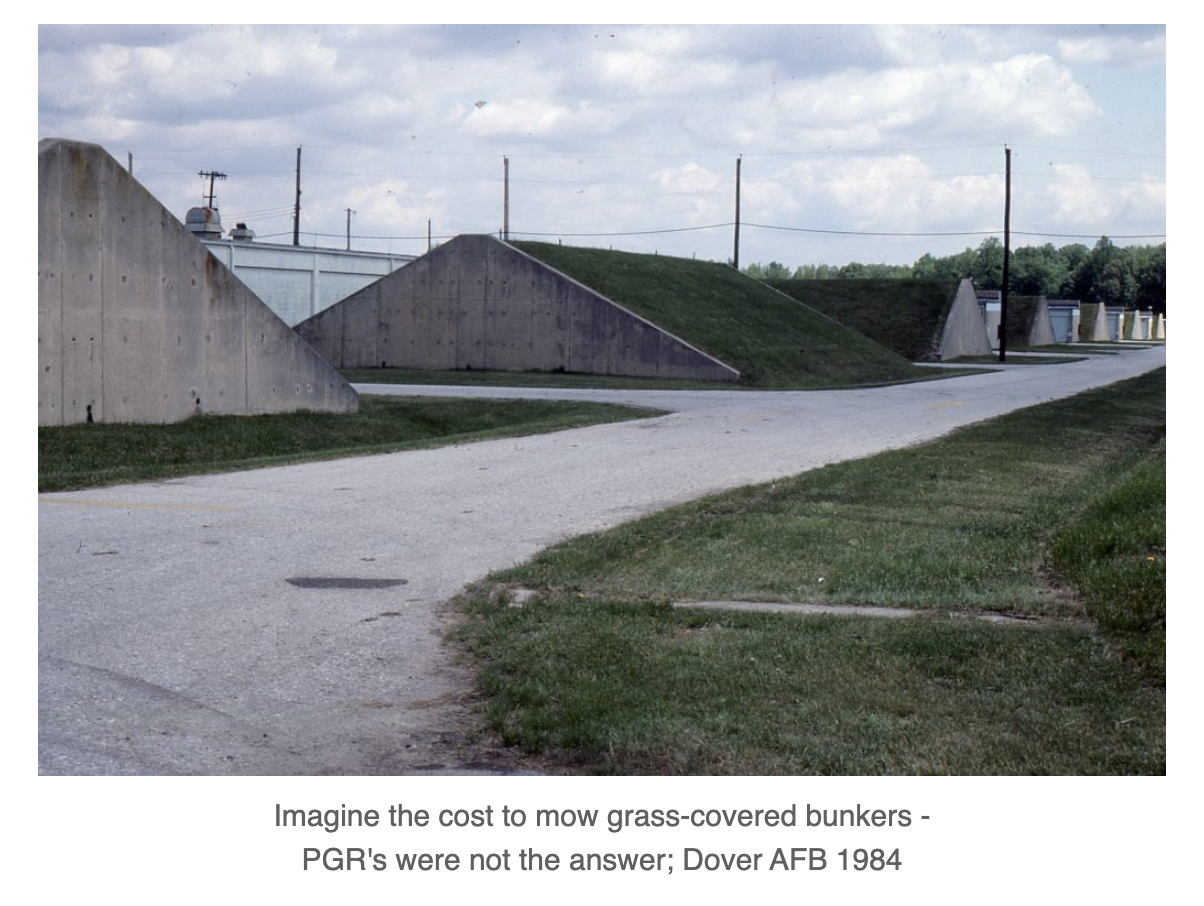
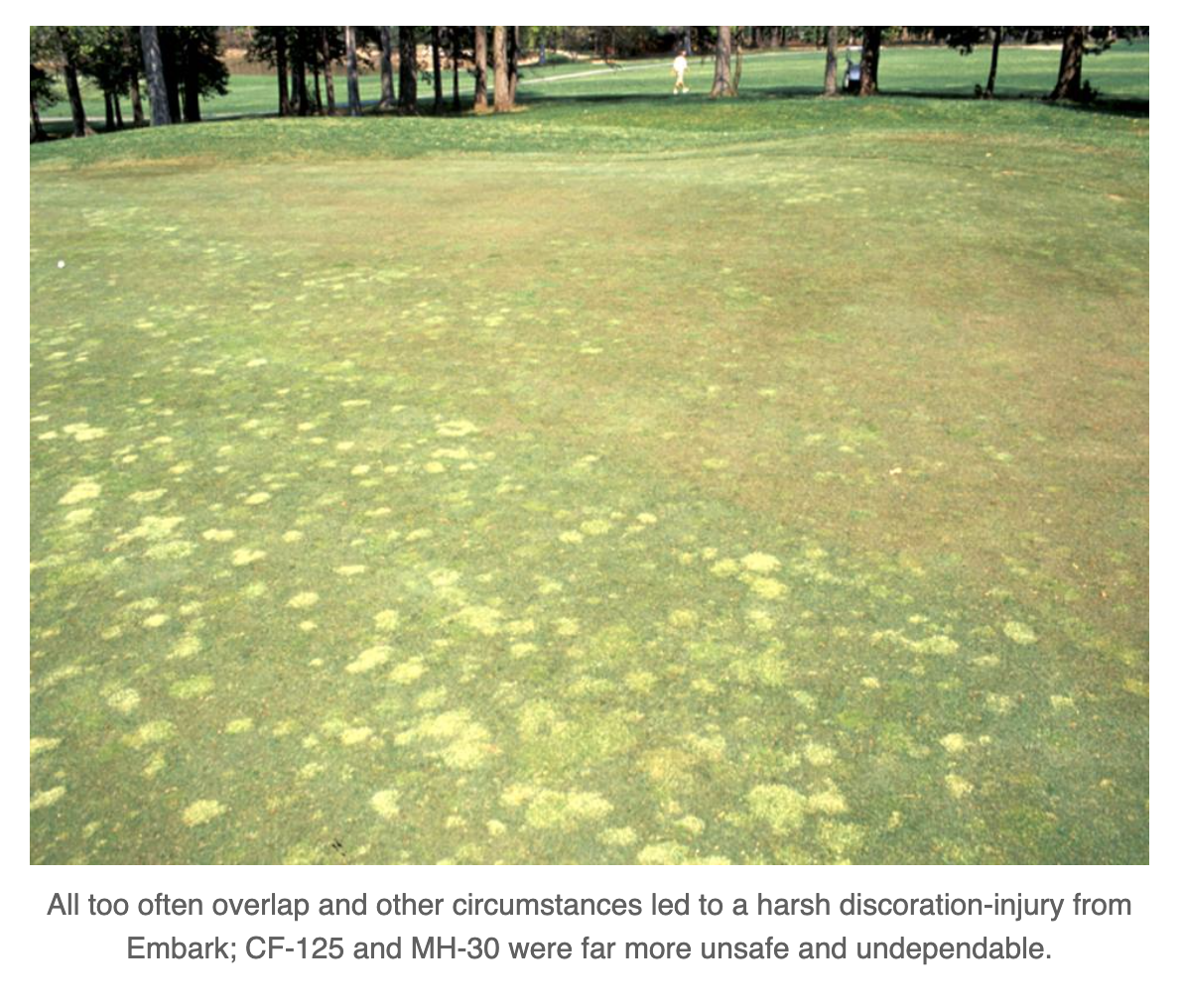
Around 1985, I was given the task to evaluate use of PGR’s on USAF bases for the purpose of suppressing foliar growth in an effort to deter nesting of birds on flight lines. I’ll never forget my USDA boss. Can’t remember his name, but at one time he worked with the military to target marijuana and poppies with non-selective herbicides in foreign lands. He was a scary dude that had a big office, lots of commendations, shaved bald head and wore gold necklaces and bracelets. I probably was chosen since I had been a GI with clearances, had worked with PGR’s on turfs at UM, and was located only a few miles from the USDA Station in Beltsville, MD. After visiting several USAF bases, I quickly concluded that PGR’s were not the answer to the problem. Simply stated, PGR’s (then and now) remain unsuitable because they are inconsistent in their ability to suppress the multitude of grass and other plant species found at airports. I found that many different grass and broadleaf species (annuals and perennials) were mostly unaffected by available PGR’s. In those days, the primary PGR’s available included Maintain CF 125 (chlorflurenol), Embark (mefluidide) and MH-30/Royal Slo-Gro (maleic hydrazide). The aforementioned PGR’s often caused high levels of discoloration and sometimes were phytotoxic when used in the hands of inexperienced technicians. Indeed, I observed that there was a total lack of expertise among personnel assigned to mix and deliver PGR’s; spray equipment was inadequate, never properly maintained or calibrated; and sprayers did not have the suspensions to uniformly spray even flat areas. Slopes. swales and otherwise fragmented terrain were impossible to deal with. The combination of lack of staff expertise; use of improper and badly calibrated equipment; difficult terrain to manage; and the lack of understanding of rates and timings were insurmountable.
Original Type 1 and 2 Mechanisms: Plant growth regulators were first organized as Type 1 or 2 in 1992. Type 1 PGR’s reduce cell division and Type 2’s inhibit cell elongation and cell division. Regardless of mechanism, the original objective was to suppress foliar growth and thus reduce mowing costs. Type 1 PGR’s (e.g., Embark T&O, MH-30/Royal Slo-Gro and Maintain CF-125) inhibit a group of plant hormones (i.e., cytokinins) that target cell division. Type 2 PGR’s (e.g., Cutless, Trimmit, Anuew and Primo MAXX) target plant hormones called gibberellins/gibberellic acid (GA), which inhibit cell elongation and cell division in leaves and sheaths. Type 1’s are absorbed through foliage, but their main use today (i.e., Embark T&O-maybe) on golf turf is to suppress annual bluegrass seedhead production. Type 2 PGR’s, are primarily absorbed by crowns and roots. Type 1 PGR’s are more potentially phytotoxic versus Type 2 PGR’s. As noted below, Proxy did not fit the definition of either Type 1 or Type 2 , and was placed in an “other” category. A Class (A,B,C, D and E) structure subsequently was adapted to better define PGR mechanisms.
Classes A and B (once Type 2’s) are gibberellic acid (GA)-inhibitors. Class A’s include Primo MAXX and Aneuw, and Class B’s include Cutless and Trimmit. Differentiation between Classes A and B are mostly an academic exercise. Basically, there are numerous biochemical steps in GA synthesis. Class A’s inhibit early stages in GA biosynthesis; whereas, Class B’s inhibit late stages. Cutless and Trimmit follow the same steps in inhibiting GA biosynthesis; whereas, Aneuw and Primo follow similar, but slightly different steps.
We know from long experience that Cutless and Trimmit (Class A) are more potent in their PGR-suppression effects; whereas Aneuw and Primo (Class B) are more subtle. For example, Cutless, and especially Trimmit, are prone to more stunting and discoloration, and have more long-lived growth suppression effects versus Anuew and Primo. Aneuw is the newest PGR, and as noted above, its GA inhibition mechanism is very similar to Primo. According to Steven McDonald MSc. (President of Turfgrass Disease Solutions), Anuew often regulates more without any discoloration versus other PGR’s. As briefly noted below, superintendent’s experiment with various tank-mixtures of Aneuw, Primo, Cutless and Trimmit. The goal usually is to lessen potential discoloration, while providing more even/consistent growth suppression. In the last 10 years, there have been several combination products among Class A (Aneuw and Primo) and Class B (Cutless and Trimmit) PGR’s. Similarly, mixes of Proxy and Class A PGR’s (esp. Primo) have gained popularity. Combo’s improve consistency of growth regulation and reduce discoloration. Finding the best mixtures remains an “ART,” Individual superintendents, through their own experimentation on their golf courses, continue to search to find the most desired effect.
Class C PGR’s include Embark T&O, Maintain CF-125 and MH-30. Maintain and MH-30/Royal-Slo-Gro. Among the aforementioned, only Embark T&O is still around, but it is no longer manufactured (existing stocks remain legal to purchase). Embark was the first PGR used extensively for annual bluegrass seedhead suppression on greens. Embark has fallen by the wayside, since Proxy, and especially Proxy plus Promo mixtures, are far more consistent and less potentially phytotoxic.

Class D PGR’s include highly phytotoxic non-selective herbicides (e.g., Round-up [glyphosate], Reward (diquat), others) that can suppress foliar growth when applied are extremely low rates. Class D’s are too erratic, too potentially phytotoxic and have no PGR practical use on turfgrasses –other than to kill them.
Class E PGR’s including Proxy and ProGibb T&O (synthetic GA). Let’s forget ProGibb –it has some very nasty side-effects. Back in the 1980’s, superintendents tried to use ProGibb to “perk-up” lethargic growth, but mostly was used to “turn-off” or counter the influences of Cutless and Trimmit on overly regulated and highly stressed greens. ProGibb must be used at extremely low rates; improper use produces excessive growth, leading to scalping and often death of golf greens. There are some bio-stimulants that contain extremely low levels of GA, which are non-phytotoxic and can be used to “turn-off” overly regulated Class B-treated greens. You need to check with a sales expert to find these ultra-low level GA-containing bio-stimulants (usually described as terpinoids on labels).
Proxy (aka Ethereal, ethephon) is the primary Class E PGR used today and targets annual bluegrass seedhead production on greens, surrounds and fairways. The active ingredient ethephon affects several growth responses. Proxy works by releasing the “senesce” hormone ethylene. Its mechanism is to shorten leaves and delay senescence/maturation of older leaves. In the 1950’s and 60’s, Proxy (i.e., Ethrel) was used mainly in crops like tobacco and banana to control even-maturation of fruit, and in tobacco, to reduce seedheads (I still remember when tobacco was the biggest cash crop in southern Maryland). Proxy use has become sophisticated and involves a combination of early winter and spring degree day models to predict onset of seedhead production. Proxy applied alone elicits a “lime-green” color in turfgrasses. It also may cause stem/stolon elongation (called “crown-lifting) in bentgrasses and bluegrasses, which can become unsightly or even contribute to scalping. For unknown reasons, combining Proxy with Primo masks discoloration and lessens stolon elongation and scalping problems.
There are numerous benefits provided by PGR’s on golf courses. The short list include: reducing clippings; improving uniformity, speed and playability of greens; reducing the invasiveness of annual bluegrass; and suppression of annual bluegrass seedhead production. These and other benefits of PGR use on golf courses will be discussed in Part II.